Solar Pool Skimmers – Beatbot, Aiper, & Betta vs. Generic
August 21, 2026Adding a solar skimmer is the easiest and most hands-off way to reduce your pool maintenance because they clean debris before it sinks to the bottom of your pool. But the question is whether a $200 robot works just as well as one that costs $400. In today’s unsponsored review, I’ve got seven solar skimmers, three from the established brands Betta, Beatbot, and Aiper, and four from relatively obscure Amazon brands. We’re going to see what features, if any, you lose by paying half as much.
Recommendations
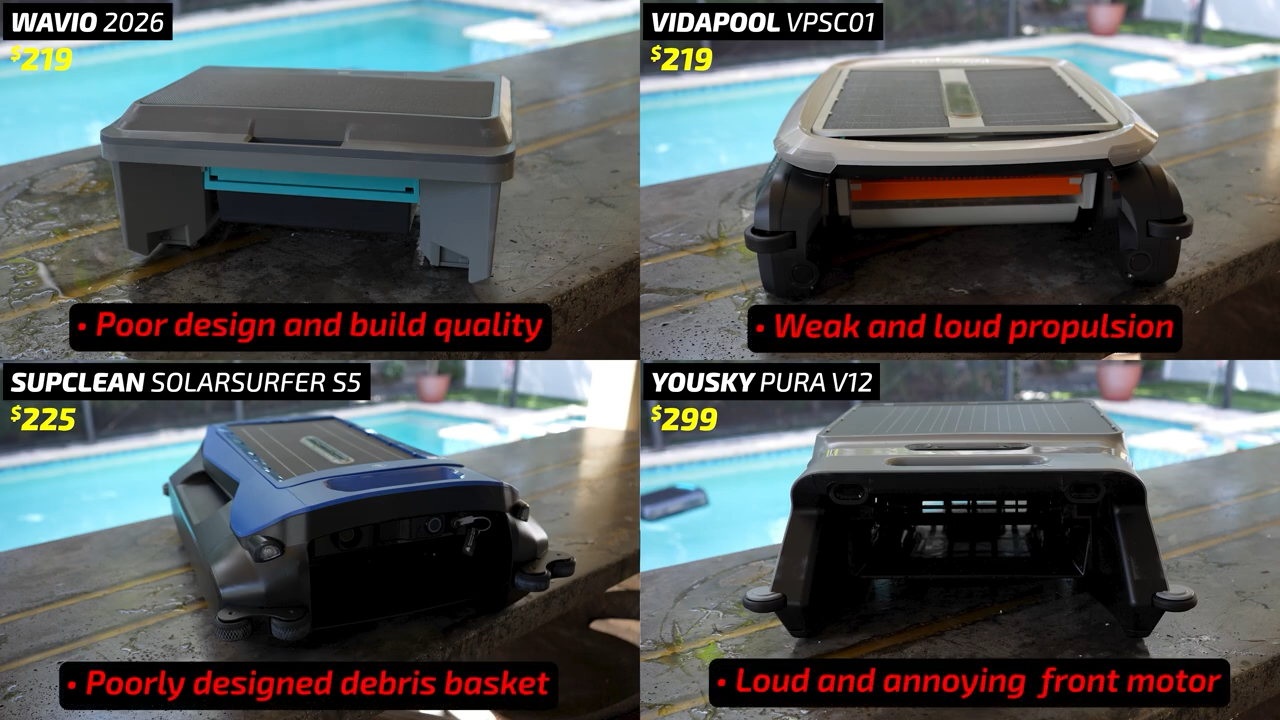
I definitely got into the weeds a little bit with my testing in this video so I’m going to save you some time by giving you my conclusions first and then go over the testing after. Unfortunately, the only one of the budget skimmers I’d even consider is the $225 Supclean SolarSurfer S5, which was the least problematic but it’s definitely still not as good as the name brands.
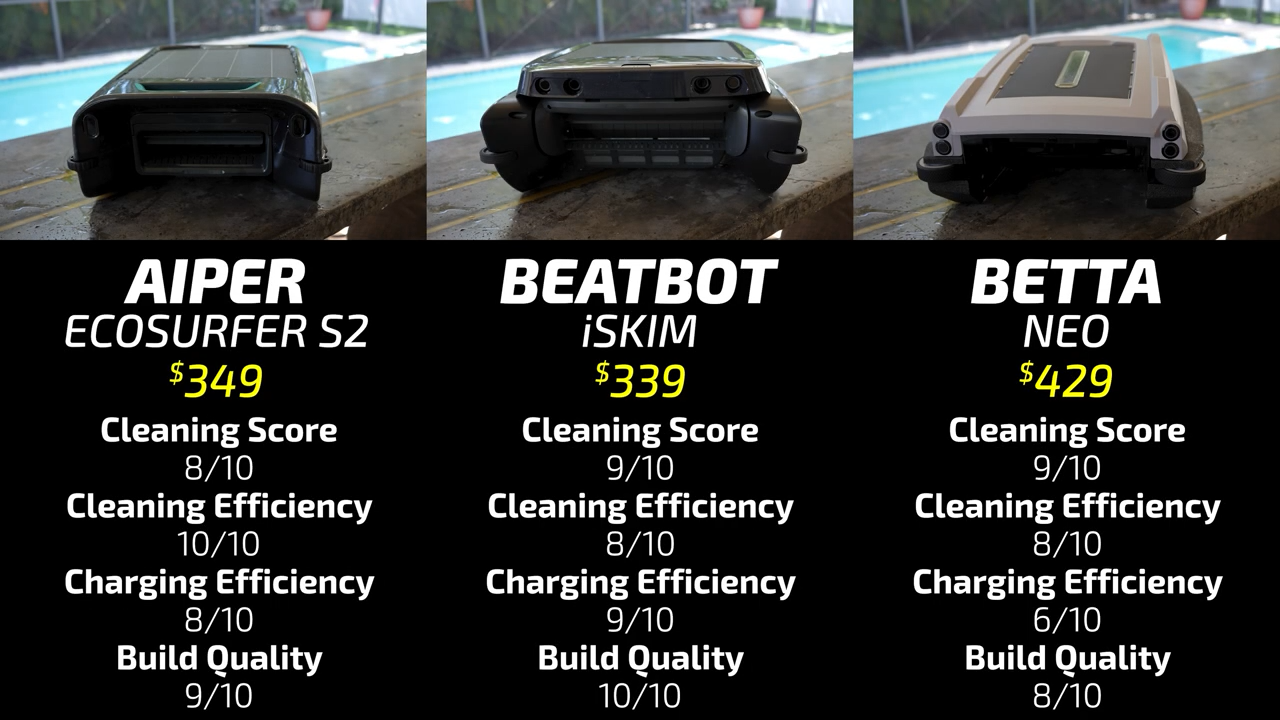
Between the Aiper Surfer S2, Beatbot iSkim, and Betta Neo, they all have basically the same feature set and very similar performance, but each has one or two key differences that may appeal to you based on your pool.
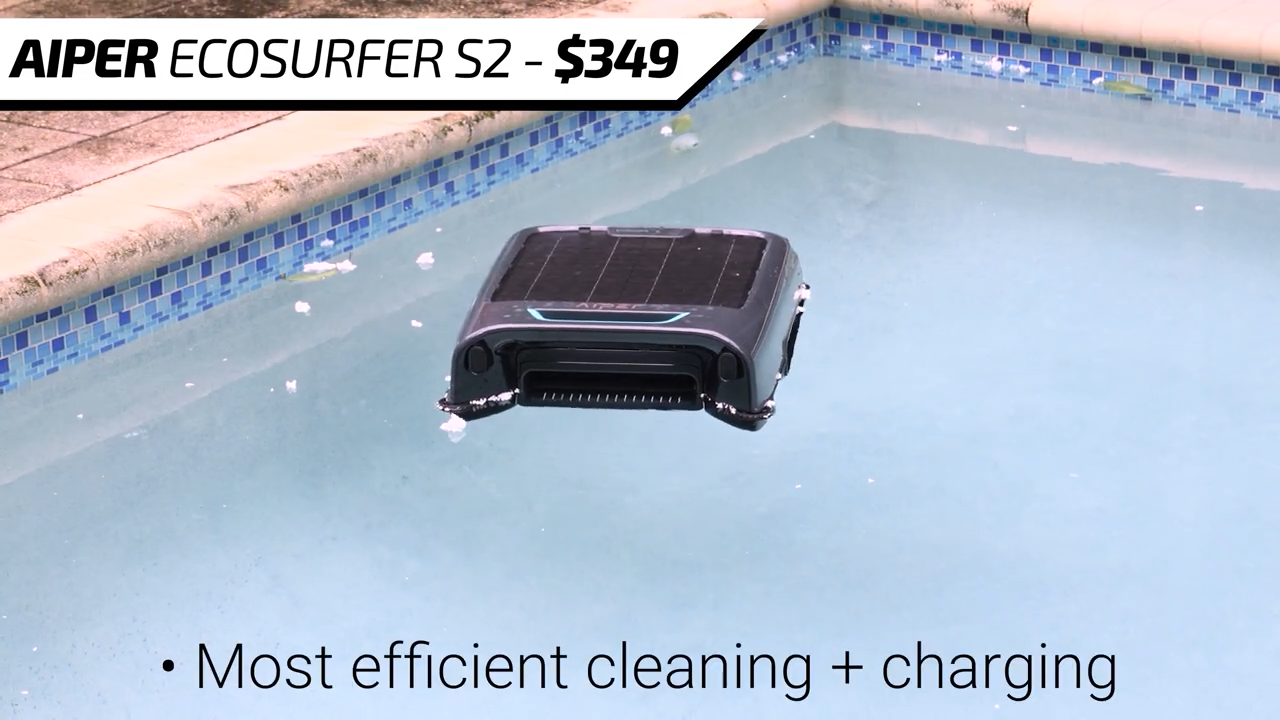
Starting with the Aiper Surfer S2, it’s the most efficient cleaner in the video in terms of battery life and solar charging. So, if you’ve got a screen over your pool or you just don’t get much sunlight where you live, it’s going to be the best option for you. One other great feature is its designated chlorine tablet holder in the bin, which is not only useful if you’re already using a chlorine floater in your pool, but if you are dealing with a lot of smaller debris and are going to wait a long time in between emptying the bin, the chlorine tablet will help prevent your debris bin from smelling bad as the debris decomposes.
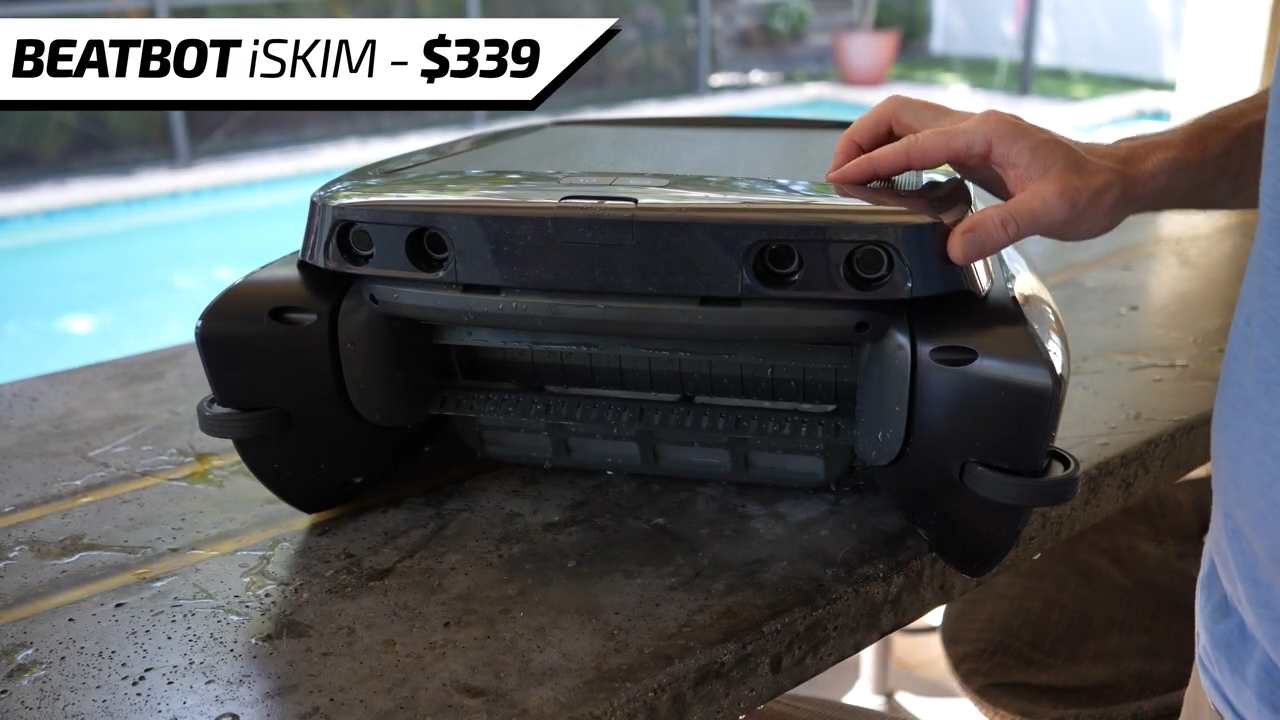
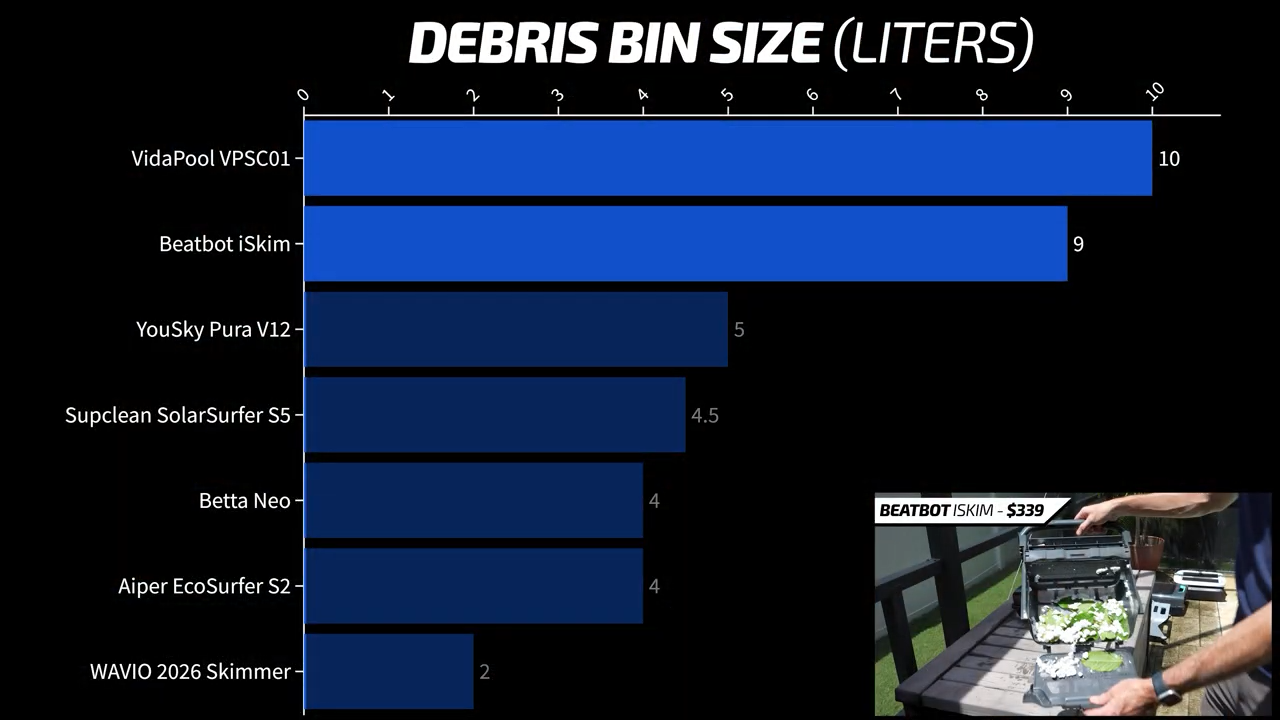
Next, the Beatbot iSkim’s big advantage is its much larger debris bin. Where the Betta and Aiper both have 4L debris bins, the Beatbot has a huge 9L bin. So, if you’ve a lot of oversized debris that ends up in your pool, the Beatbot will be your best option because it can pick up more of it before it needs to be emptied.
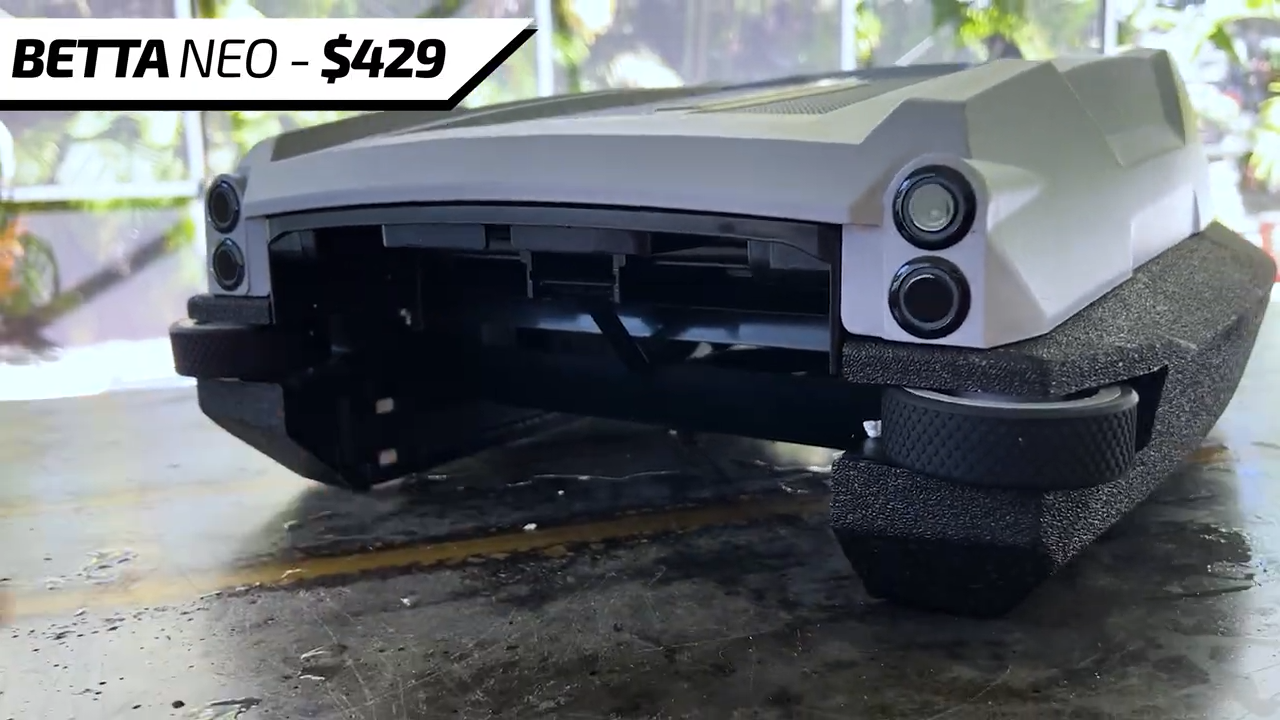
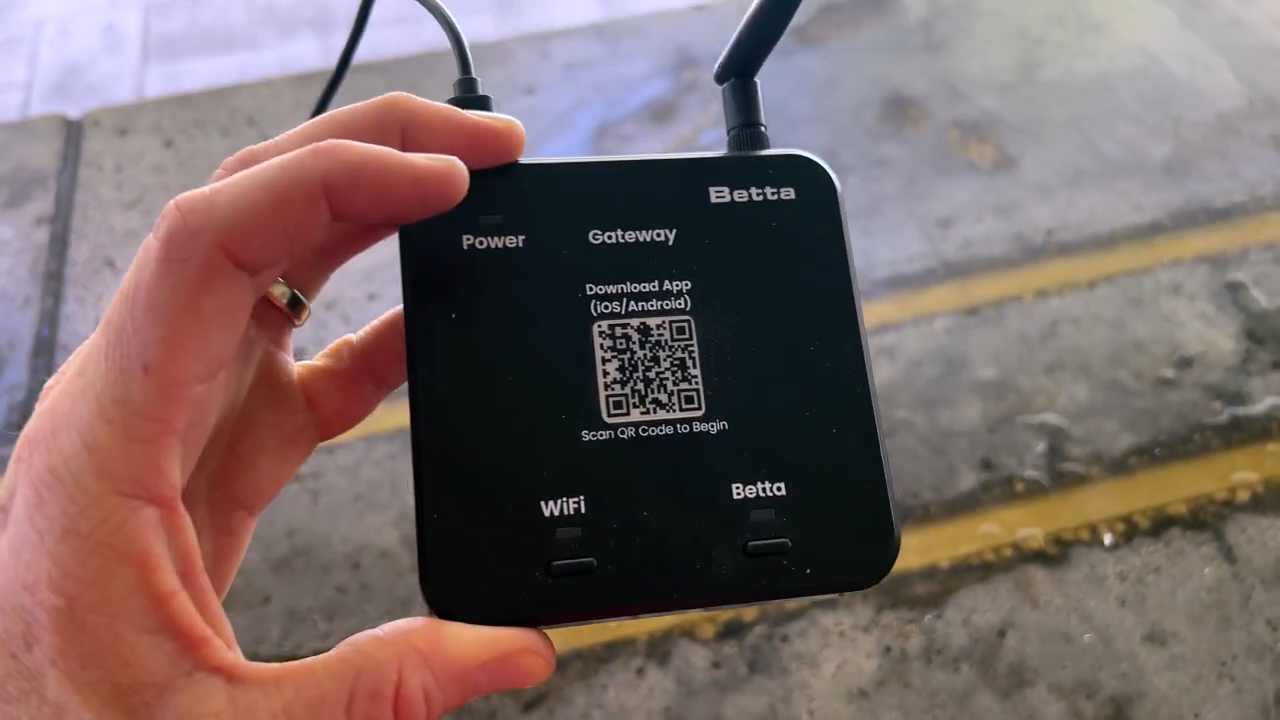
Last is the Betta Neo. The main reason you’d choose this one is if your pool has poor WiFi coverage because the Neo comes with its own hub that can connect to your home’s WiFi and then communicate with the Neo up to 600ft away. The other small feature that’s unique to the Neo is this anti-tangle bar that prevents it from eating the power cord from a corded pool cleaner. Still keep in mind that a cord is going to stop the skimmer from being able to float freely in your pool, so they still don’t pair particularly well together.
If that was all you needed to know, I’ve got affiliate links below and I appreciate it when you use those but stick around to see the data.
Noise Level
First things first, the number one thing that prevents me from recommending the budget cleaners from YouSky, Vidapool, and Wavio is noise. While all their noises are different, they were all complete dealbreakers for me because they ruined the peaceful feeling I get sitting out by my pool. Starting with the least annoying, the YouSky’s front debris paddle motor just makes a loud humming noise. Next the VidaPool uses paddle wheels for propulsion instead of propellers like the rest of the robots, and they sound like this all the time. Last, the Wavio’s motors are quiet enough, but it has no distance sensors, so the only way it navigates is by running full speed into the sides of your pool, making a loud clunk every time. By contrast, here’s what the rest of the skimmers sound like. I know it seems silly to base my recommendation so largely on their sound, but for a device that is supposed to run constantly, it definitely mattered to me.
Debris Pickup
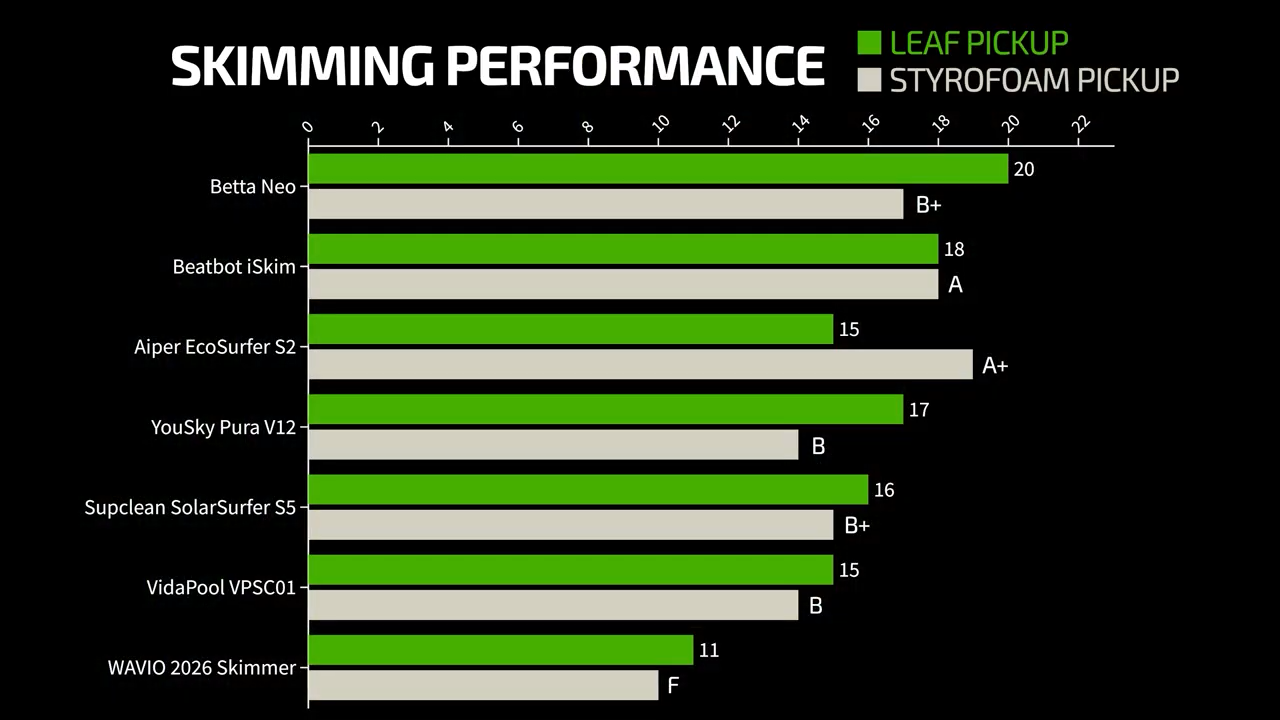
Next, let’s look at their actual debris pickup. For this test I put exactly 20 leaves into my pool along with some ground up Styrofoam and let each skimmer clean for 1 hour.
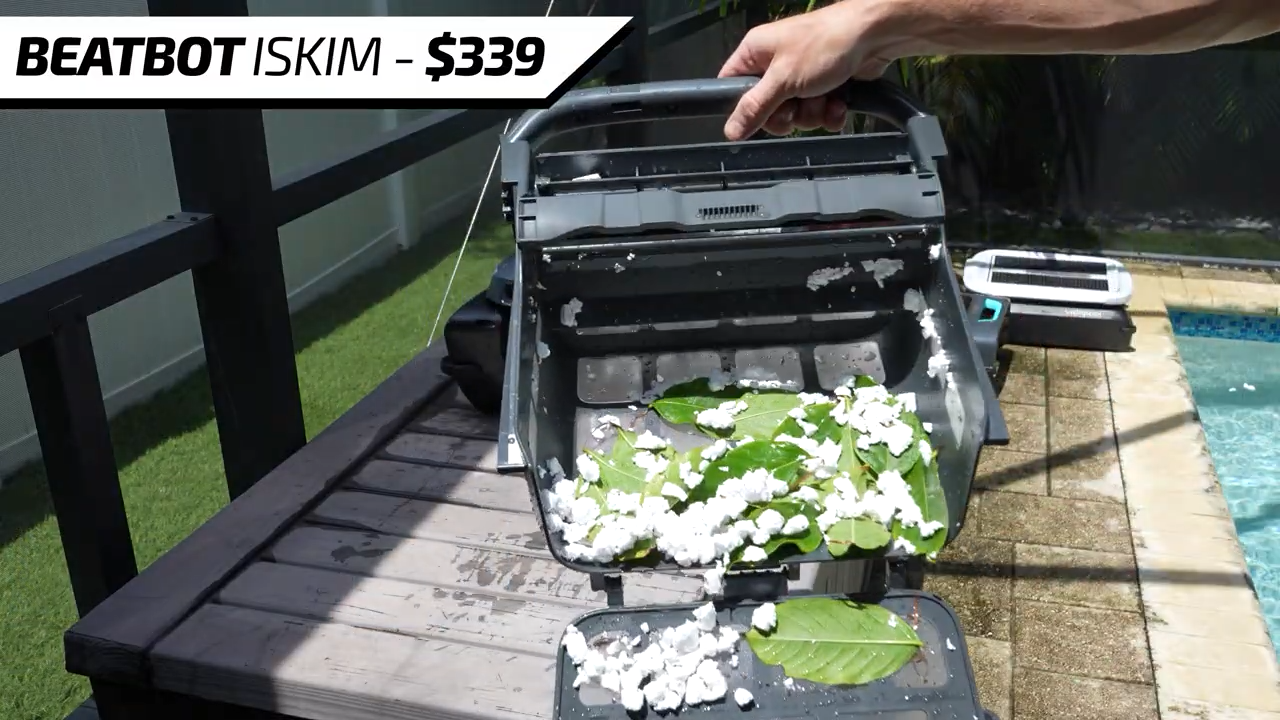
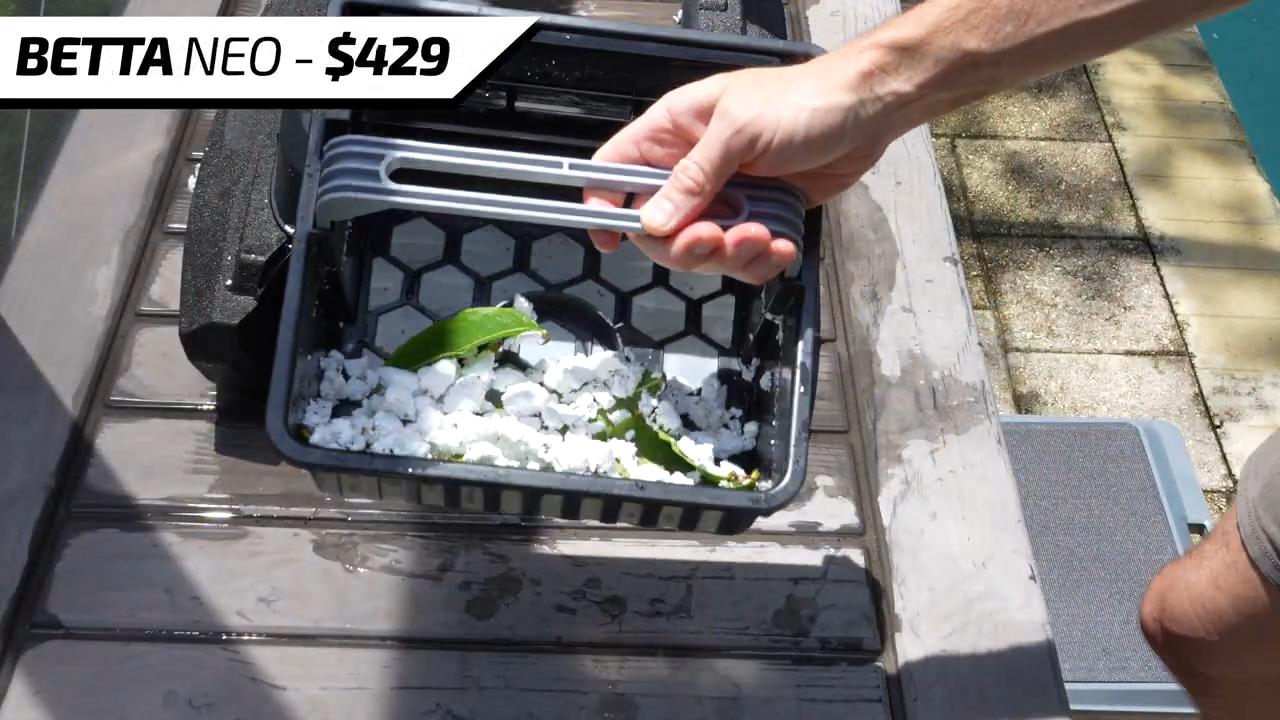
The best overall performances were from the Beatbot iSkim that picked up 18 leaves and did an excellent job with the Styrofoam, and the Betta Neo that picked up all 20 leaves but didn’t collect as much of the floating styrofoam.
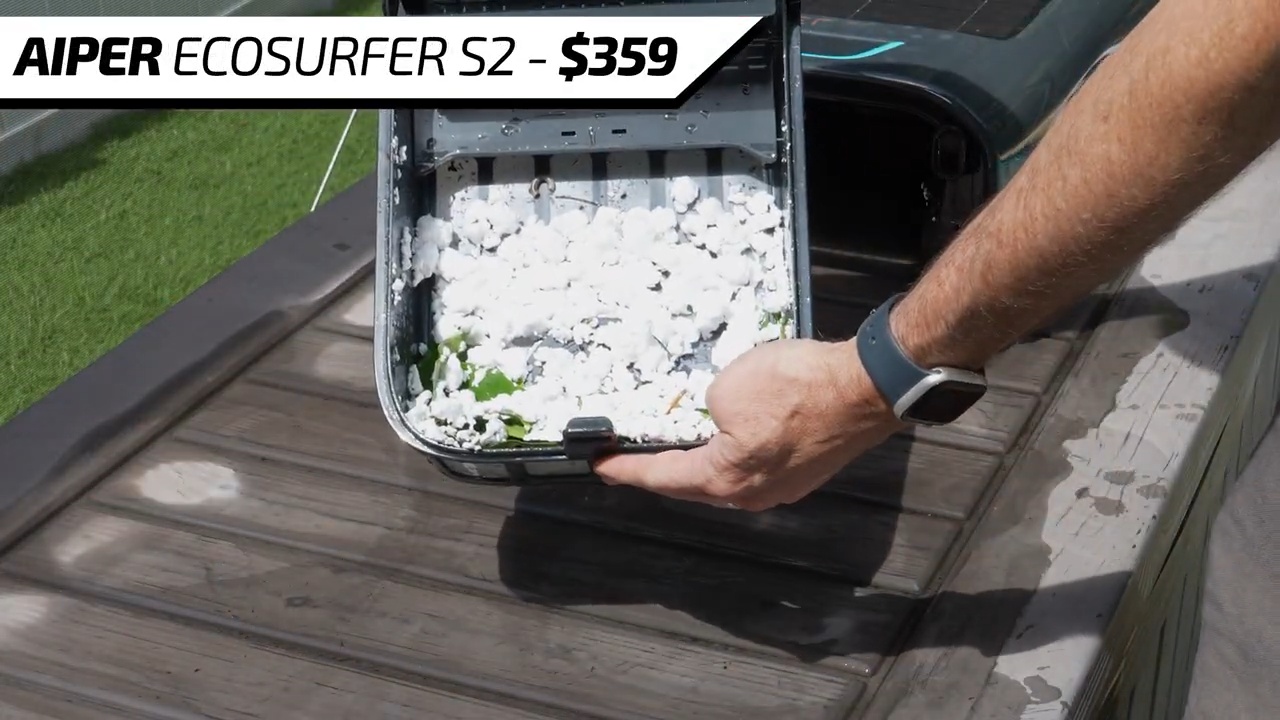
The Aiper EcoSurfer S2 collected the most Styrofoam but only 15 of the leaves, and the Supclean and YouSky had similar performances collecting 16 leaves and 17 leaves but doing a pretty poor job collecting styrofoam.
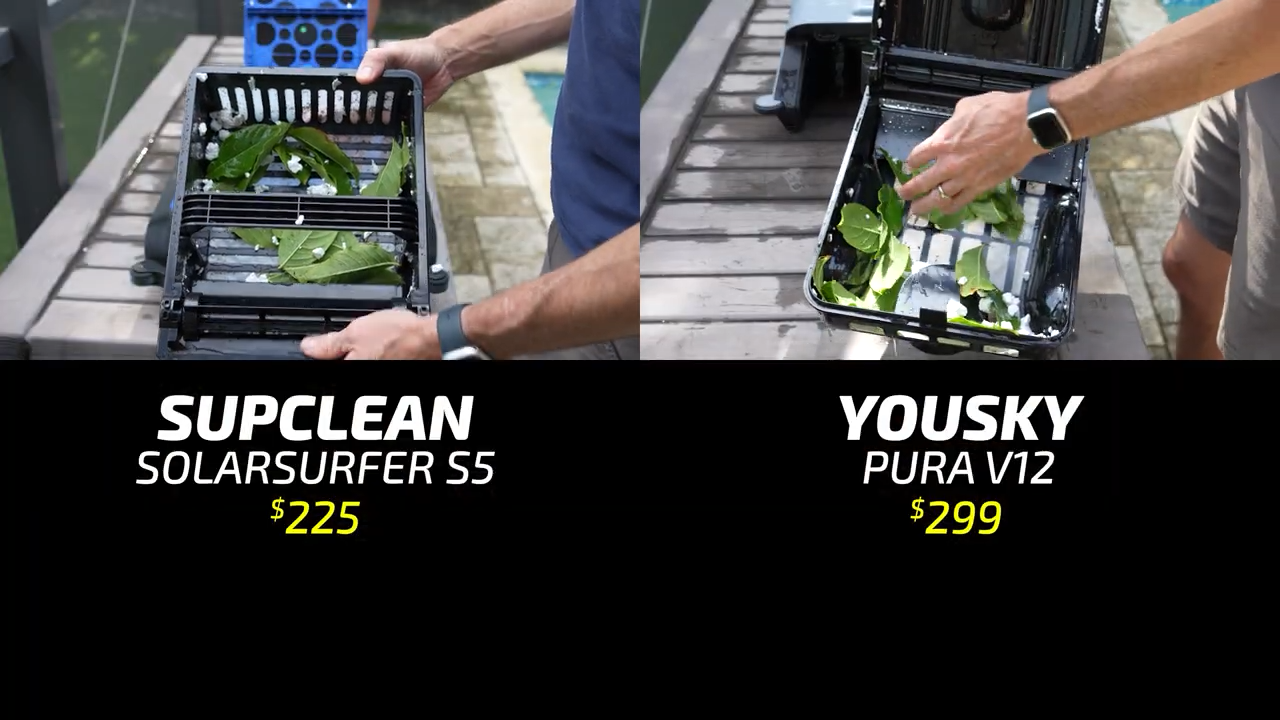
The Vidapool was slightly worse than that, and then the Wavio was by far the worst and only collected 11 out of the 20 leaves and almost no styrofoam.
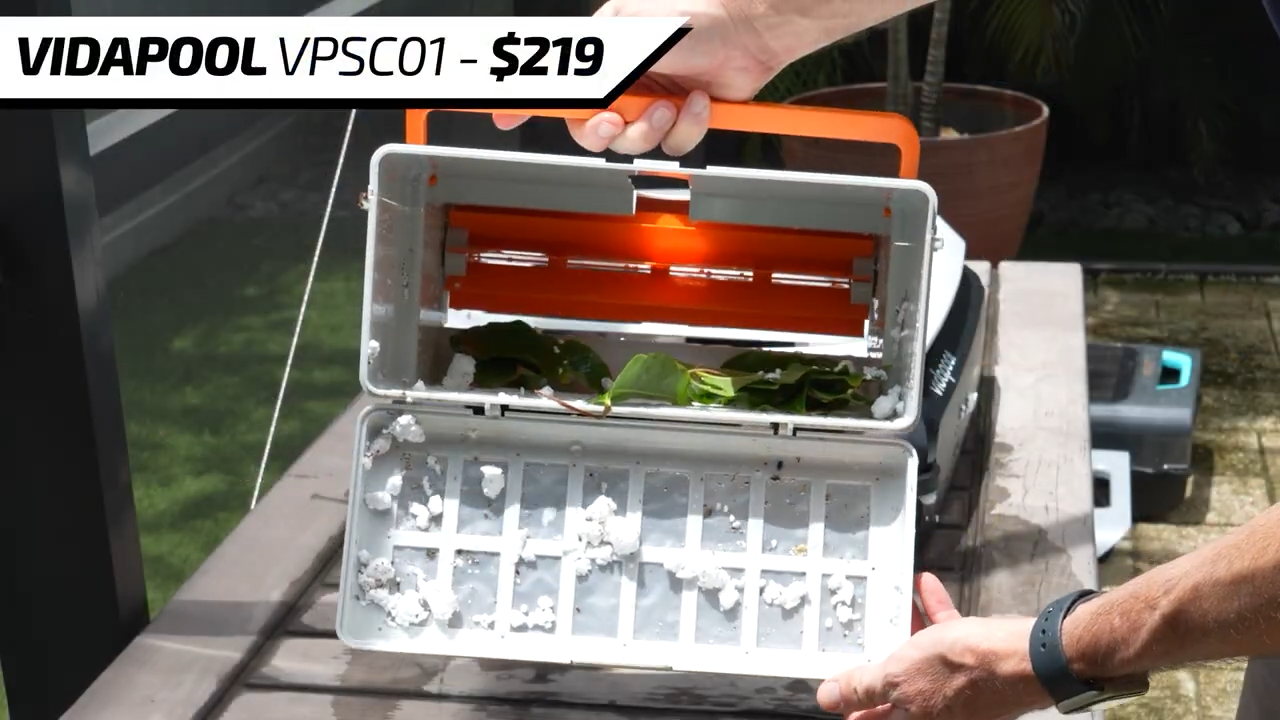
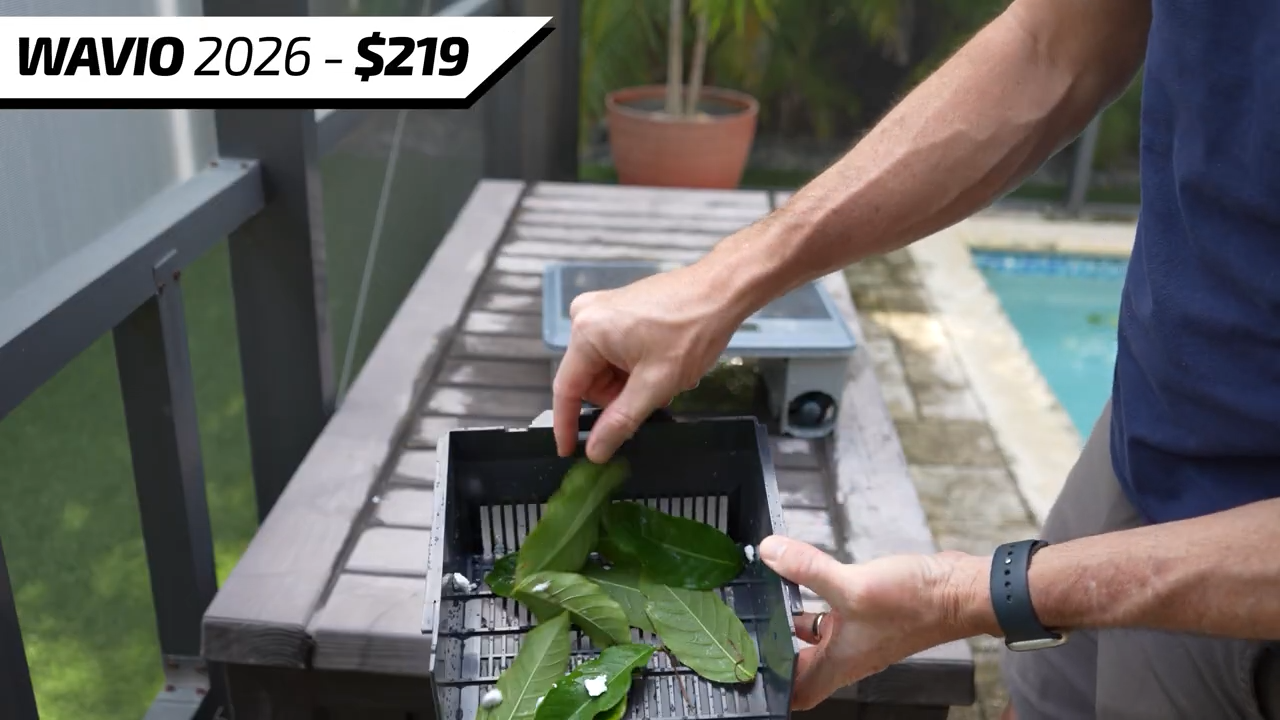
But I would say these results are of limited usefulness because ultimately there was a lot of luck involved with the random patterns of these skimmers matching up with how the debris was interacting with the currents in the pool. These skimmers are not necessarily designed to work quickly but are meant to stay in the pool and work constantly. So, while the Beatbot, Betta, and Aiper did better than the rest, the only one I’d eliminate based strictly on this performance is the Wavio.
Cleaning Efficiency
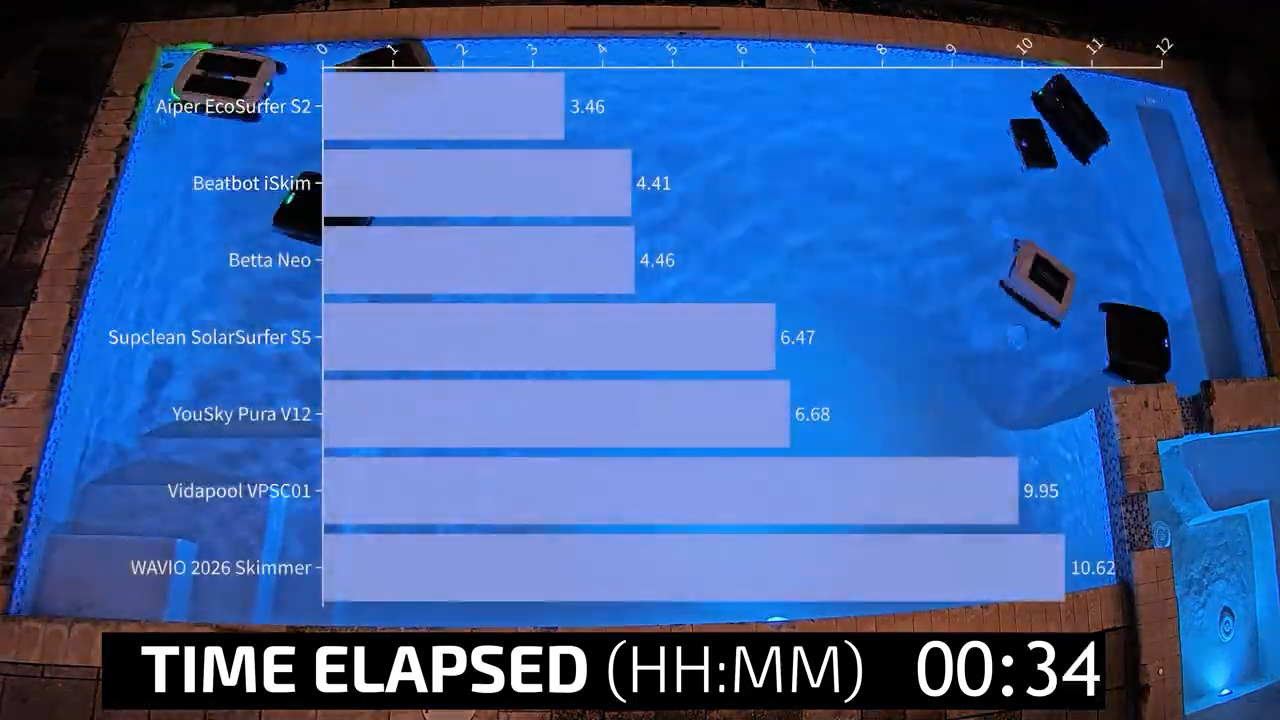
A more important metric is their efficiency and how long they can actively clean each day based on available sunlight. This test had two parts. First, I ran the skimmers overnight where there was no solar input and recorded their battery percentage versus their runtime to determine cleaning efficiency. In this test the Aiper Ecosurfer S2 was the most efficient using 3.46% of its battery every hour, which was nearly twice as efficient as the Supclean and YouSky and three times more efficient than the Wavio.
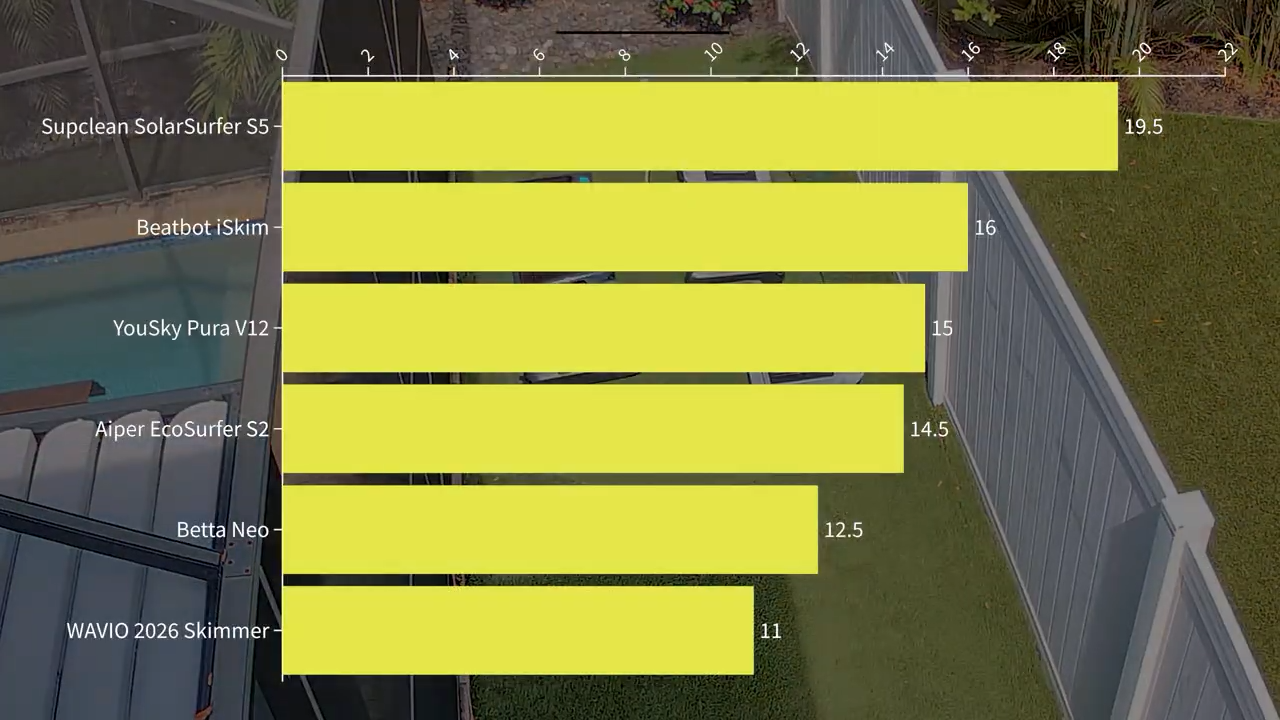
For the second part of the equation, I measured their solar recharge efficiency, making sure each skimmer was exposed to the exact same amount of sunlight over a 3-hour period. The Supclean reported the largest change in battery percent, gaining 19.5% per hour, while the Wavio gained just 11% per hour.
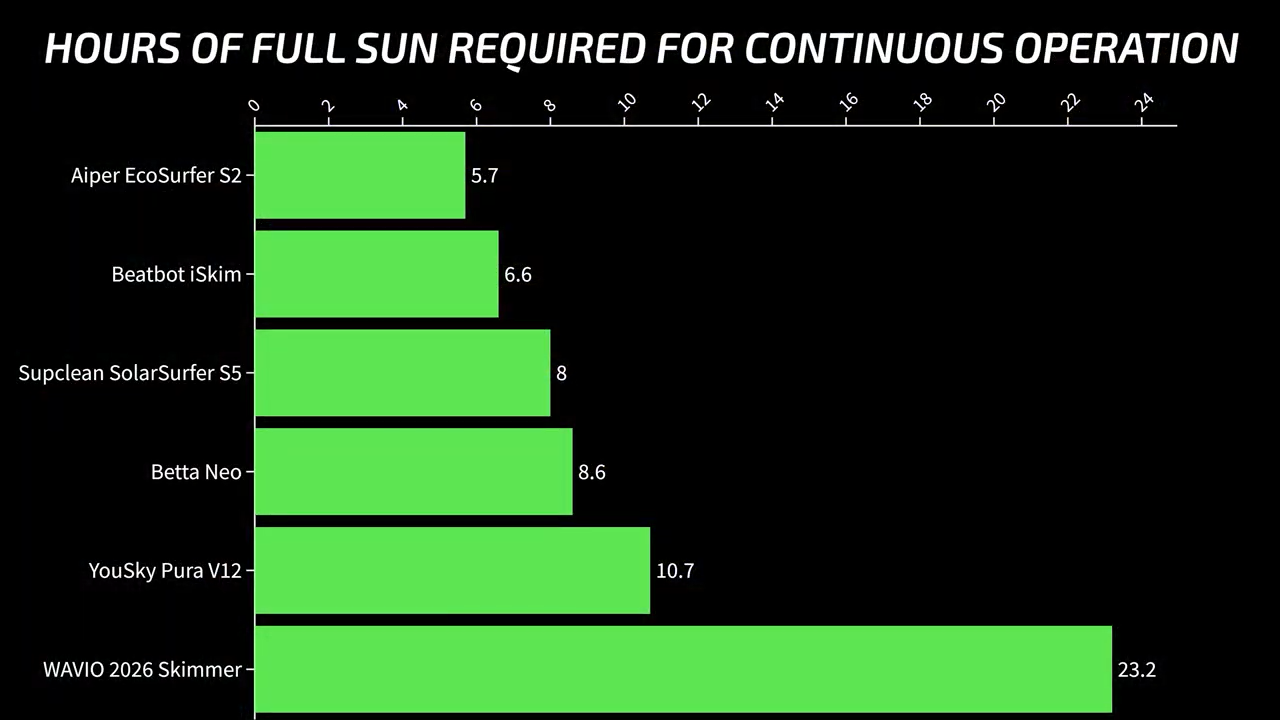
If you combine those together, you can calculate that to operate continuously, the Aiper Ecosurfer S2 needs around 5.7 hours of full sun per day and the Beatbot would need around 6.6 hours, which are totally reasonable, but the YouSky would need closer to 11 hours, and the Wavio has almost the same drain and charge rate and would need 23.2 hours of full sun a day to run continuously, which is clearly not possible.
The next question then is why is the Aiper the most efficient? That comes down to navigation.
Navigation
With the exception of the Wavio, all of these skimmers use sensors on the front of the robot to figure out when they’re getting close to a wall so they can turn to maneuver themselves along the edge, but the Aiper uses optical sensors instead of ultrasonic sensors like the rest of the skimmers. While that might be slightly more efficient, the main reason why the Aiper can run longer on the same amount of battery is that it regularly turns off its propulsion while keeping its front paddle running, floating freely with the current.
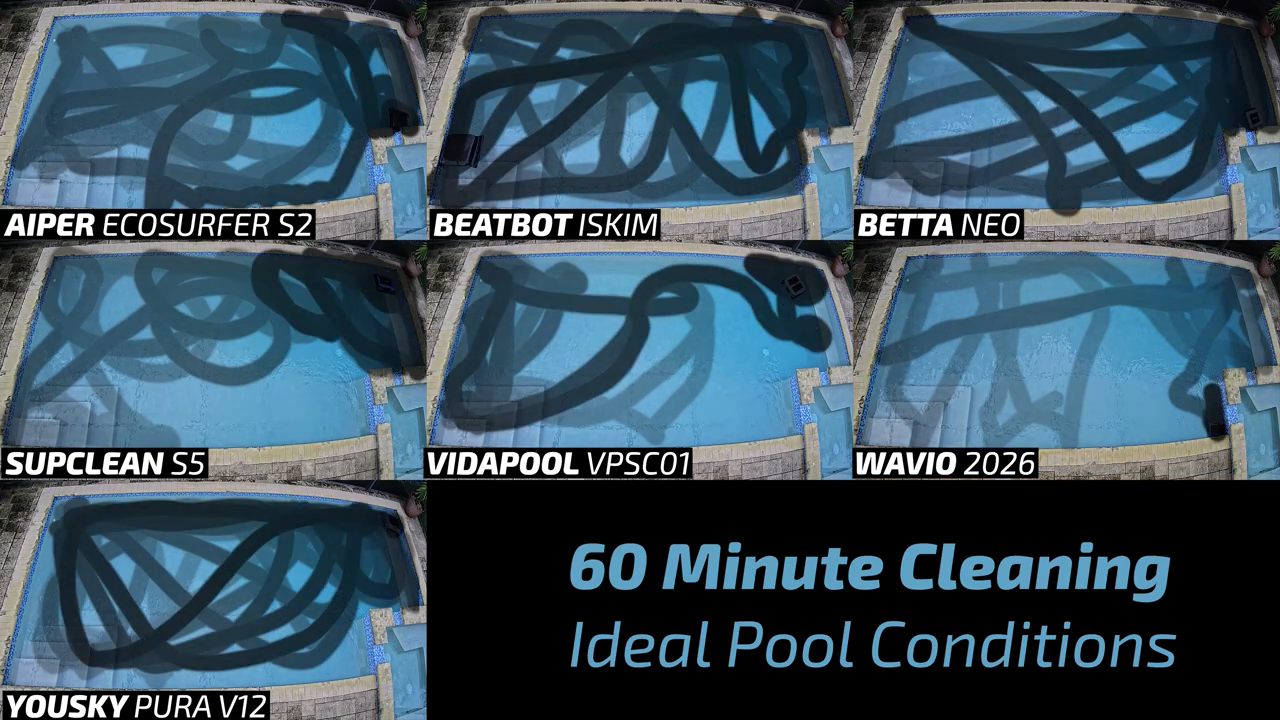
But as I mentioned earlier, none of them are exactly methodical with their navigation. The YouSky moves quickly and mostly circles the pool while the Beatbot and Betta criss cross the middle of the pool more often. You can see the Aiper turning off its propulsion and regularly making fishtail like movements. As mentioned earlier, the Wavio uses an accelerometer to navigate and only turns after it runs full speed into a wall, but that navigation style fails when it gets caught in the current of the pool and can’t run into the wall hard enough to trigger the turning motion.
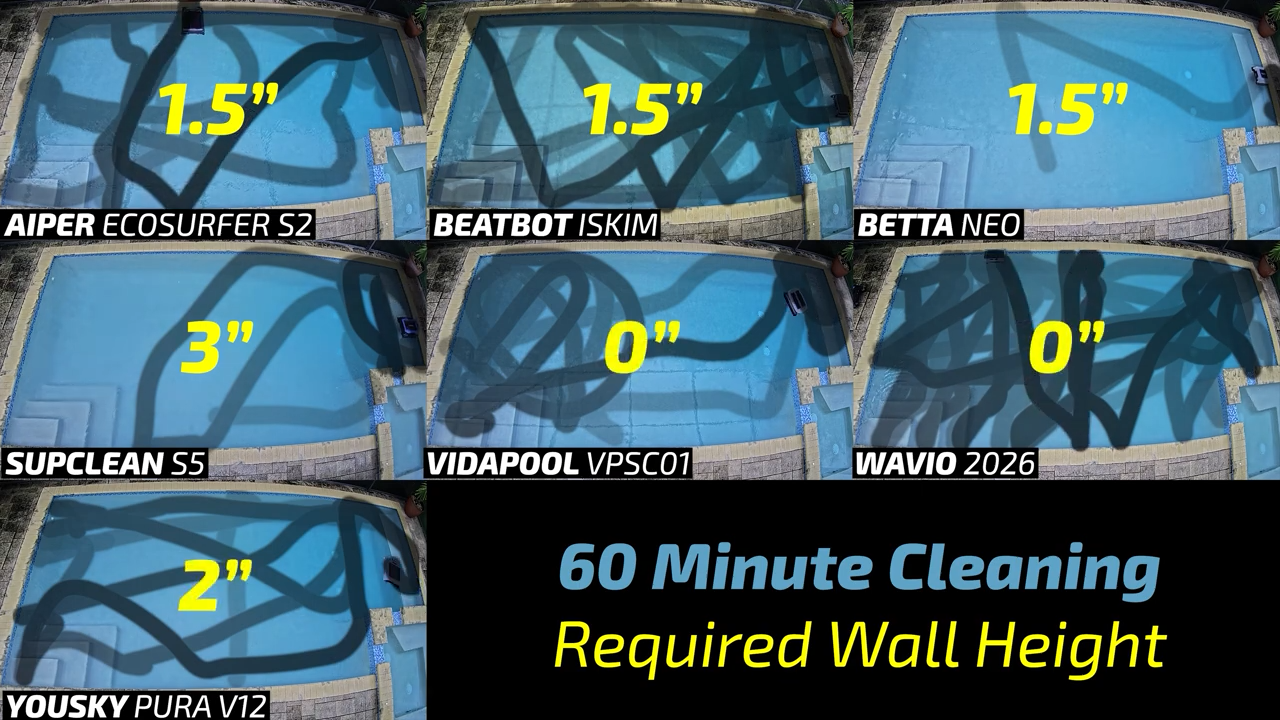
After this controlled 60-minute run, you can see the Aiper, Beatbot, Betta, and YouSky had the most complete pool coverage, and the Beatbot did the best job of cleaning along walls, which may have contributed to its excellent styrofoam pickup performance.
One more thing to know about these skimmers and their navigation is that if your pool’s water level gets too high, or if you have a zero-edge pool that lets the front sensors see over the walls of your pool, their navigation will be seriously compromised or, in some cases, completely broken. You can see in this test after a heavy rain my pool was overflowing with the water level flush with the top of the coping and the Betta completely failed, propelling itself straight into the wall for 60 minutes while the Wavio was unaffected since it uses its accelerometer to detect edges. While the Beatbot wasn’t as graceful as it was when it could use its optical sensors, it does appear to also have an accelerometer to detect when it runs into walls to continue to clean when the water level is too high.
I also measured the difference between the water level height and the wall height required to trigger the front sensors. The Supclean needed slightly over 3”, the Betta, Beatbot and Aiper needed 1.5” and the Vidapool’s sensors are mounted below the surface, so it had the same relatively poor navigation regardless of the water level.
Build Quality
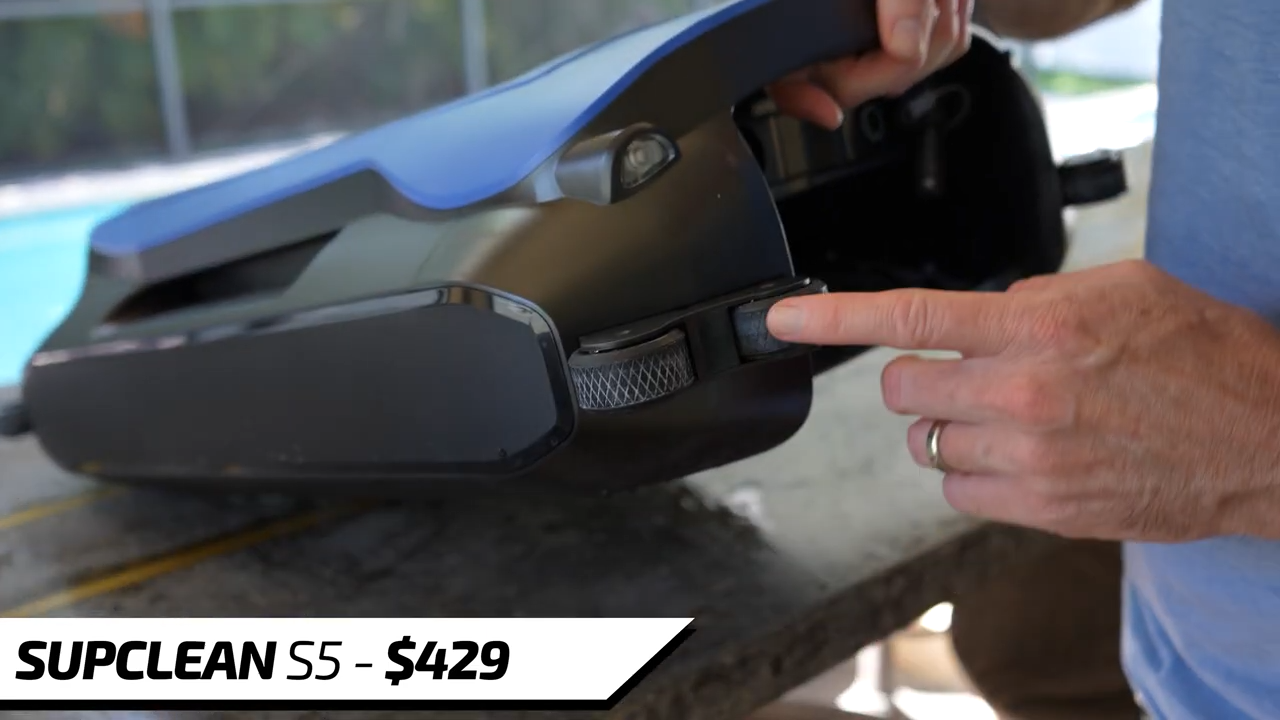
Next, moving onto the actual construction of each of the skimmers, with the exception of the Wavio, all of the skimmers have guide wheels to help them turn along the edges of your pool without scuffing the robots themselves or your pool tiles. However, after just a few weeks, the rubberized wheels on the Vidapool and Supclean started to feel sticky like they were breaking down in the sun and chlorine environment. While the rubber on the Beatbot, Betta, and YouSky didn’t feel sticky, I think I prefer the hard plastic rollers on the Aiper, and they seem like they’re going to last the longest.
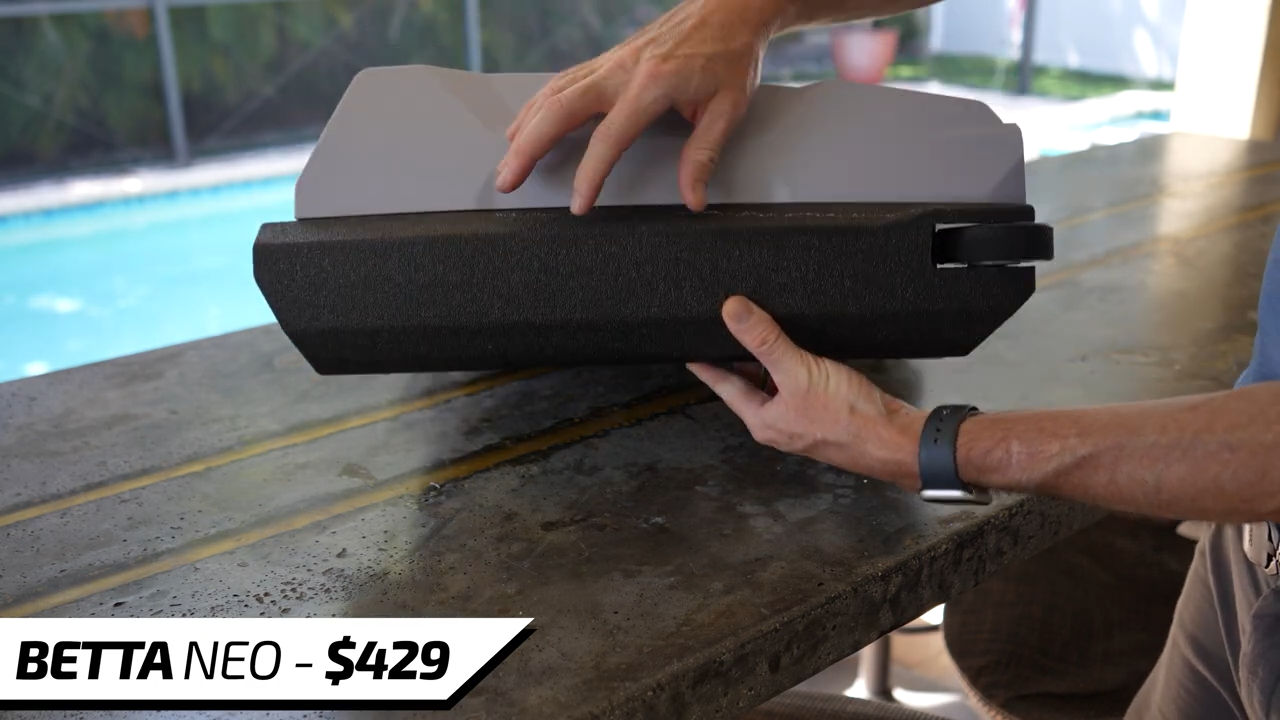
Another thing that concerns me is the exposed black Styrofoam on the Betta. While I’m sure it helps with the overall weight of the skimmer it doesn’t seem nearly as durable as the hard plastic covering on the rest of the skimmers.
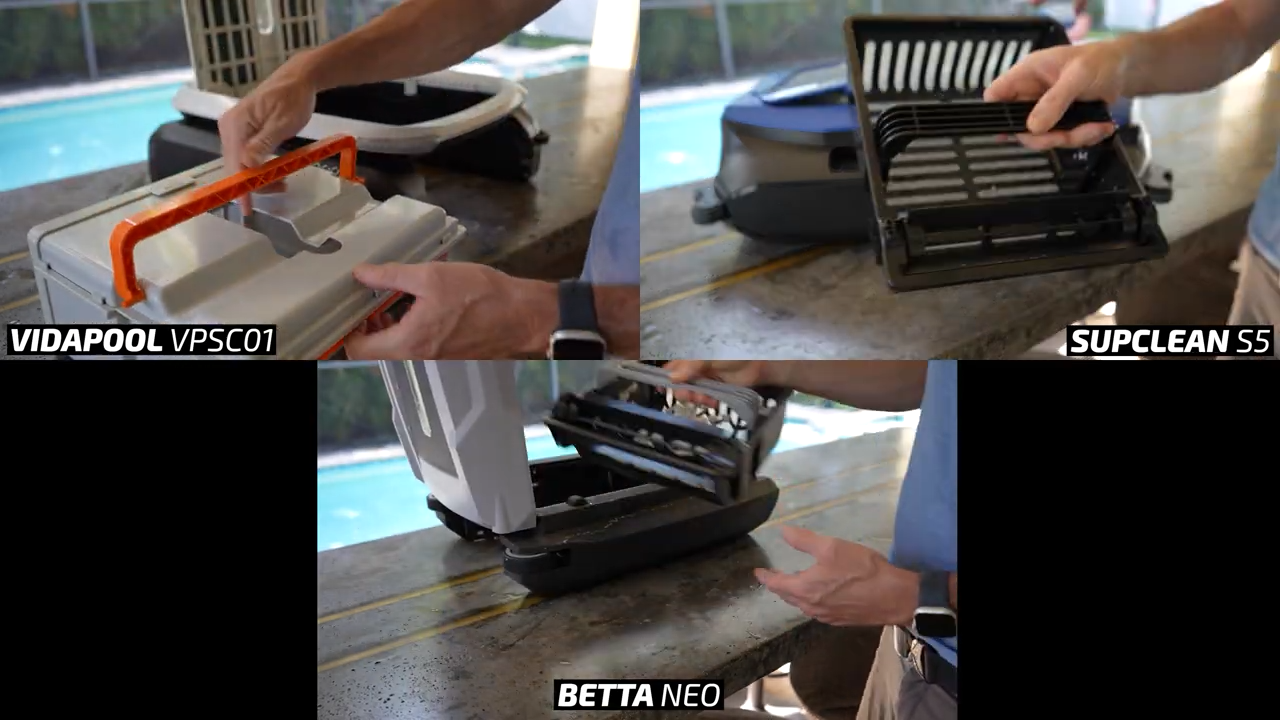
Moving onto bin construction, the first thing to look at is how you access the bin. On the Vidapool, Supclean, and Betta, you lift up the top cover of the skimmer and pull the basket straight out. Probably the biggest reason that I wouldn’t recommend the more budget friendly YouSky is that the latch that keeps the top of the robot closed is extremely weak and opens itself nearly every time I put the skimmer in the pool.
In contrast, the Aiper, Beatbot, YouSky, and Wavio have their bins slide out without opening the top. My biggest complaint here is with the Aiper where the grip point is too close to the bottom of the skimmer, so you need to tip the whole robot back to avoid scraping your knuckles on the ground when you pull out the bin. The easiest bin to get out is definitely the Beatbot that has a spring-loaded release button.
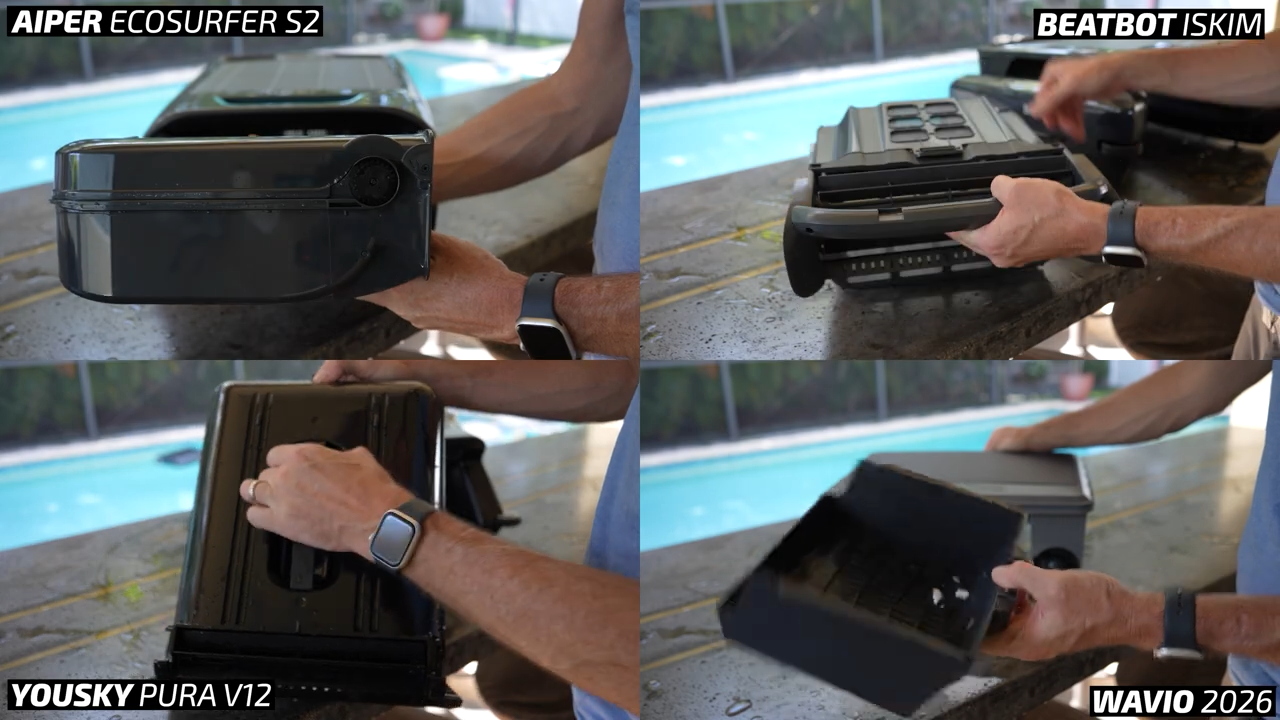
As far as bin construction, the Beatbot and Vidapool have largest bin at 9L and 10L and the Wavio is the smallest at around 2L, meaning you’ll need to empty the Beatbot and Vidapool much less. But two other important bin construction differences are that the Beatbot, YouSky, and Aiper all have anti-leak flaps that prevent debris from coming out of the bin when the robot is free floating or in reverse. The Beatbot, YouSky, and Aiper are also all fully enclosed bins, meaning that if you pick the skimmer up by the front of the robot, all the water will drain out the back without letting any debris out, while the open top bins either leak the debris back into the pool or into the body of the skimmer itself. For the open top bins, it’s definitely best to keep the skimmer level when pulling it out of the pool.
I mentioned earlier that the Aiper has a spot for a 3” chlorine tablet and an adjustable vent on the bottom to control the release of chlorine and the YouSky also has a basically identical chlorine distribution system while the Betta just has a circular indentation that I assume is for a chlorine tab, but there’s nothing to hold it in place or control the flow of chlorine.
Anti Stranding Bars
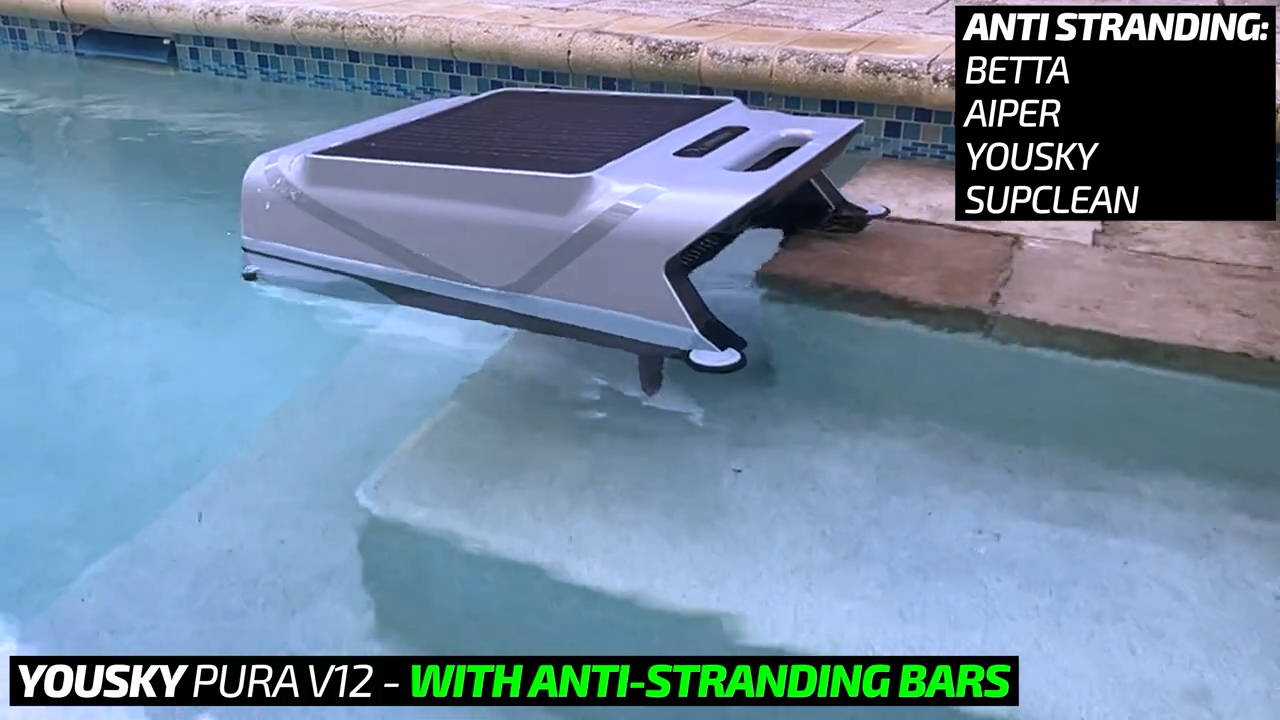
The last part of the construction to look at is what are called “anti stranding mechanisms,” which are basically designed to stop the robots from beaching themselves on shallow areas of your pool with under 5” of total depth. The Betta, Aiper, YouSky, and Supclean all have deployable anti-stranding bars that you can use if you’re having issues with them getting stuck in shallow areas while the Beatbot has roller wheels on the bottom of the skimmer pontoons to allow it to free itself from shallow areas using its propulsion system.
Phone Apps
Looking at their apps and connectivity, as I mentioned earlier, the Betta comes with a hub that must be installed to communicate with the skimmer. That is either a good thing if you have poor WiFi coverage around your pool or an added annoyance if your WiFi coverage is already strong. Looking at the apps themselves, the Beatbot, Aiper, and Betta apps are the most useful, offering different scheduling and cleaning mode types. But honestly, you really don’t need the apps to get the most out of these skimmers and you probably shouldn’t base your buying decision on WiFi connectivity.
Overall Scores
I think that pretty much covers everything you’d want to know about solar skimmers. Taking everything into account, like I mentioned at the beginning of the video, I think the Aiper, Beatbot, and Betta are worth the extra money over the more budget off-brand options which all at had at least one deal breaking issue that prevent me from giving them a full recommendation.
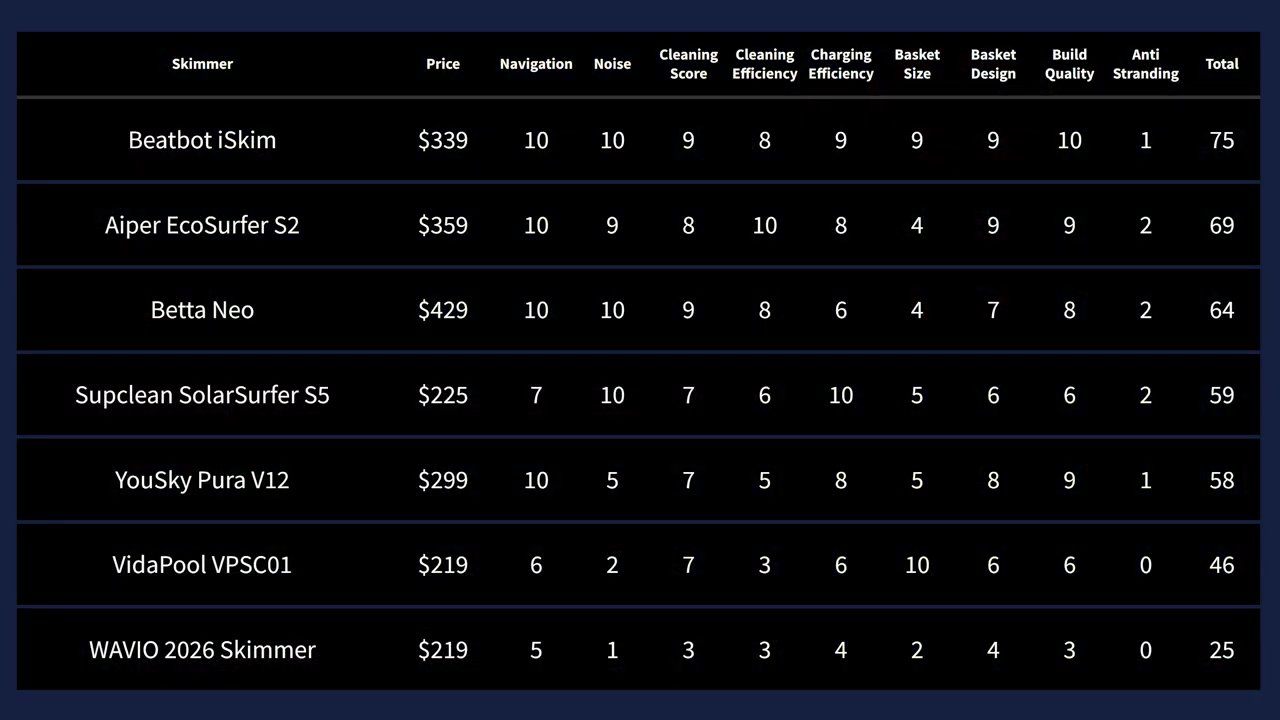
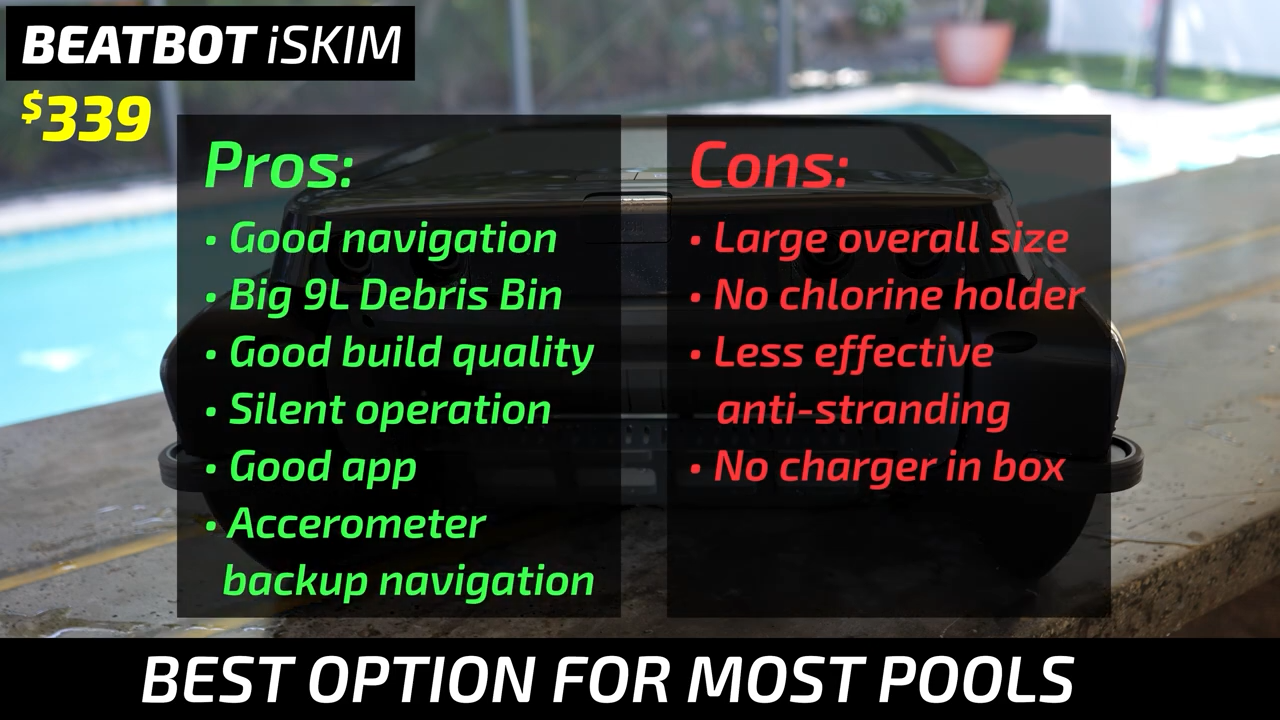
If I had to pick just one skimmer that was right for most people, I think the Beatbot iSkim is just a great all-around cleaner with good navigation, a big easy-to-use debris bin, and good build quality. My one nitpick about the Beatbot is that even though it can charge via solar or a wall charger, they don’t include the wall charger in the box and charge an extra $25 for it, which seems absurd at this price point.
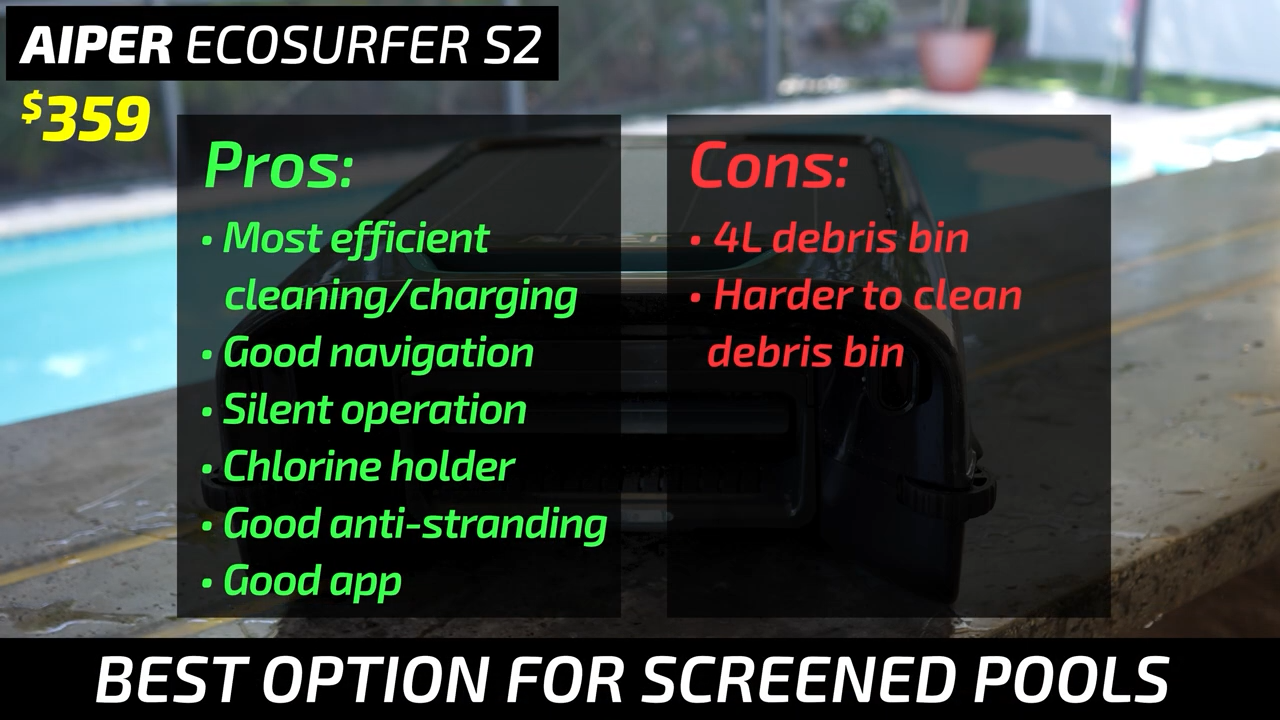
Personally, I’m going to keep the Aiper Ecosurfer S2 to use in my pool inside of a screened pool cage since the floating debris that I get is much smaller and the increased cleaning efficiency is important since the screen blocks a lot of the available sunlight.
The Betta was probably the best cleaner of the bunch, but I have concerns about the exposed Styrofoam, the bin design isn’t as good, and it doesn’t appear to have a backup navigation system in the event that the optical sensors can’t detect a wall. The Betta also only has a 1-year warranty compared to the 2-year warranties from Beatbot and Aiper, and at the time of testing, it’s also the most expensive option. So, unless you really need that extra connection hub to increase your WiFi range, the Aiper and Beatbot are probably better options.
As always, there are no sponsored reviews on this channel, but I do have links below for all of the skimmers in this video and as always, I appreciate it when you use those links since as an Amazon affiliate I do earn a small commission on the sale at no cost to you.
I’d also like to thank all of my awesome patrons over at Patreon for their continued support of my channel, and if you’re interested in supporting my channel, please check out the links below. If you enjoyed this video, please consider subscribing to my YouTube channel and as always, thanks for watching The Hook Up.