Premium Soundbars in 2026
August 14, 2026How many extra speakers can a soundbar system have until it’s not really a soundbar anymore? Today I’ve got nine premium soundbar systems ranging from $1000 to $4000 and I’m going to put them head-to-head and up against my ELAC 5.1.4 home theater setup testing their vocal clarity, front sound stage separation, surround and height effects, low bass performance, and more to find out which one is the best. If you don’t want a multi-speaker setup, I’m also going to evaluate the best bar-only systems at the end of the video. As always, there are no sponsored reviews on this channel.
Configuration and Sub Frequency Response
Let’s start with the least expensive soundbar in this video, the $999 Ultimea Skywave X100 with the single 10” sub. Ultimea claims this is a 9.1.6 channel system, and to clarify that would mean that there are nine discrete speakers at ear level, one subwoofer, and six discrete height channel speakers. It accomplishes that with a main soundbar with five ear level channels and two upfiring channels, and four identical wireless surrounds each with one ear level channel and one height channel.
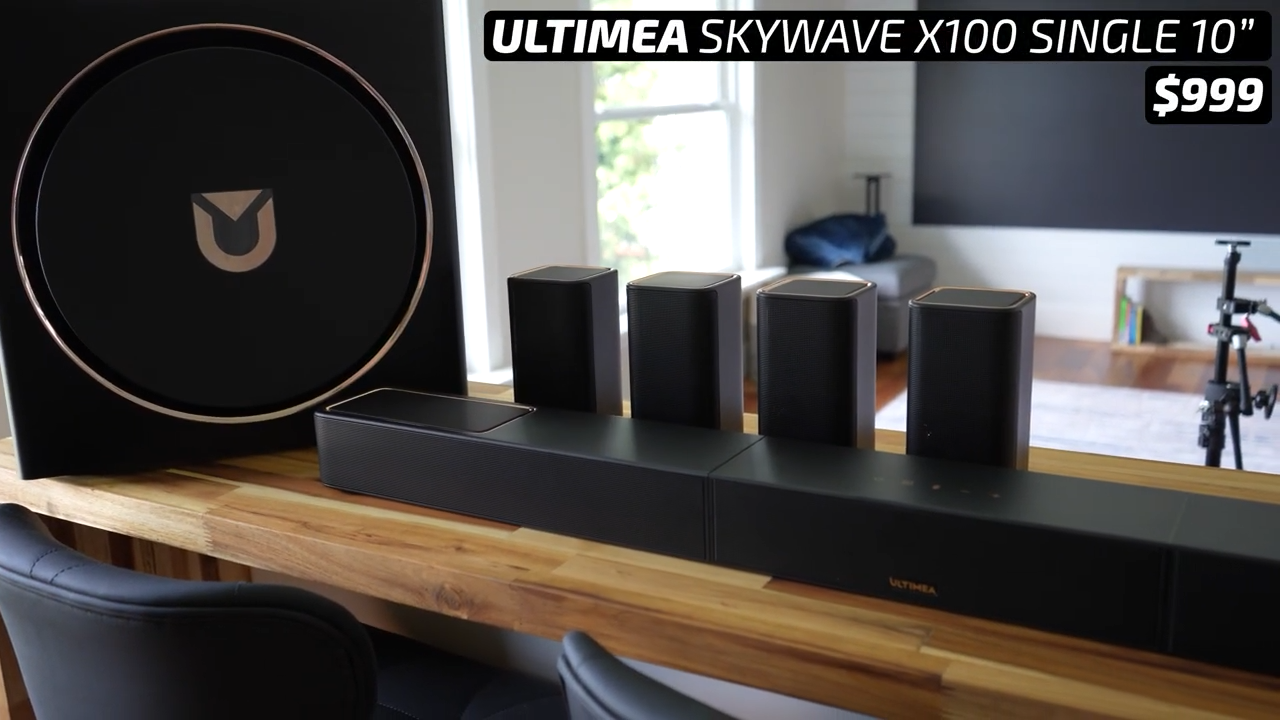
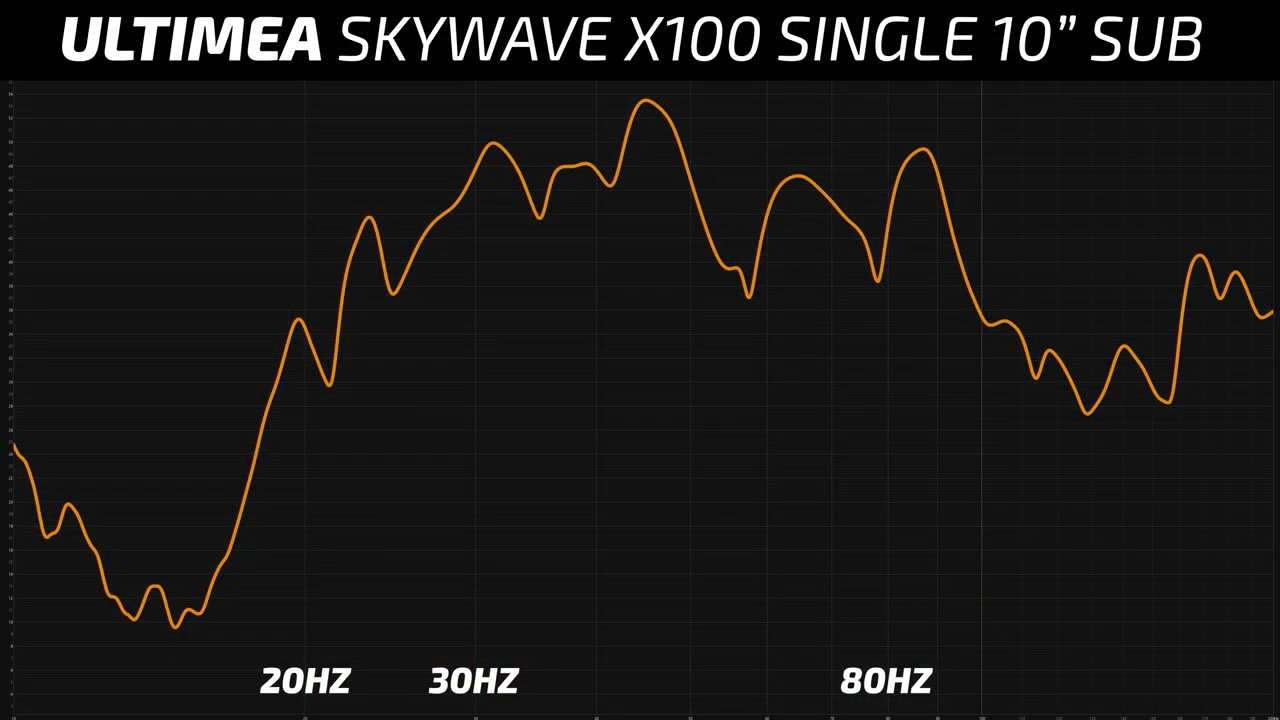
The Ultimea Skywave X100 also comes with a single 10” subwoofer, and looking at the frequency response, the 10” sub performs admirably producing some sound as low as 20Hz, but doesn’t reach its full potential until around 30Hz, and gradually falls off after around 80Hz.
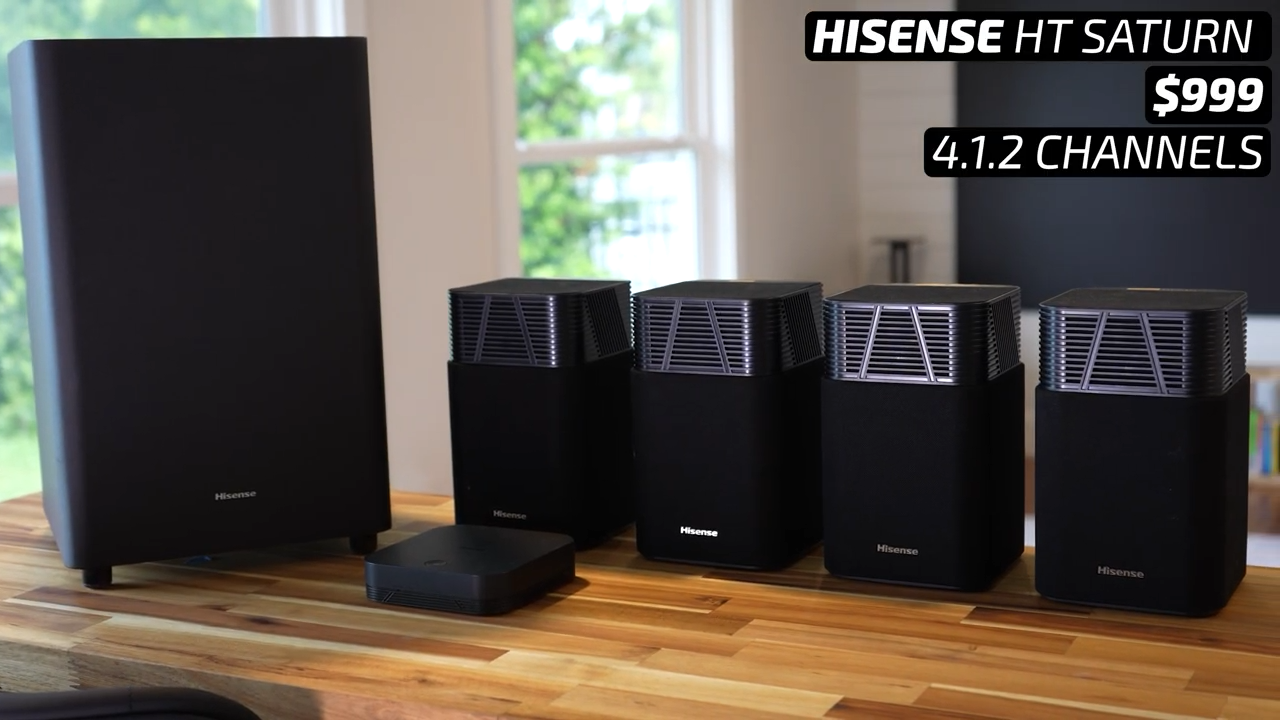
Next, also for $999, is the Hisense HT Saturn, which actually isn’t a soundbar but earned its way into this video by being the overall winner of my wireless surround sound system video a few months ago where it bested the Sony Bravia Quad for a fraction of the price. Instead of a central soundbar, the HT Saturn has a small wireless receiver unit and four wireless satellite speakers to be placed in the four corners of your room making it a modest 4.1.2 system with the four upfiring drivers combining into two height channels instead of four.
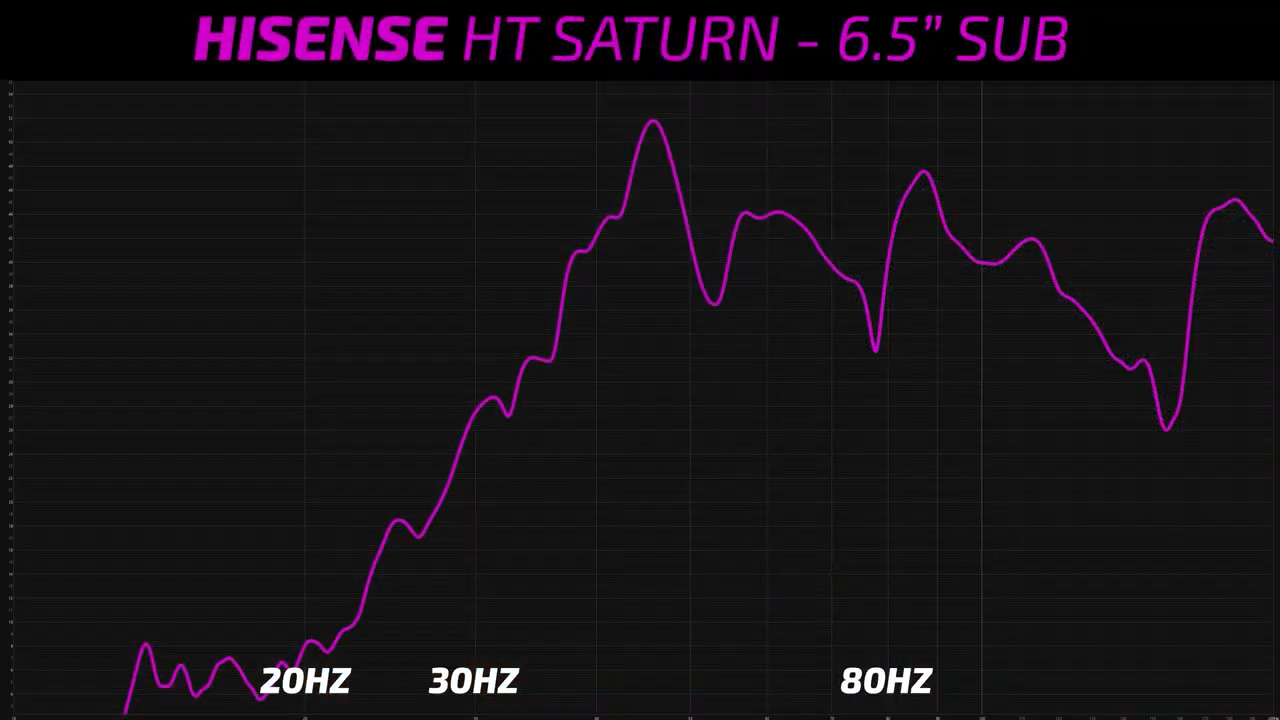
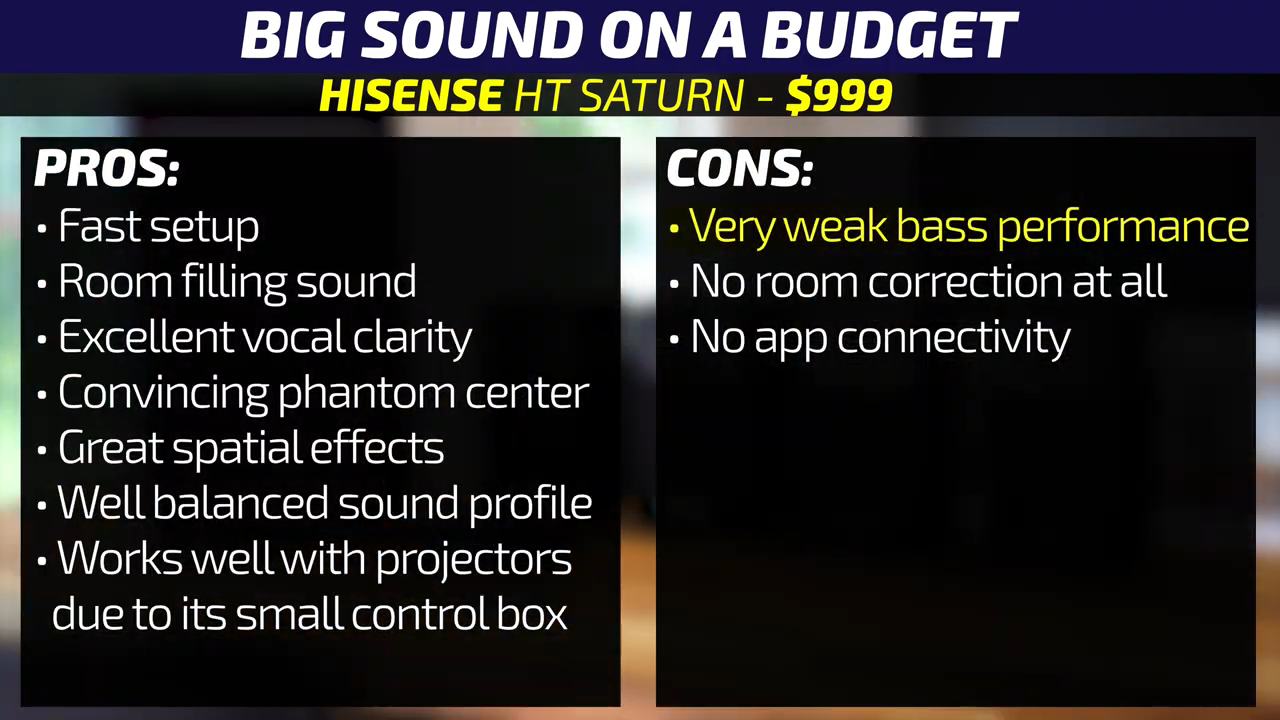
The HT Saturn’s 6.5” ported subwoofer doesn’t reach nearly as low as the Ultimea and doesn’t make any meaningful sound pressure below 38Hz, which means it can’t provide the type of room shaking bass that you can feel in your chest, but in my testing it was free of distortion even at high volume.
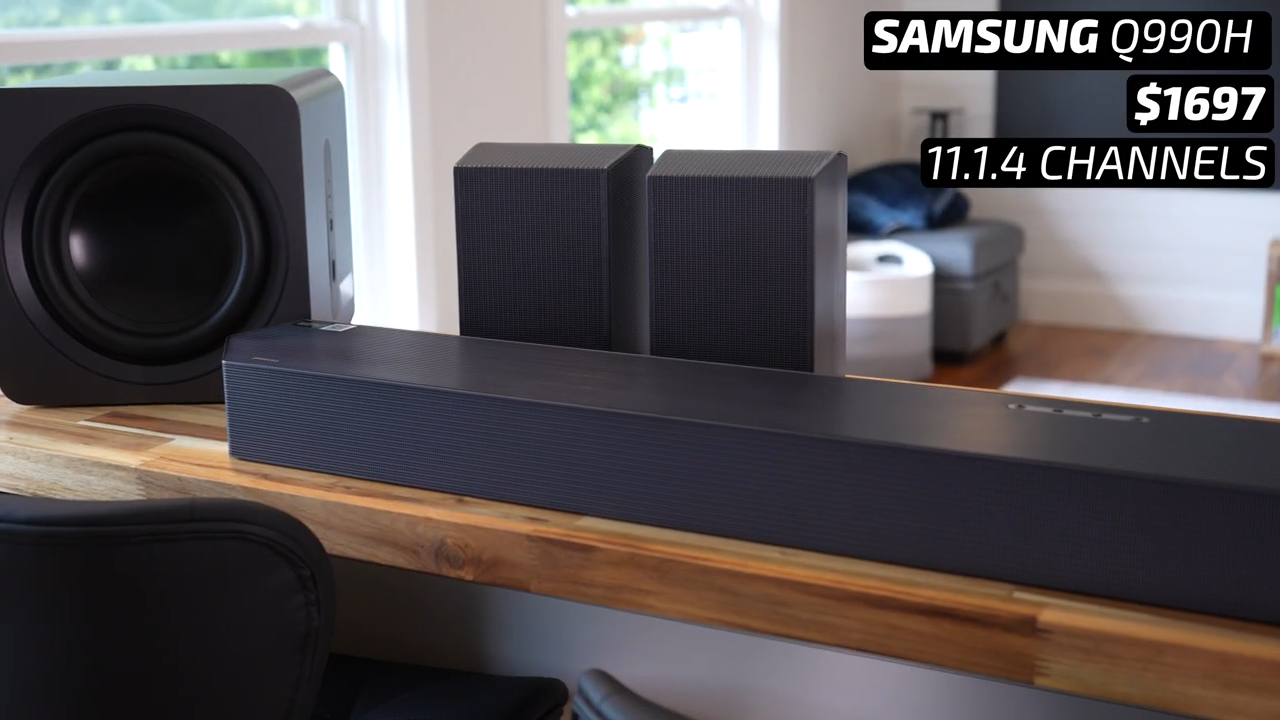
After that, for $1697, is the Samsung Q990H which is Samsung’s latest flagship soundbar system advertised as a 11.1.4 channel system with a main soundbar containing the left, center, right, four front wide channels, and two upfiring height channels, plus two wireless surround speakers that each have one side surround channel, one rear surround channel, and one upfiring height channel.
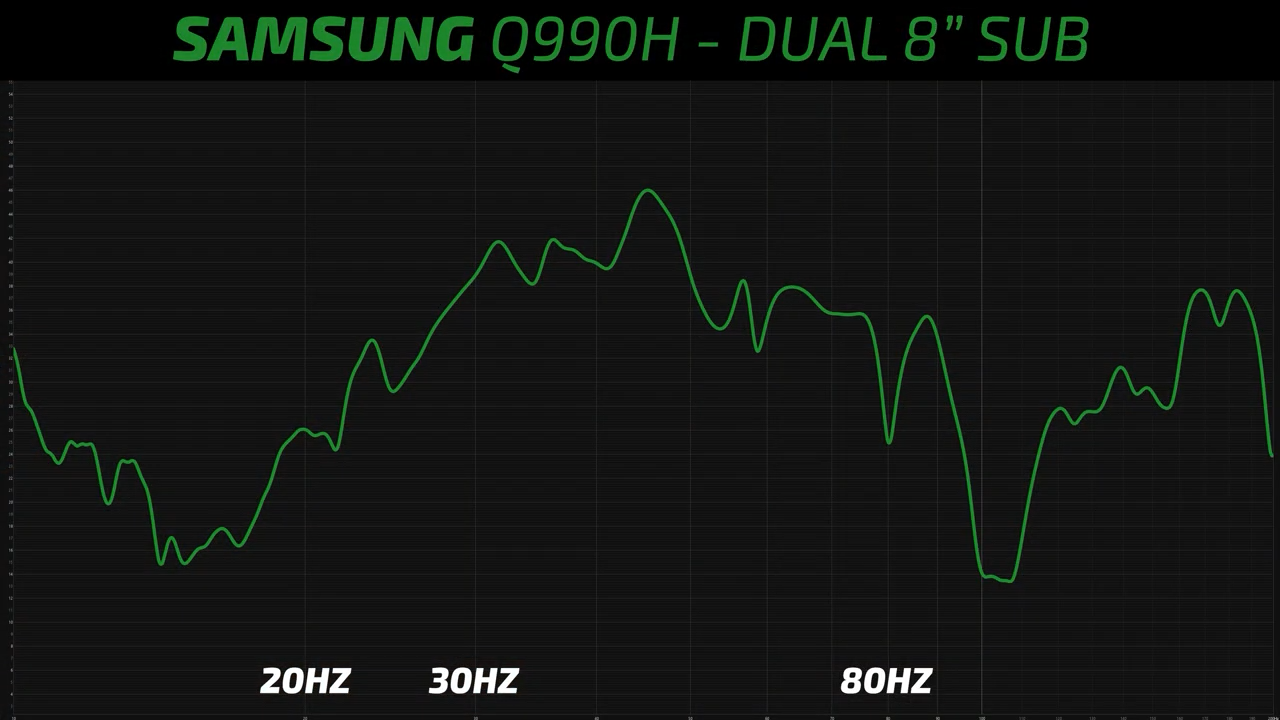
For bass, the Q990H’s included sub has dual 8” side-firing drivers in a ported enclosure, and the frequency response predictably puts its performance somewhere in between the 6.5” Hisense and the 10” Ultimea, first showing some signs of life around 24Hz, but not really kicking into high gear until around 32Hz with a very steep dropoff around 100Hz.
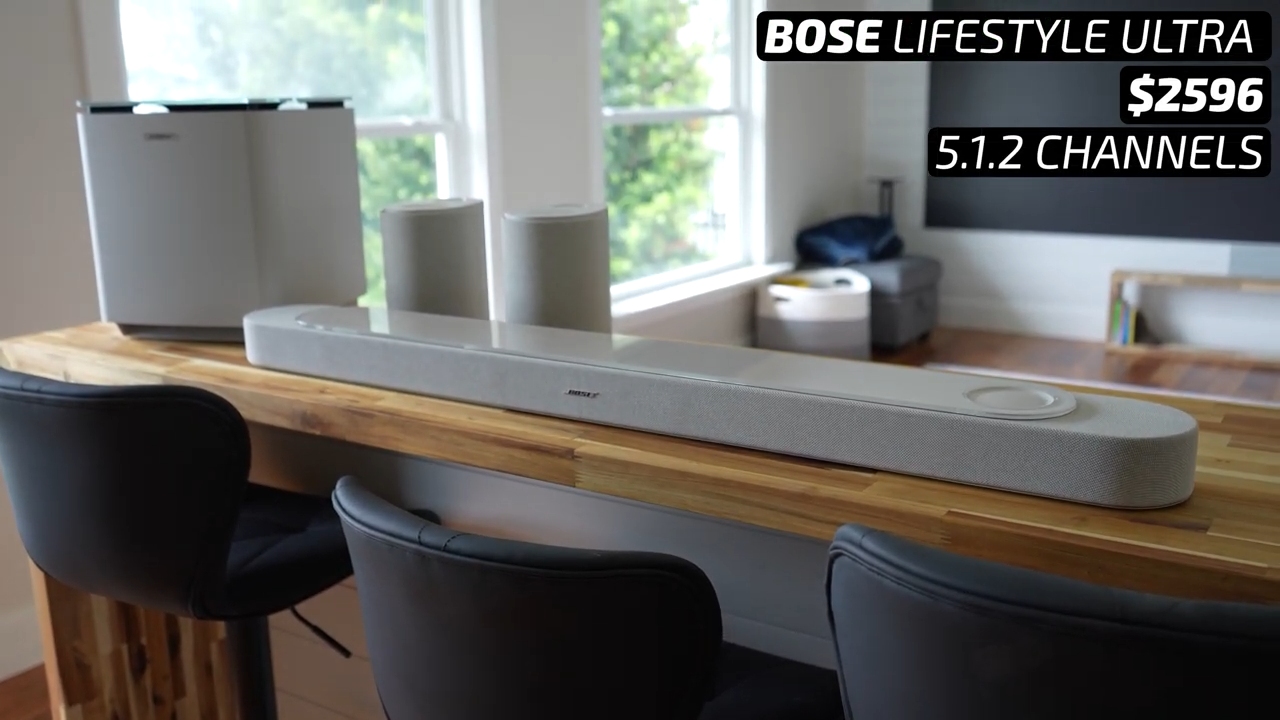
Jumping up significantly in price is the Bose Lifestyle Ultra package, which is the first bespoke system that consists of the $1099 Bose Lifestyle Ultra soundbar, two Lifestyle Ultra speakers at $299 each, and the Lifestyle Ultra subwoofer for $899, resulting in a 5.1.2 system with a grand total price of $2596. The main bar has four front firing full range drivers, two upfiring drivers and a central tweeter and each of the rear speakers has a single upfiring driver and a woofer tweeter combo for the ear level channel.
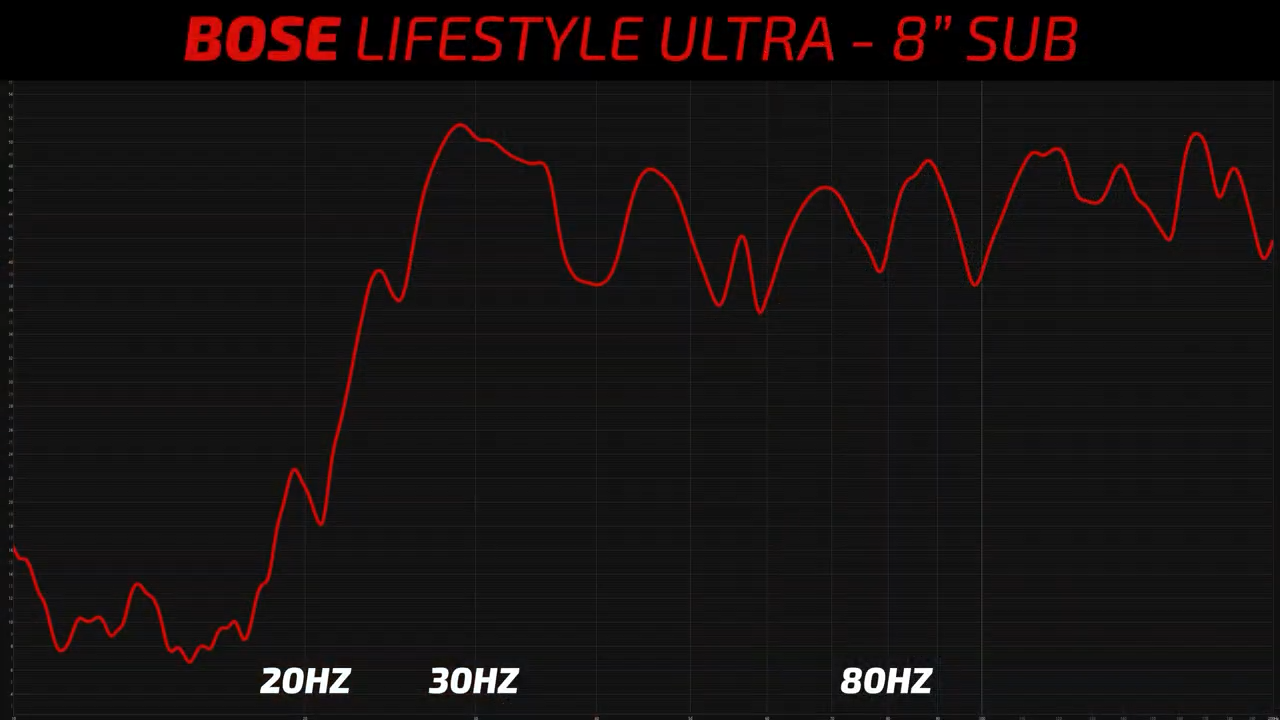
The Lifestyle Ultra subwoofer uses a single 8” upfiring driver and has a similar bass response to the Samsung, coming in around 24Hz, but unlike the Samsung subwoofer the Bose doesn’t have that steep dropoff at 100Hz, and is much more powerful from around 25Hz to 35Hz which is where the room shaking bass usually lives, but it’s not quite low enough to feel it in your chest.
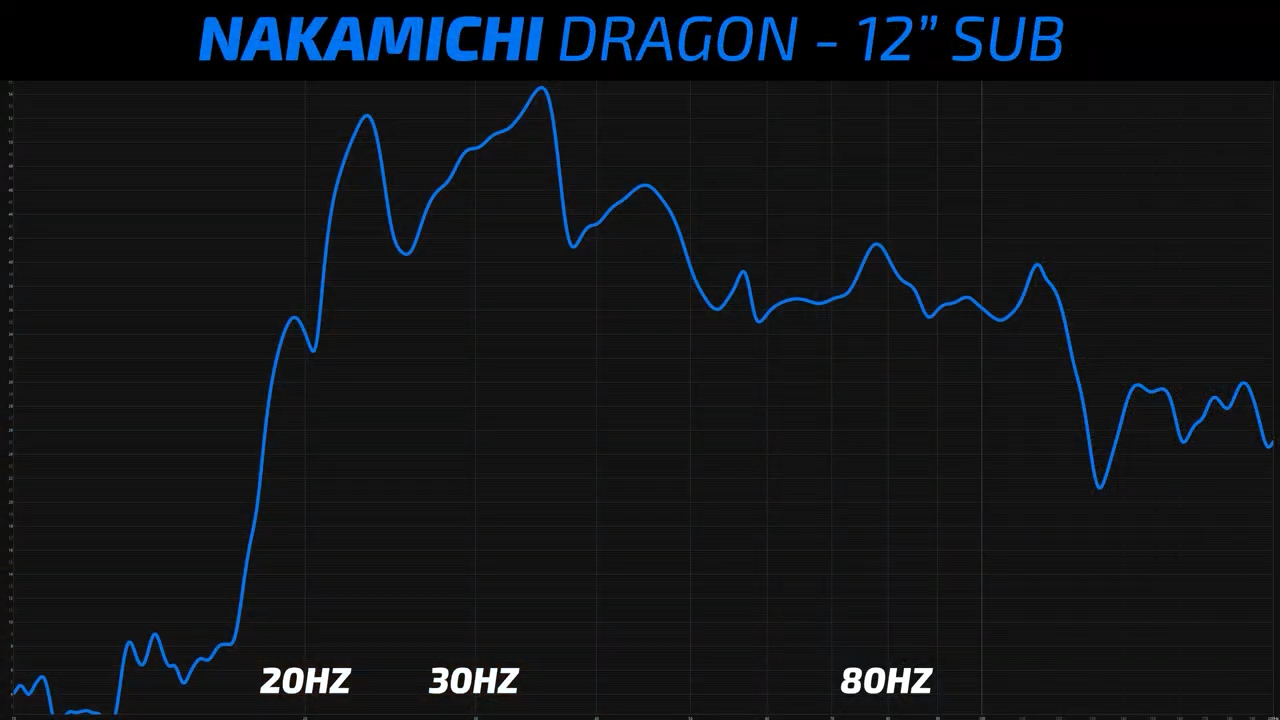
If you want to feel the bass, you’ll need to shell out $2877 to get the Nakamichi Dragon with the single 12” Sub. Compared to the other systems, this thing is absolutely massive and pumps out 11.1.6 surround sound with a comparatively insane driver count with 14 woofers plus three AMT style tweeters in the main bar, two massive surrounds with a woofer tweeter combo for each of the separate side and rear surround channels, and an aimable upfiring height channel.
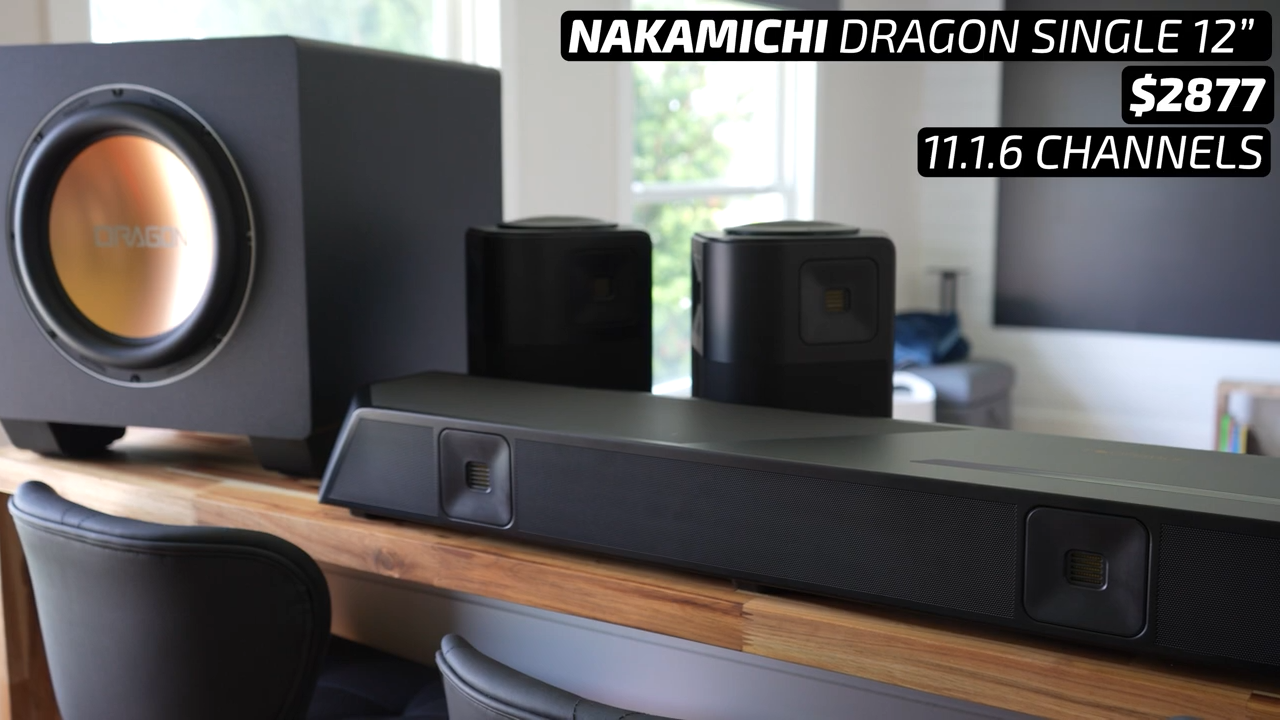
Like the rest of the system, the Dragon’s 12” sub is massive and heavy, even compared to my 12” ELAC sub, and while it has similar sound pressure to the Ultimea 10” around 18Hz, it quickly comes into its power band around 22Hz and the Dragon’s 12” sub constantly reminds you that it’s there providing room shaking bass that you can definitely feel in your chest.
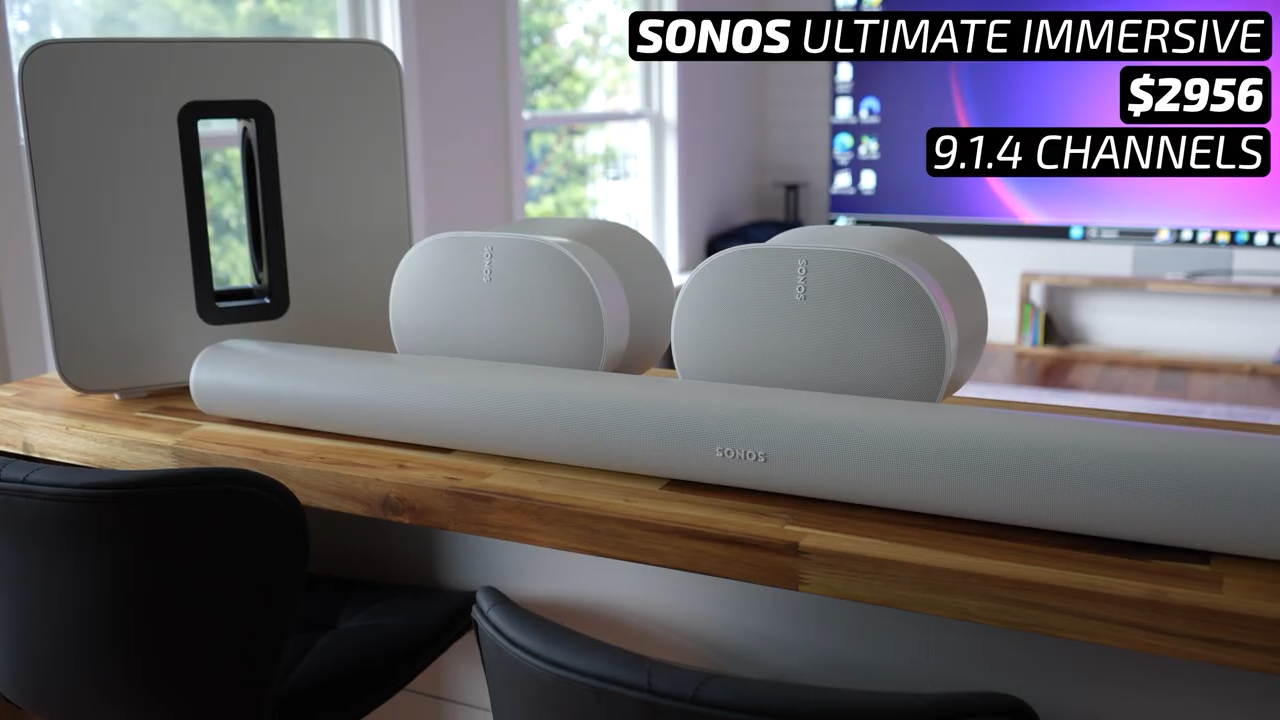
Next, completely shifting gears away from a Dragon style system, the Sonos Ultimate Immersive package is another bespoke set that consists of the $1099 Sonos Arc Ultra soundbar, two Era 300 wireless rears for $958, and the $899 Sonos Sub 4, for a grand total of $2956 for this technically 9.1.4 system, but those channels are mostly made through fancy DSP and beamforming rather than discrete drivers like the Dragon.
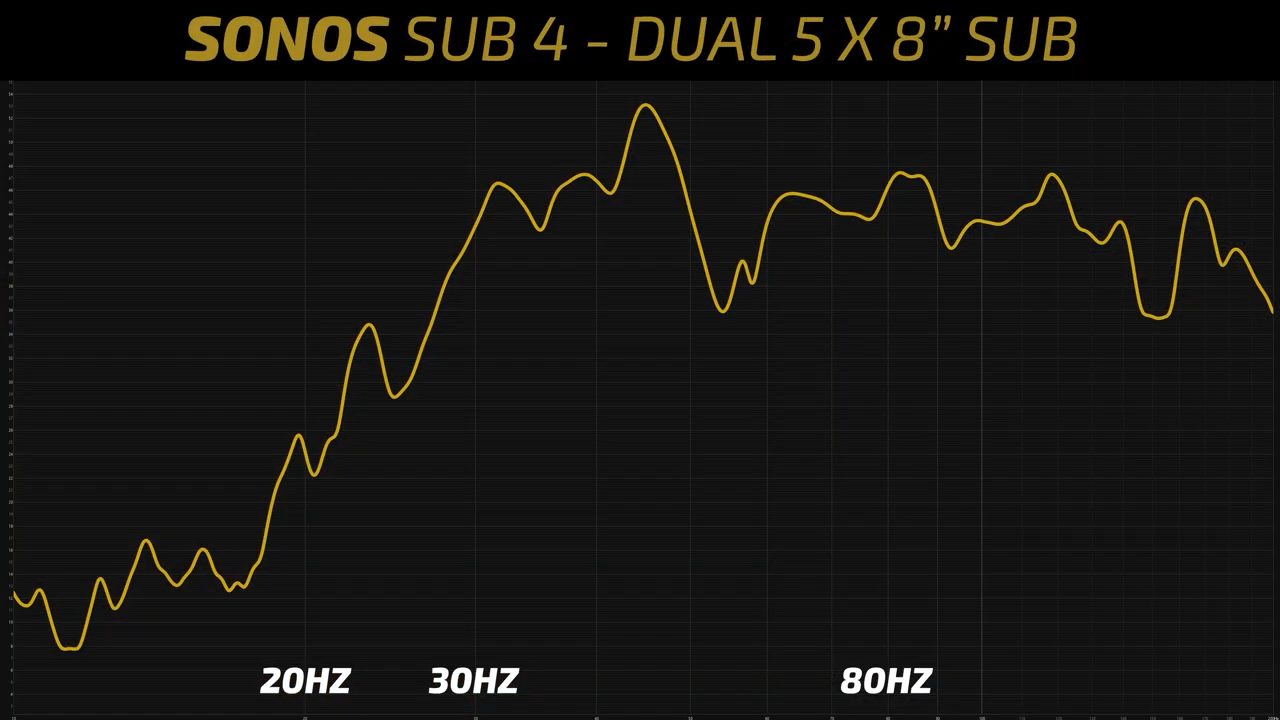
The dual 5″ × 8″ elliptical subwoofer drivers are very similar in bass response to the Samsung from 20Hz to 30Hz, but comes in a bit stronger above 30Hz, which again isn’t going to shake the room or vibrate your bones, but the Sub 4 is incredibly clean throughout its frequency range, even at high volumes, and doesn’t have that same steep dropoff as the Samsung at 100Hz.
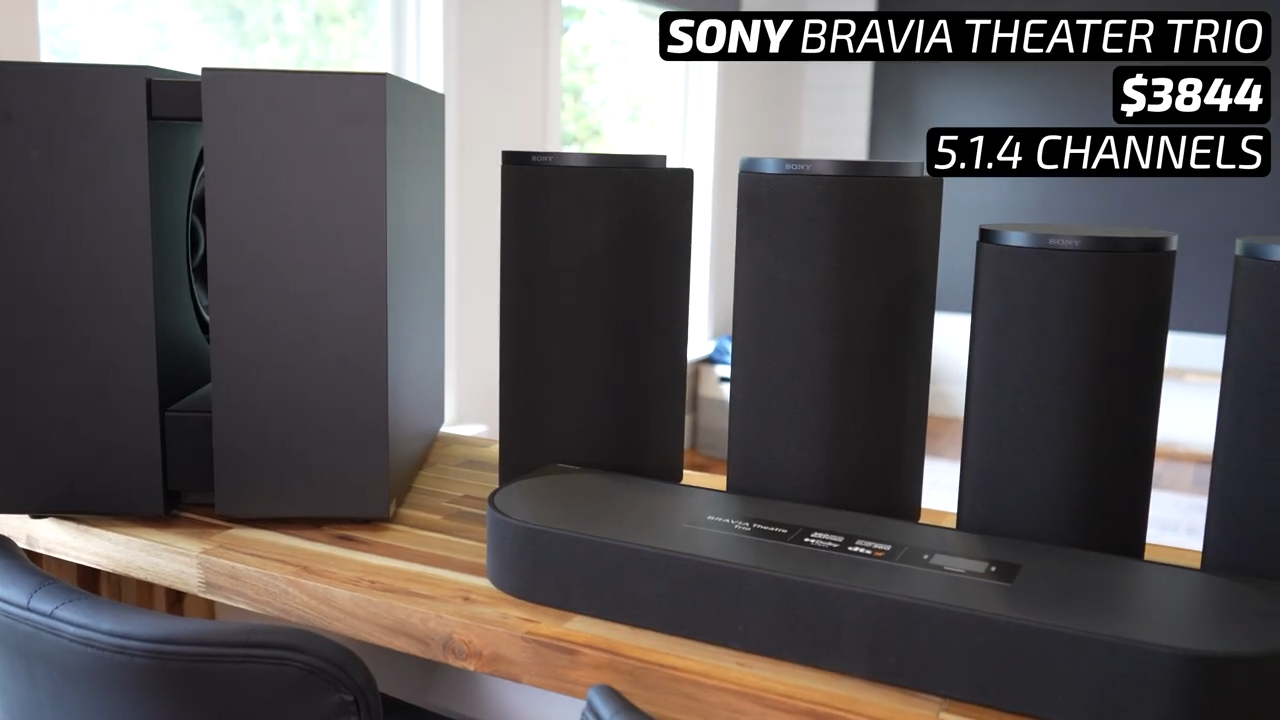
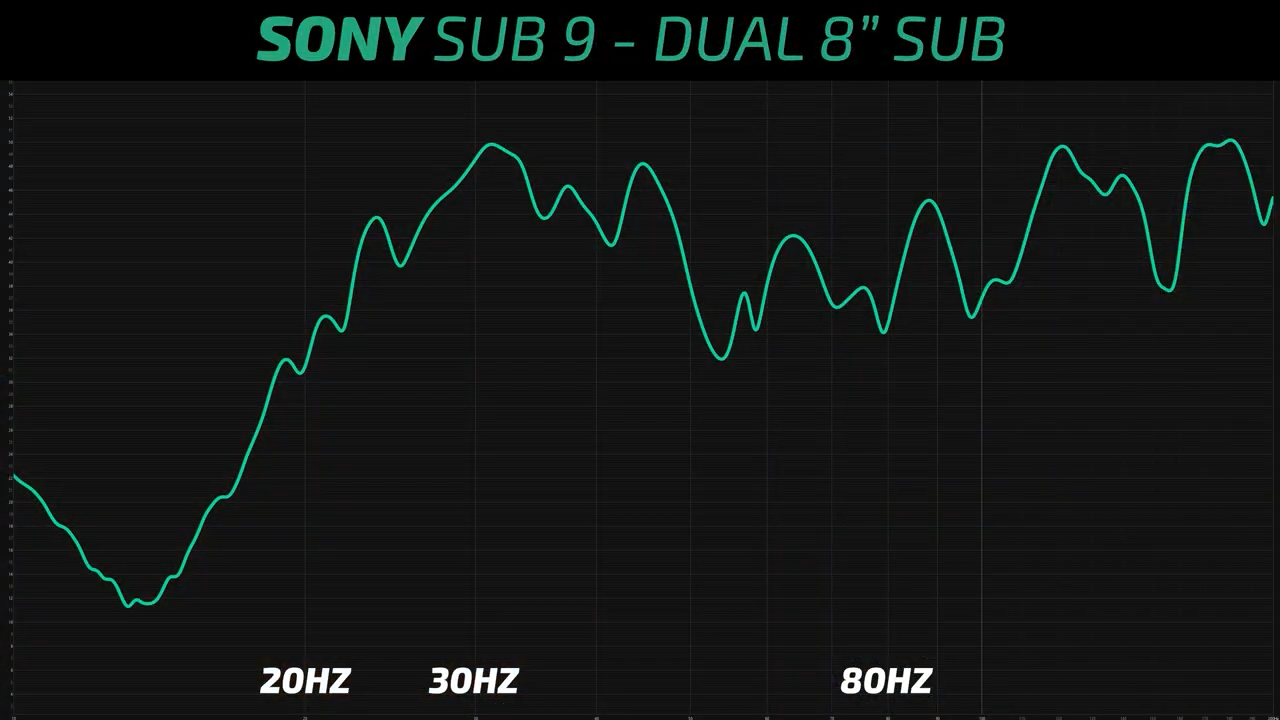
The last and most expensive soundbar system in this video is the new Sony Bravia Trio which costs an eye watering $2198 for just the soundbar and left and right satellites. To complete the setup, you’ll also need the $748 Sony Rear 9s and I paired it with the new, top of the line, Sony Sub 9 for $898 for a grand total of $3844 for a, wait for it, 5.1.4 system. But unlike the Sonos, those channels are actually based on discrete drivers rather than fancy DSP, and each of the corner speakers has a woofer tweeter combo for ear level and an upfiring full range driver, while the center channel has two woofers and a single tweeter.
The Sony Sub 9 has dual 8” drivers in a sealed enclosure, and for 8” drivers they performed extremely well. However, the single 10” sub from the Ultimea had the same, if not slightly better bass response, and the entire Ultimea system is only $100 more than just the Sub 9.
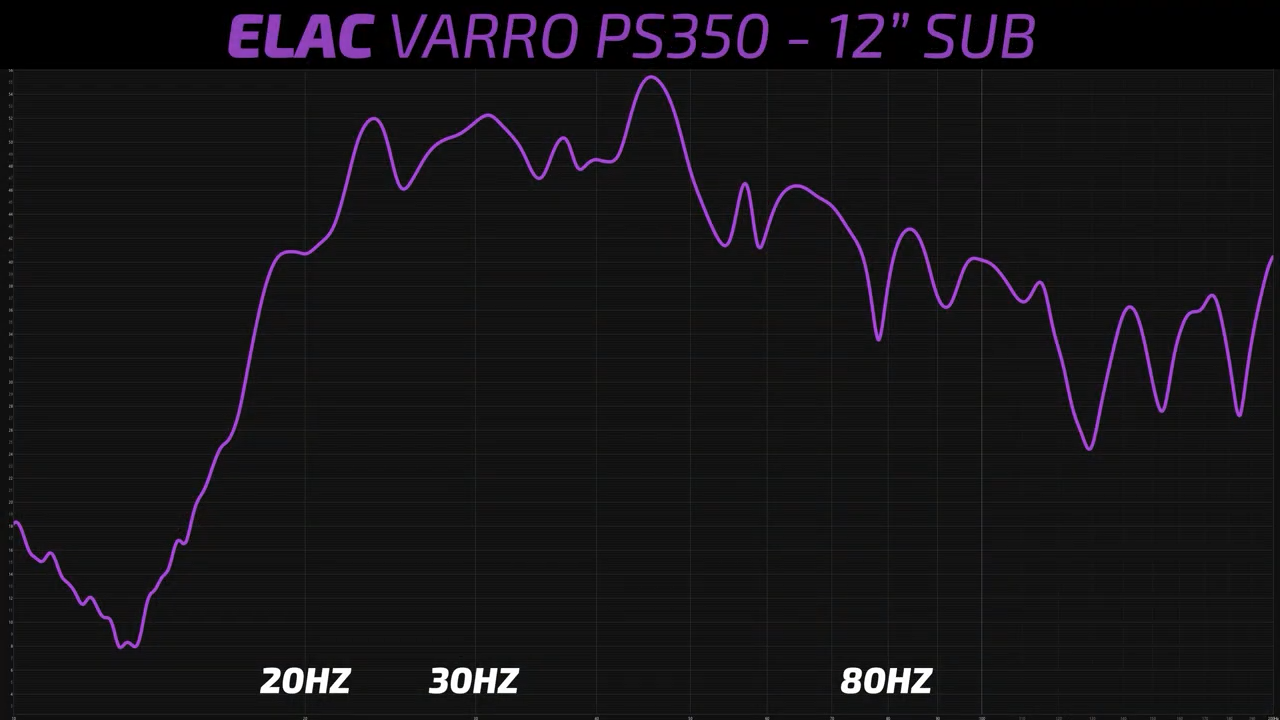
As a baseline reference, I’ll be comparing all the systems to my 5.1.4 home theater system using ELAC’s Debut 2 and 3 series speakers and a Yamaha A6A AVR, which including speaker wire costs a little more than $6000 but has five completely discrete speaker sets at ear level and four in the ceiling each with at least one woofer and one tweeter. The 12” ELAC Varro PS350 subwoofer reaches a bit lower than the Dragon’s 12” sub, with real noticeable sound pressure as low as 17Hz based on my measurements, despite being listed at 21Hz.
Vocal Clarity Tests
Next, getting into testing, and starting with vocal clarity, the number one reason why people decide to buy a soundbar is because they have trouble understanding the vocal track coming from their TV’s built in speakers. For this test, my first order of business was to figure out which sound mode on each setup provided the highest vocal clarity without compromising the rest of the audio track.
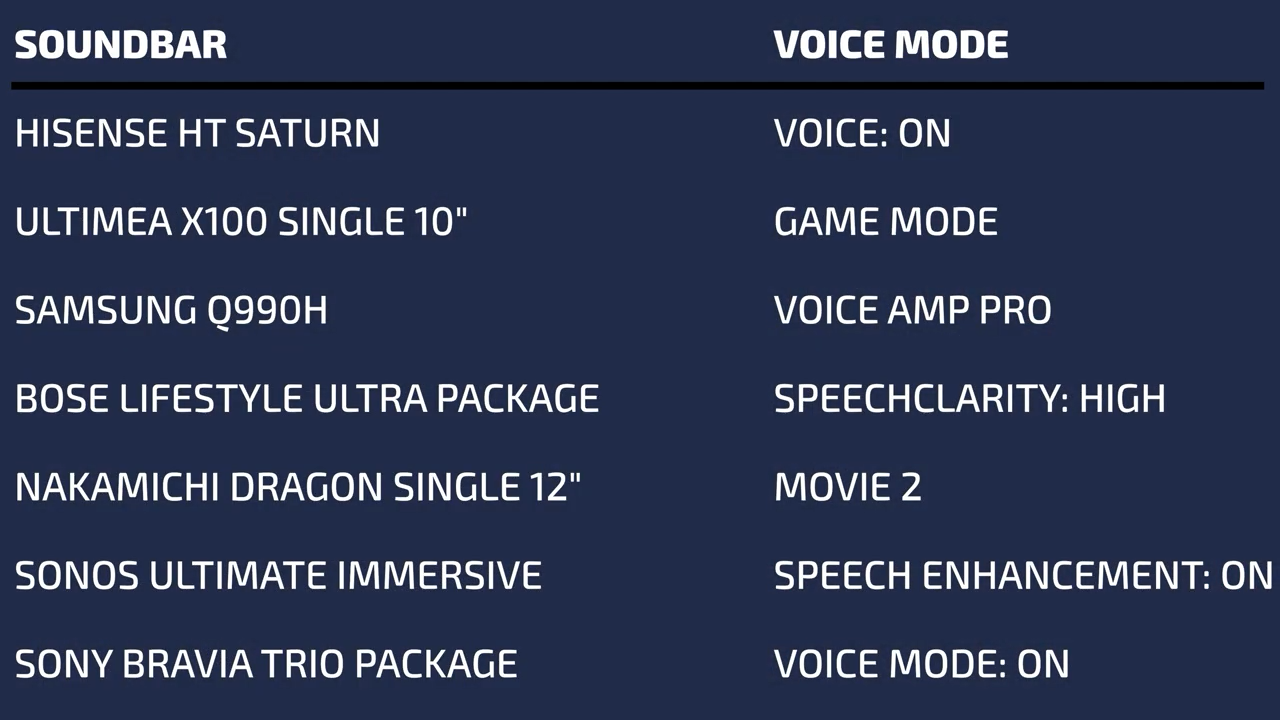
Then, I recorded each soundbar from my main listening position using my Tascam X8 Stereo microphone and put them head-to-head, going from least expensive to most. As with all of the testing footage in this video, you’ll get the most out of it if you listen with a high-quality set of headphones.
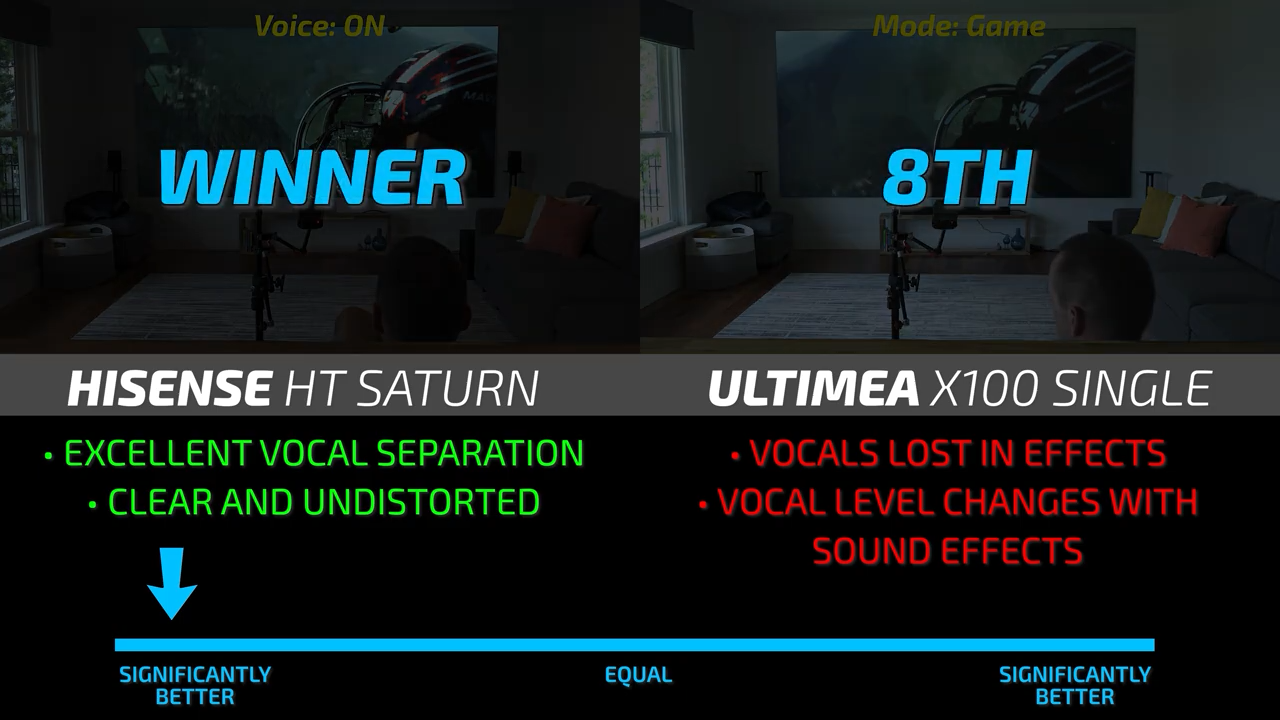
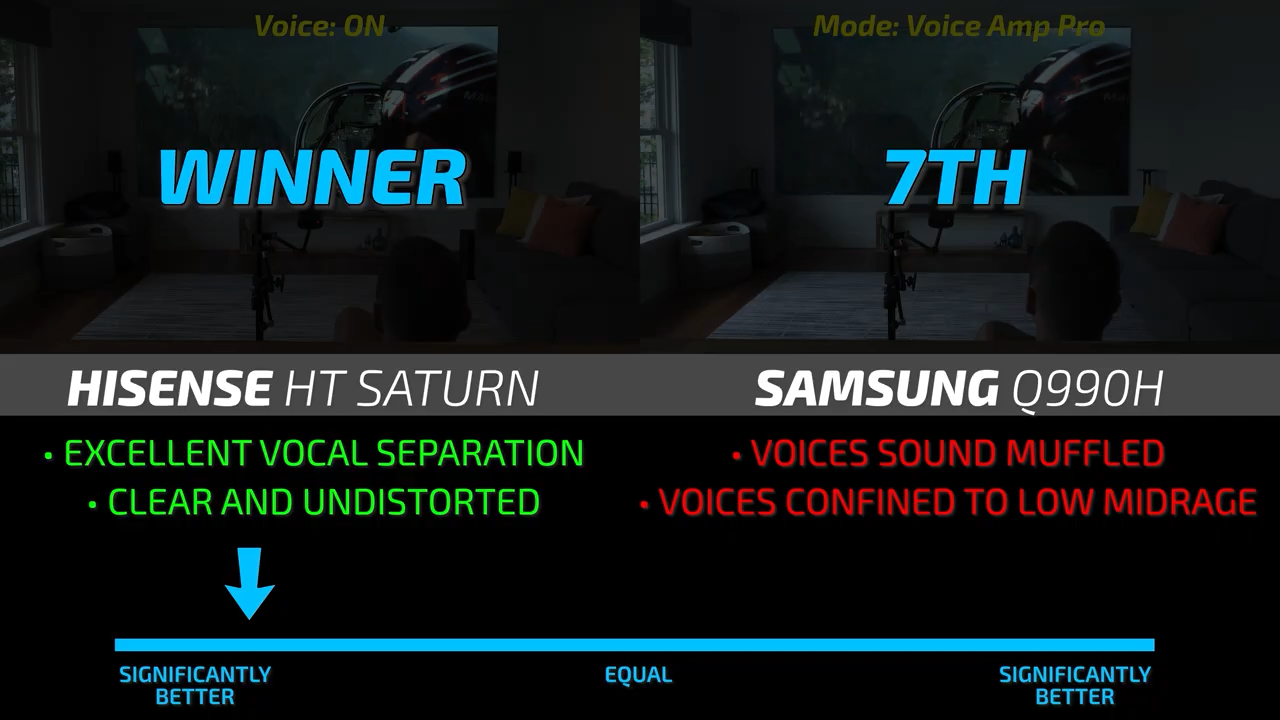
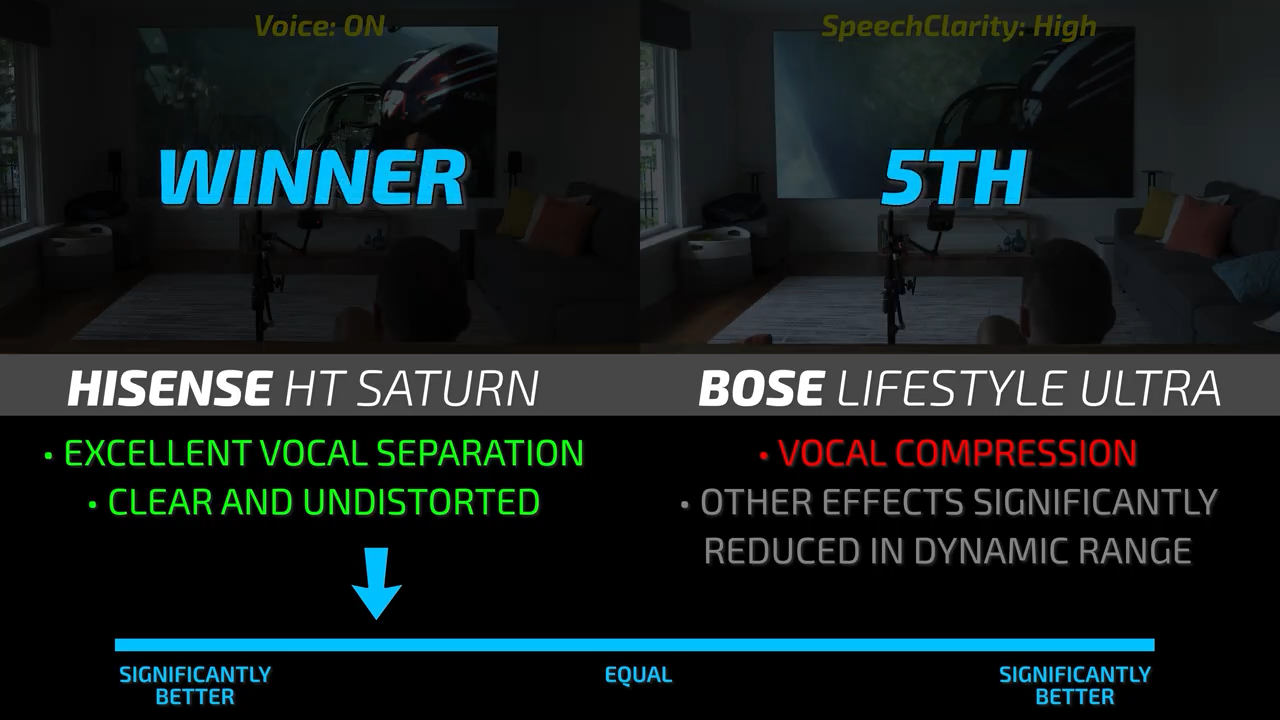
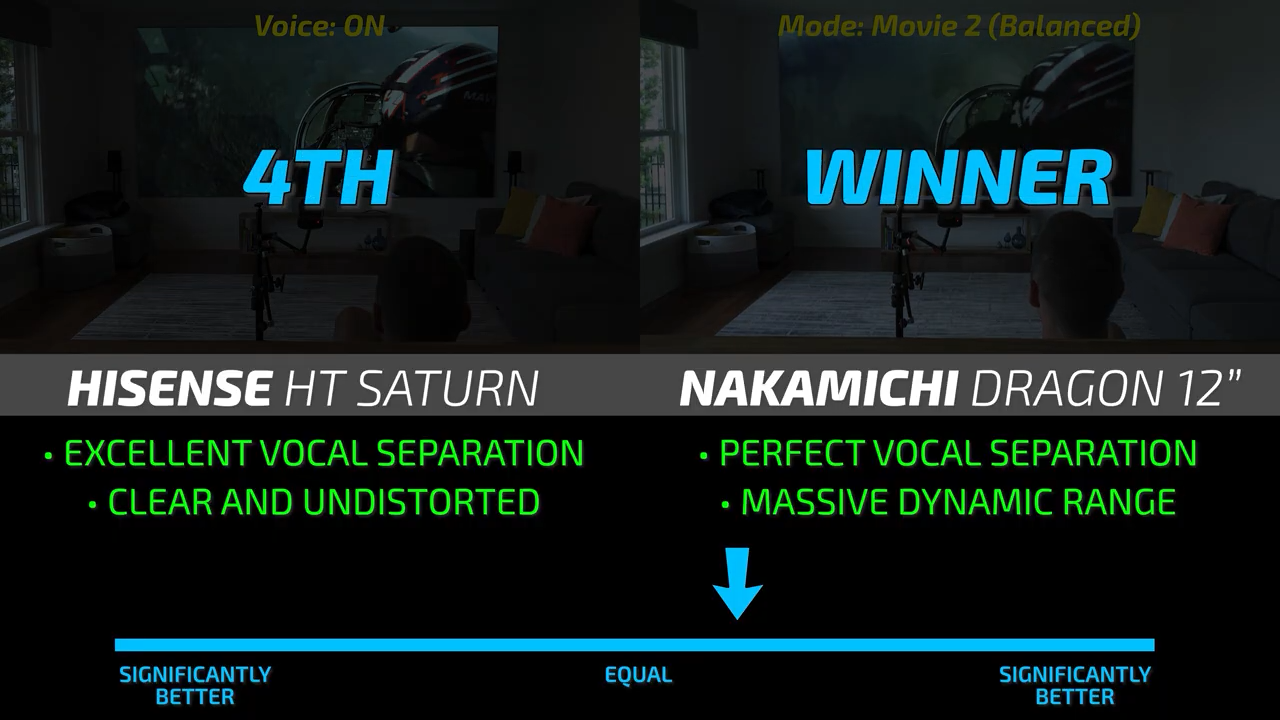
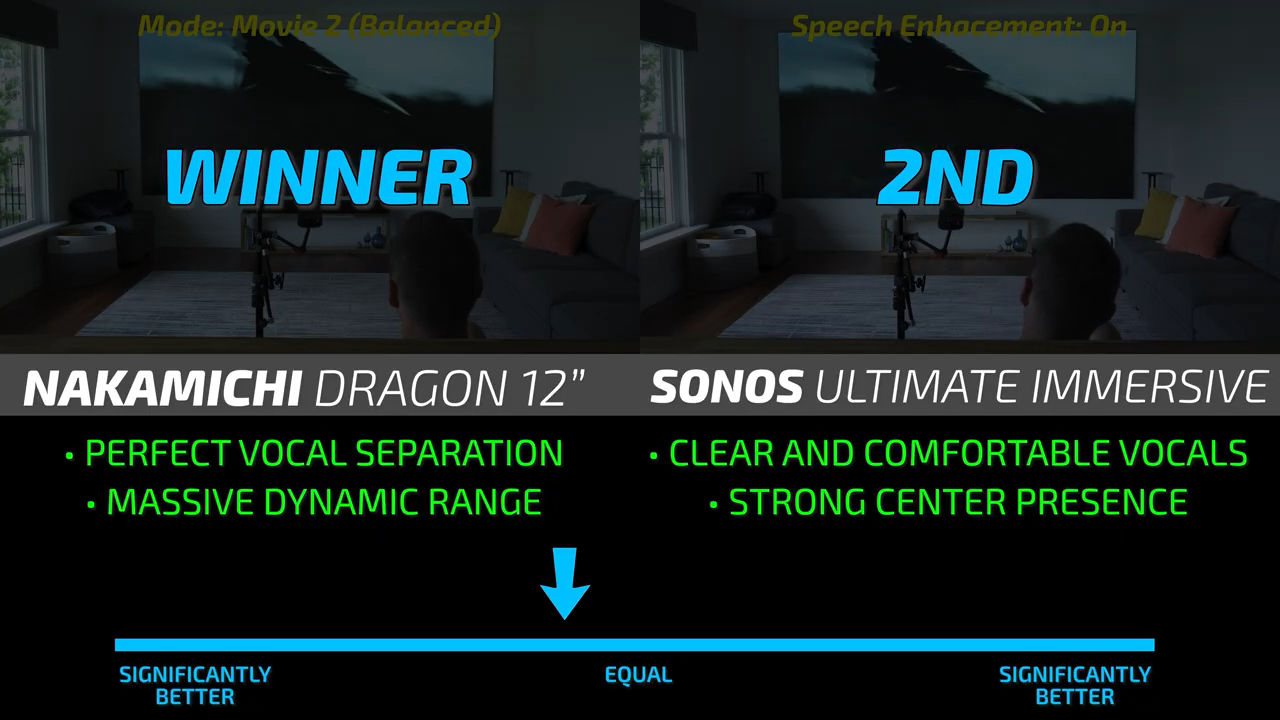
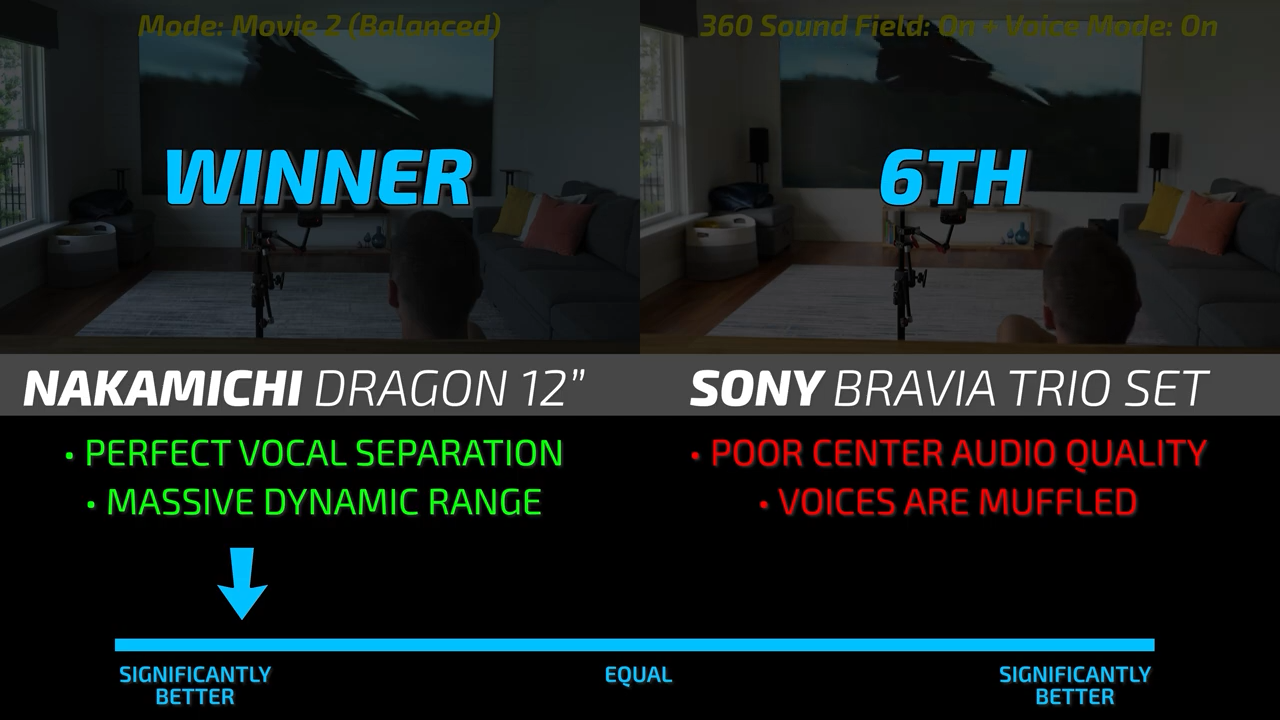
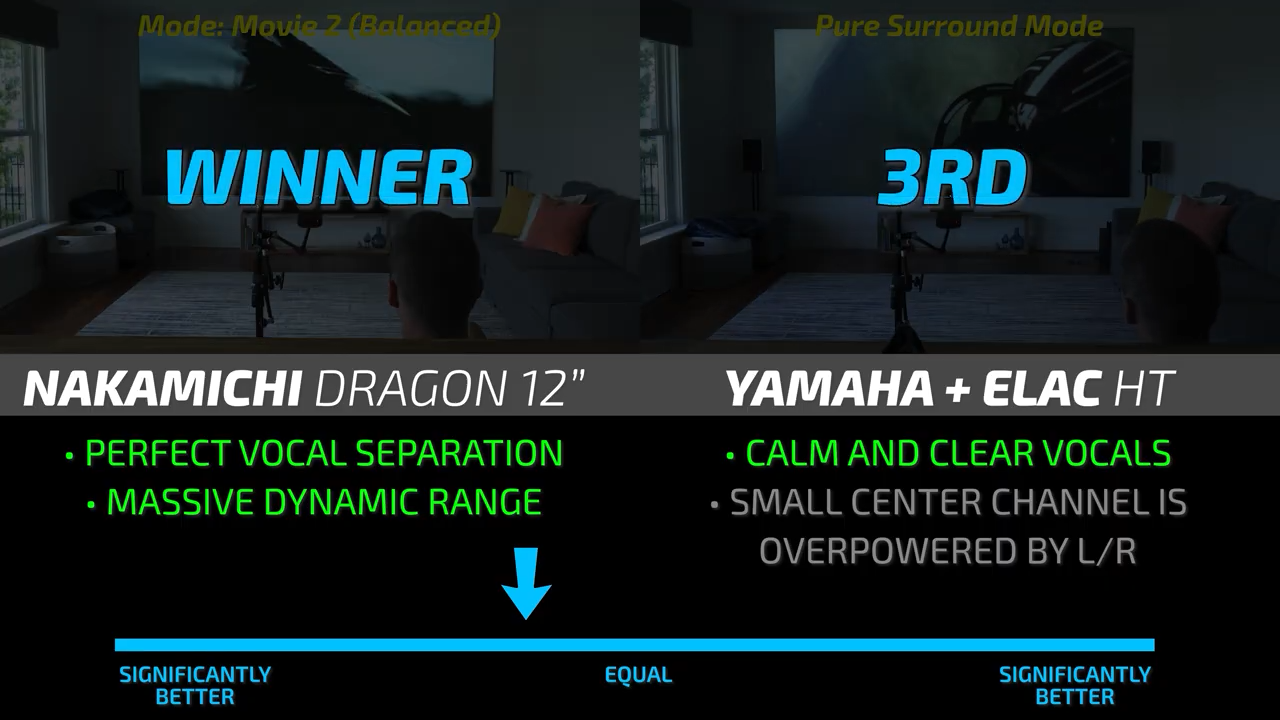
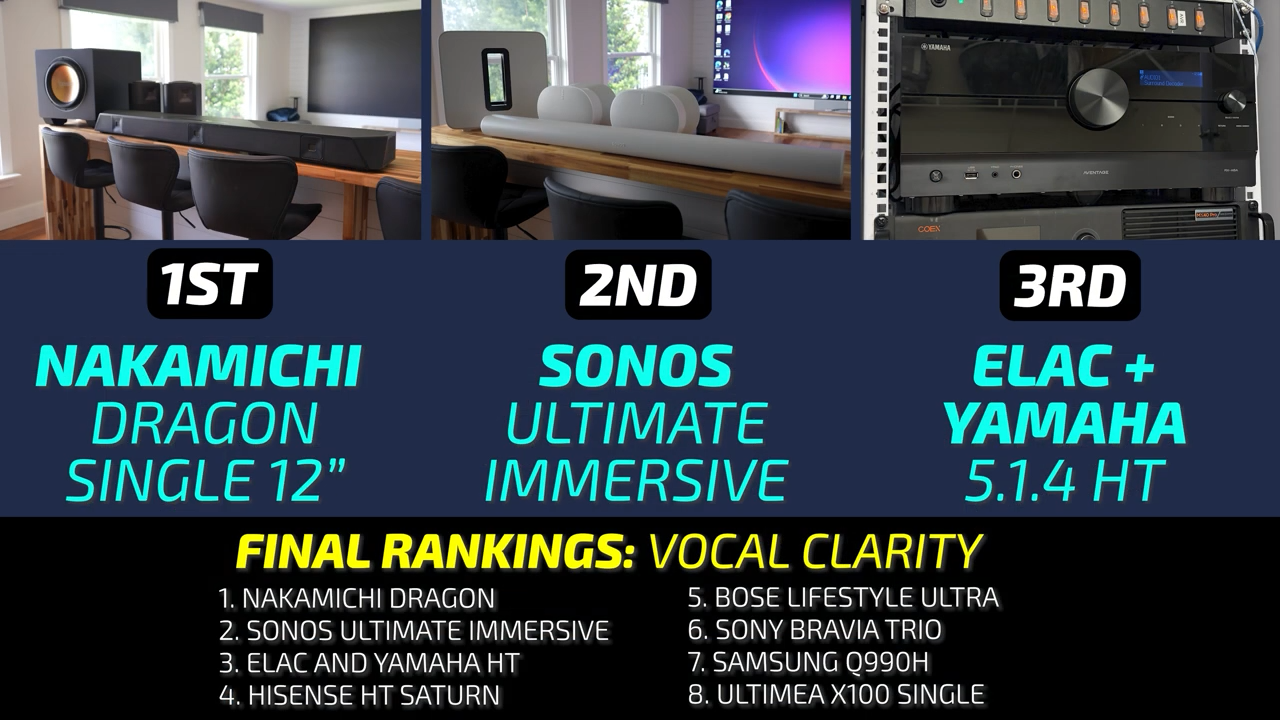
Here are the final rankings for vocal clarity, with the Nakamichi’s strong center presence and vocal separation putting it into first place, and Sonos’s speech enhancement providing an excellent boost to the vocal track without compromising the rest of the audio. But I should also mention that if you’re just looking to understand dialog and you don’t care what the rest of the audio sounds like, activating Voice Amp Pro and Speech Enhancement on the Samsung Q990H makes it sound like everyone is shouting at you. Voice mode on the Ultimea X100 muffles the entire audio track except for dialog.
Front Sound Stage Tests
Next, one of the areas where soundbars can typically struggle is with the width of the front sound stage or the ability to make it appear as if sound is coming from the entire front of the room instead of just the soundbar. So, in these clips, try to focus on the movement of sound from left to right as well as the clarity when passing through center.
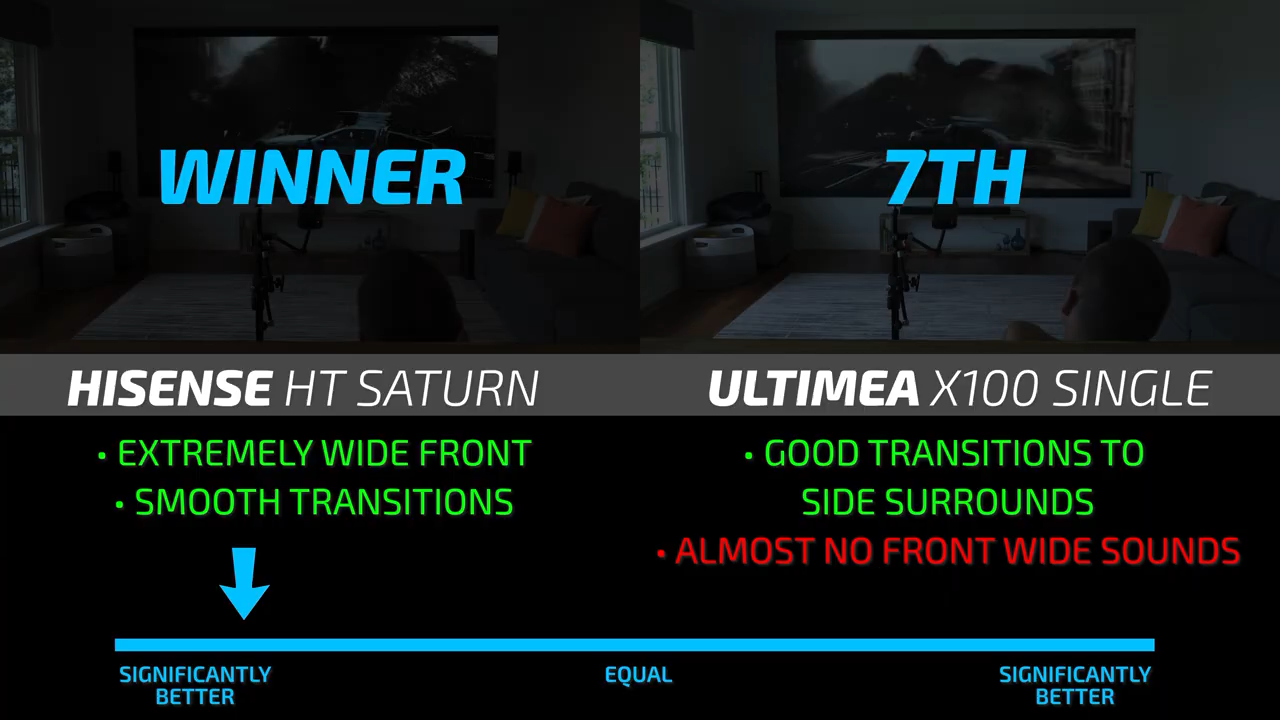
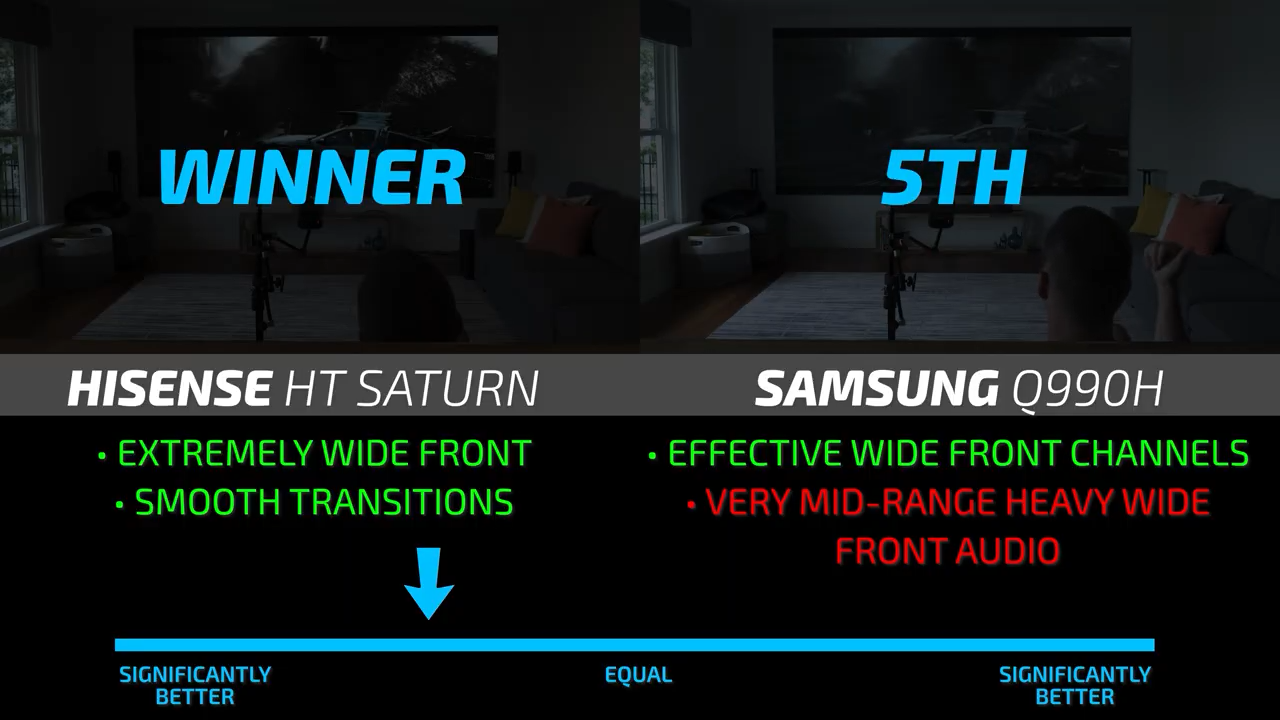
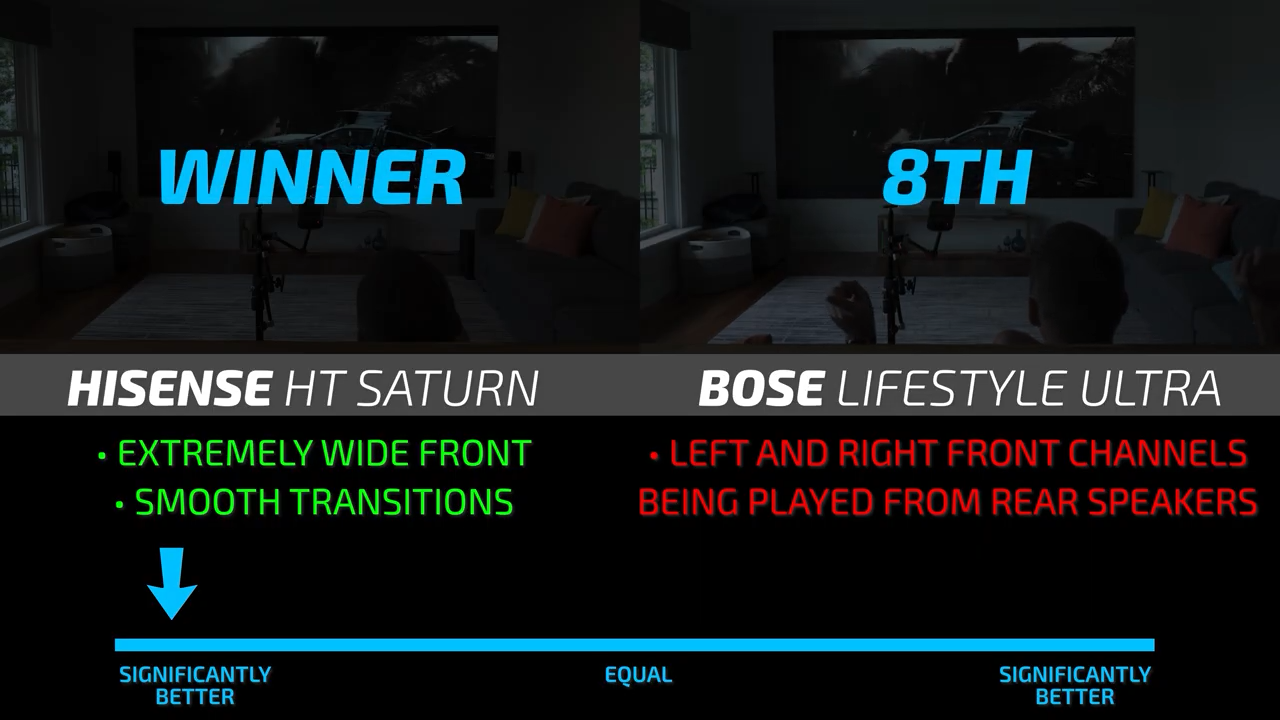
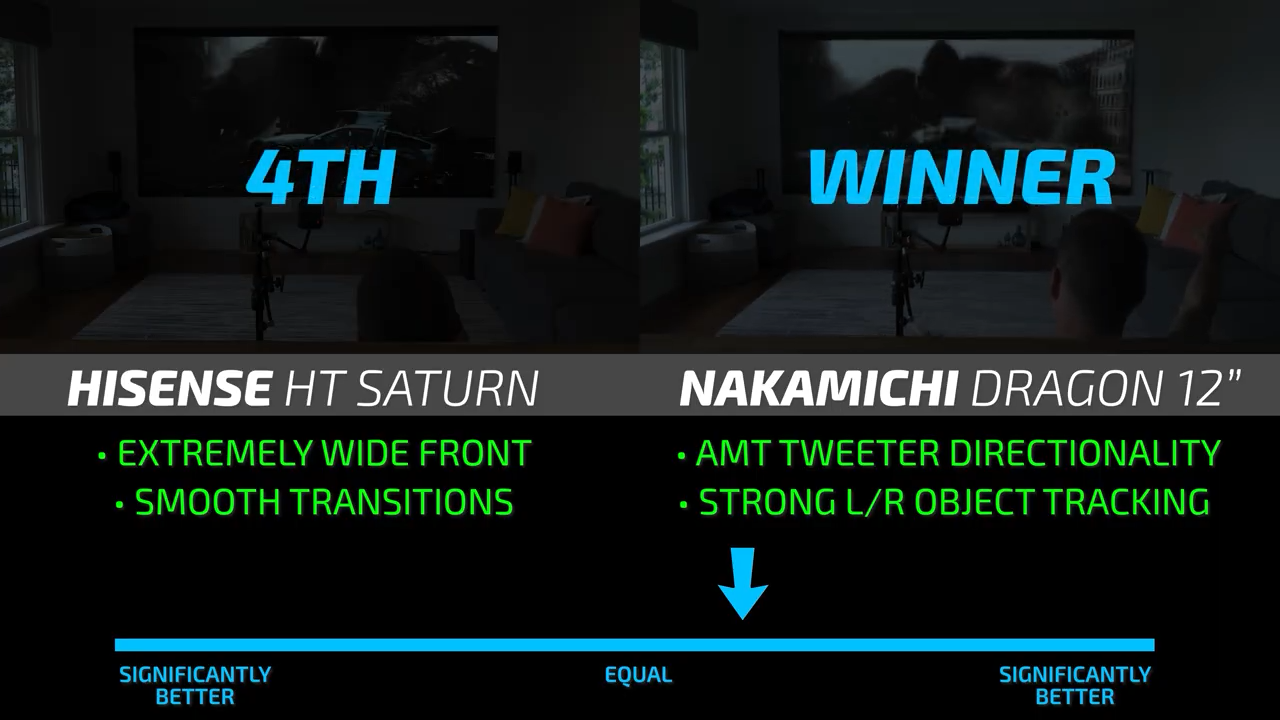
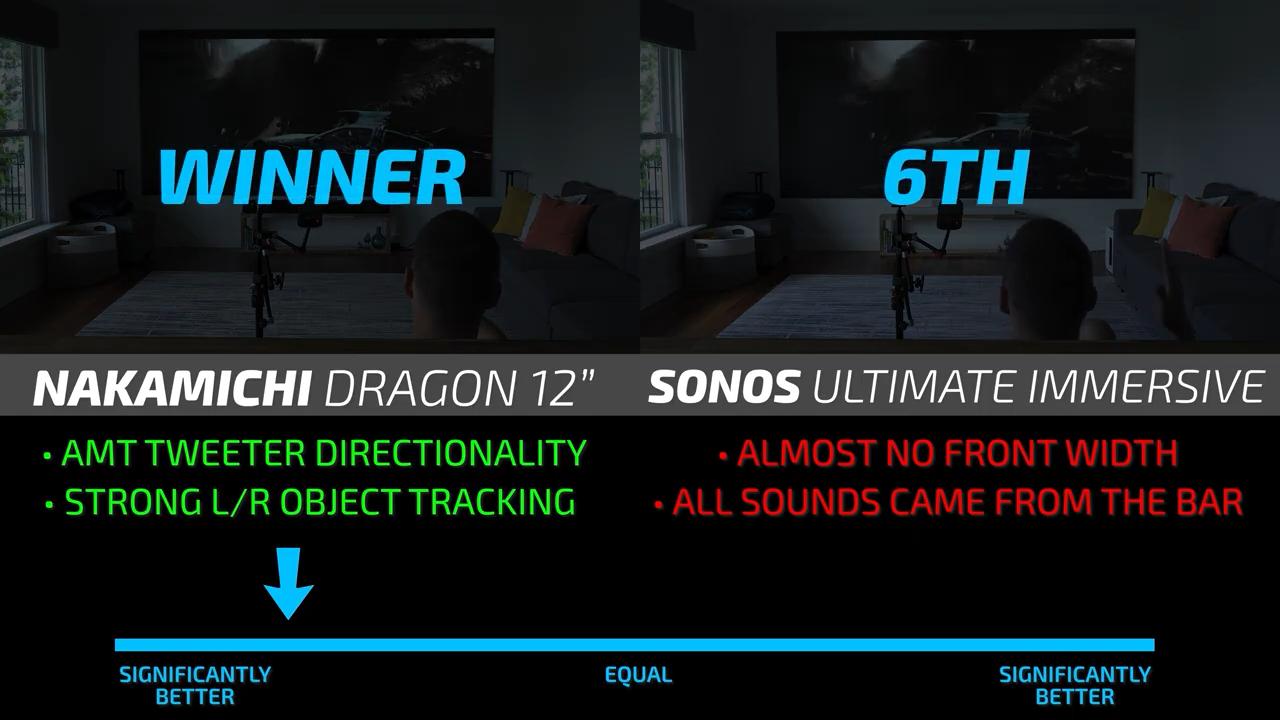
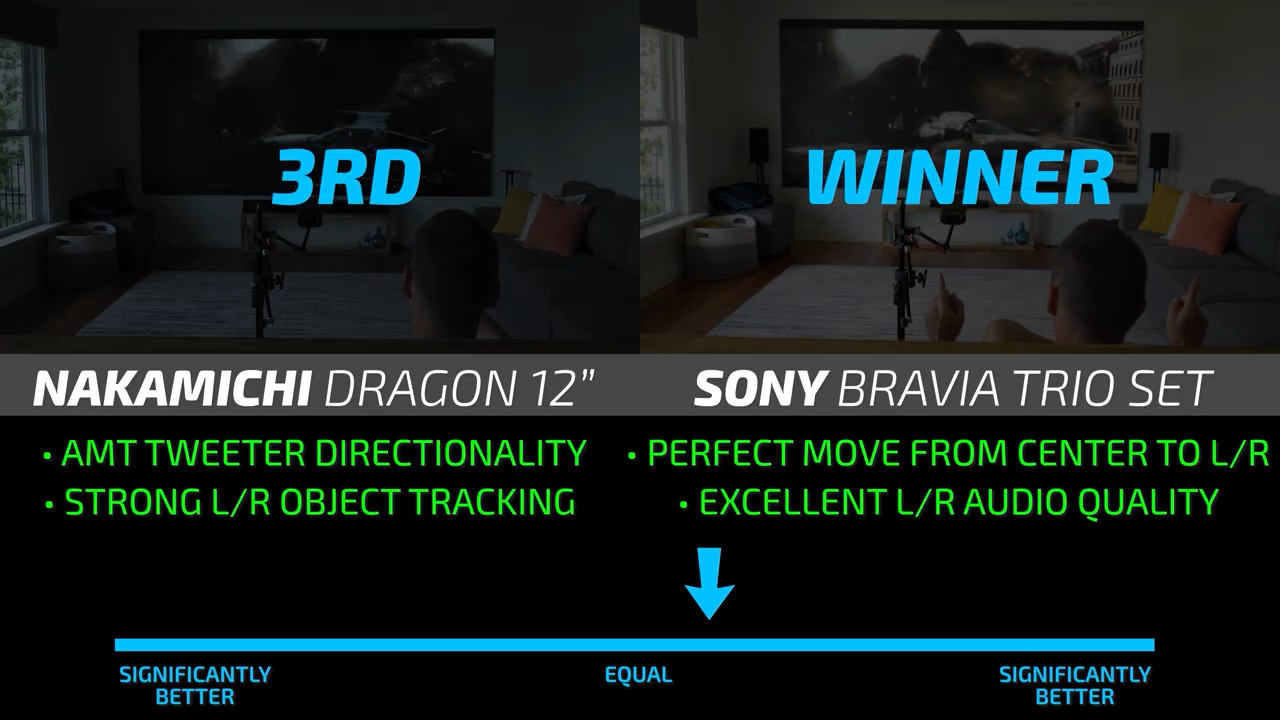
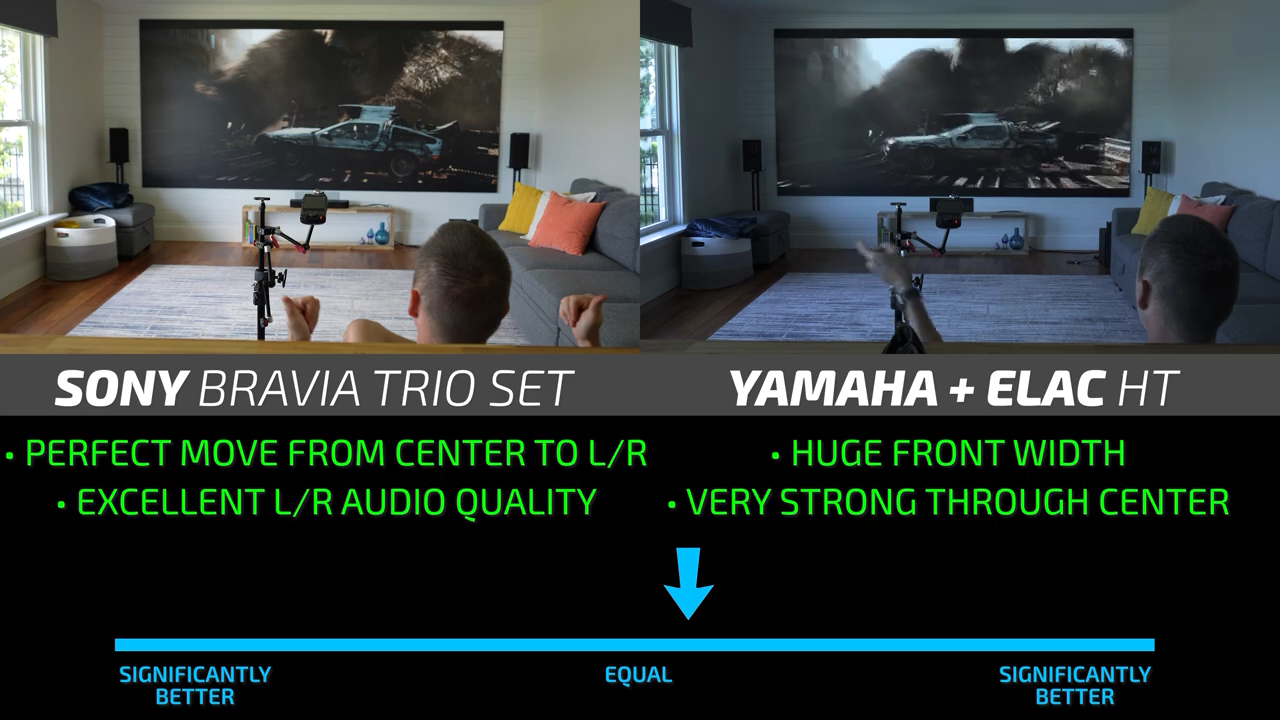
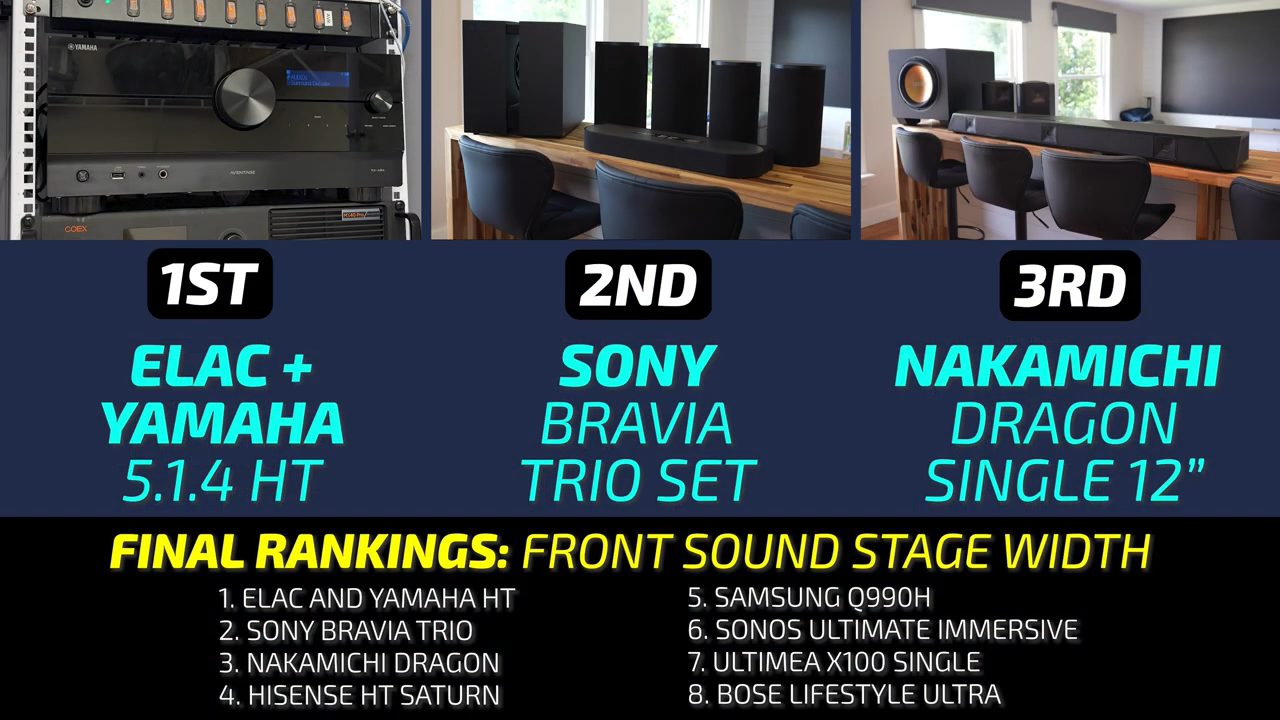
Here are the final rankings for front sound stage width and separation with my ELAC left center right configuration working exactly as it should, and unsurprisingly the Sony Bravia Trio, which is essentially an LCR system, also performed extremely well finishing second. The Nakamichi Dragon performed surprisingly well given that it doesn’t have separate speakers in the corner, but the overall width of the Dragon and side firing channels still make for a very convincing front width. The strangest behavior came from the Bose system that seemed to be playing some of the left and right front audio through the left and right rear speakers which is not ideal.
Surround Effects Tests
Next, looking at surround effects, these are the ear level effects that should come from the side of the room and completely behind you. No matter how I record the audio, YouTube is going to play it back for you in stereo anyway, so for this test I set up two microphones behind the main listening position pointed at the rear speakers, and you’ll hear only the audio from those microphones.
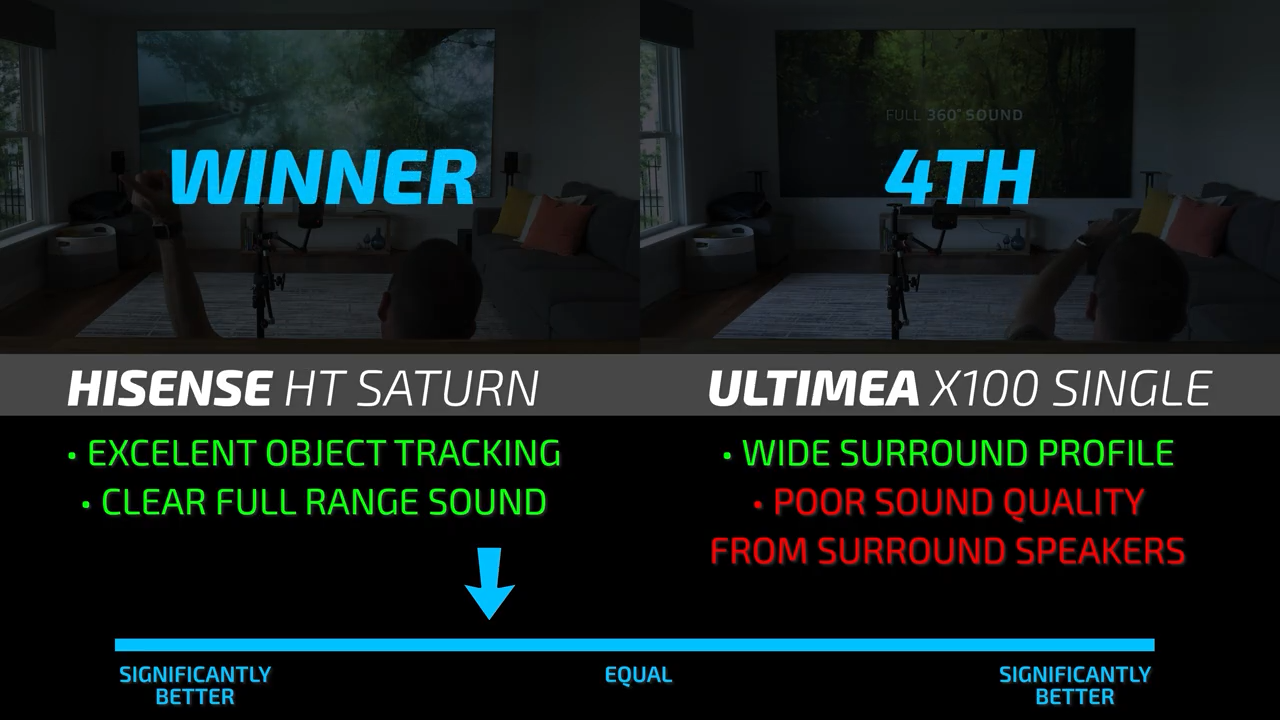
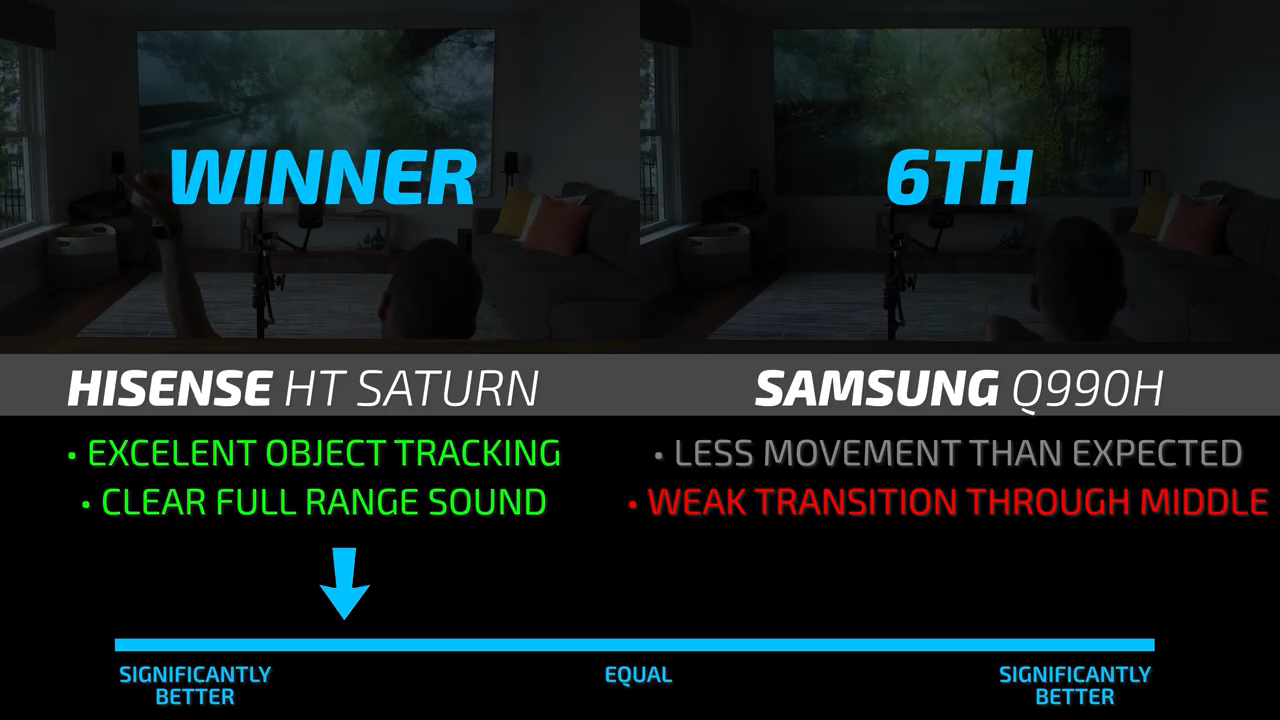
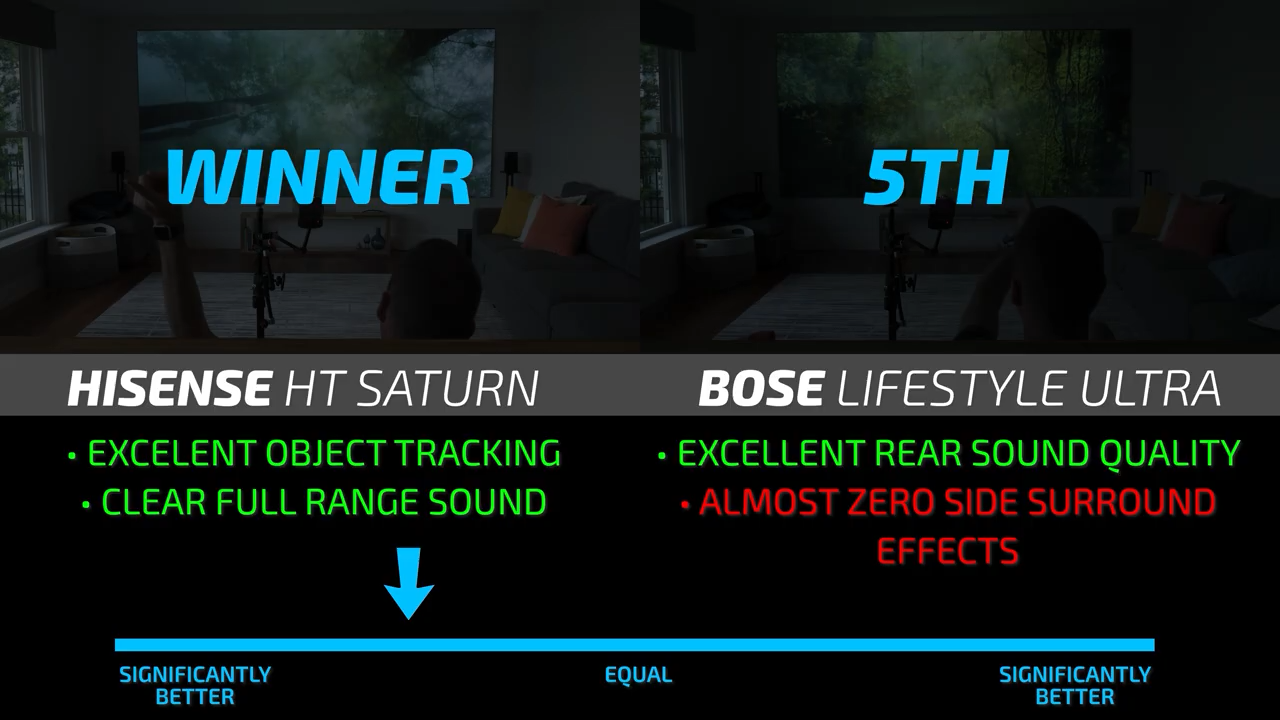
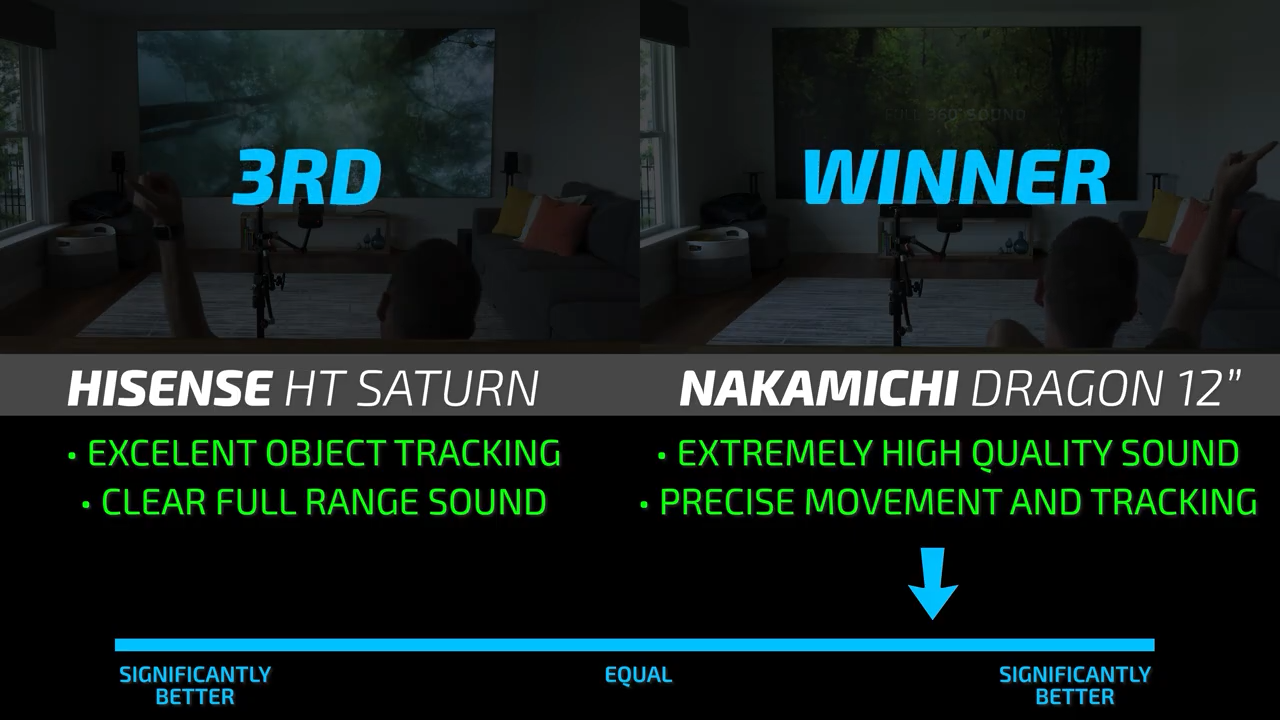
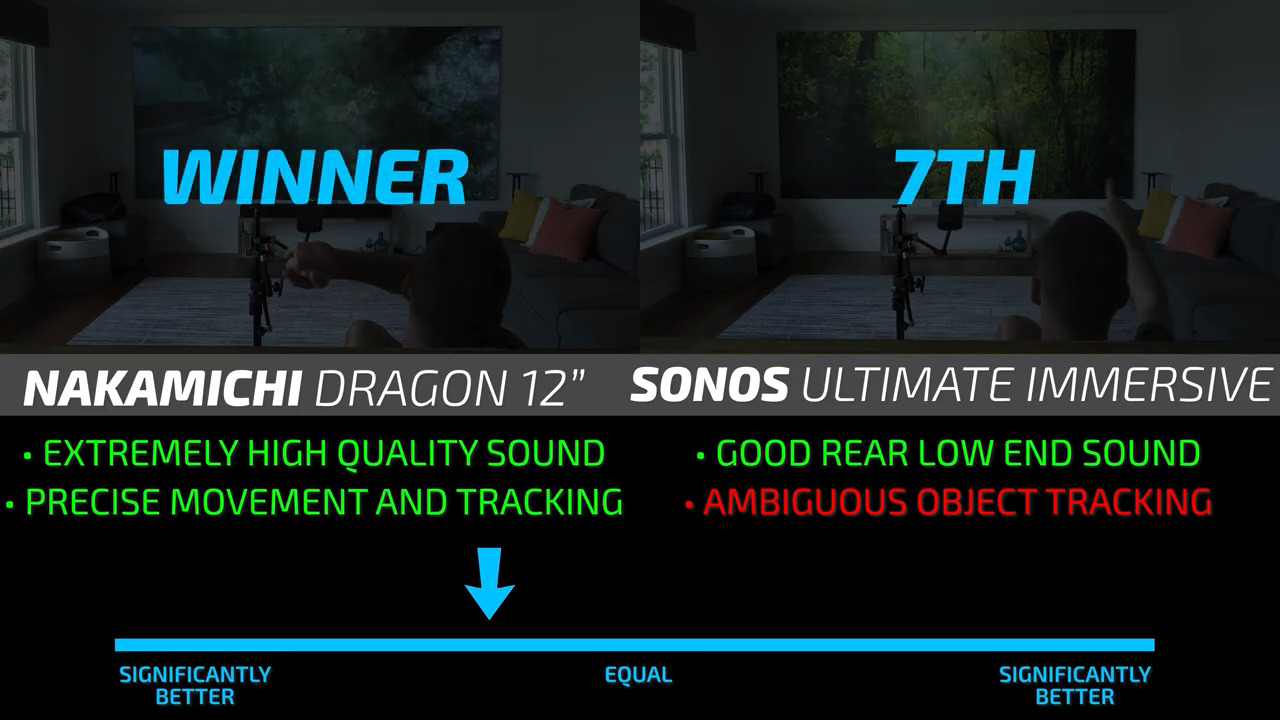
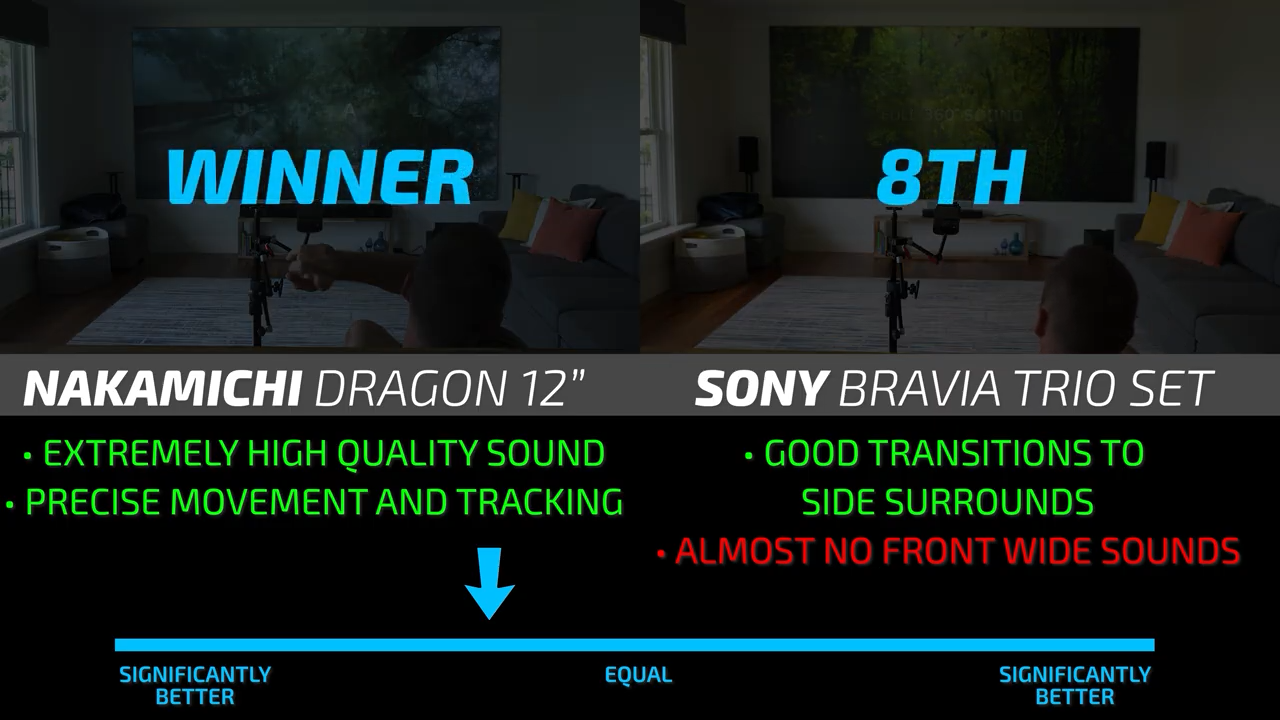
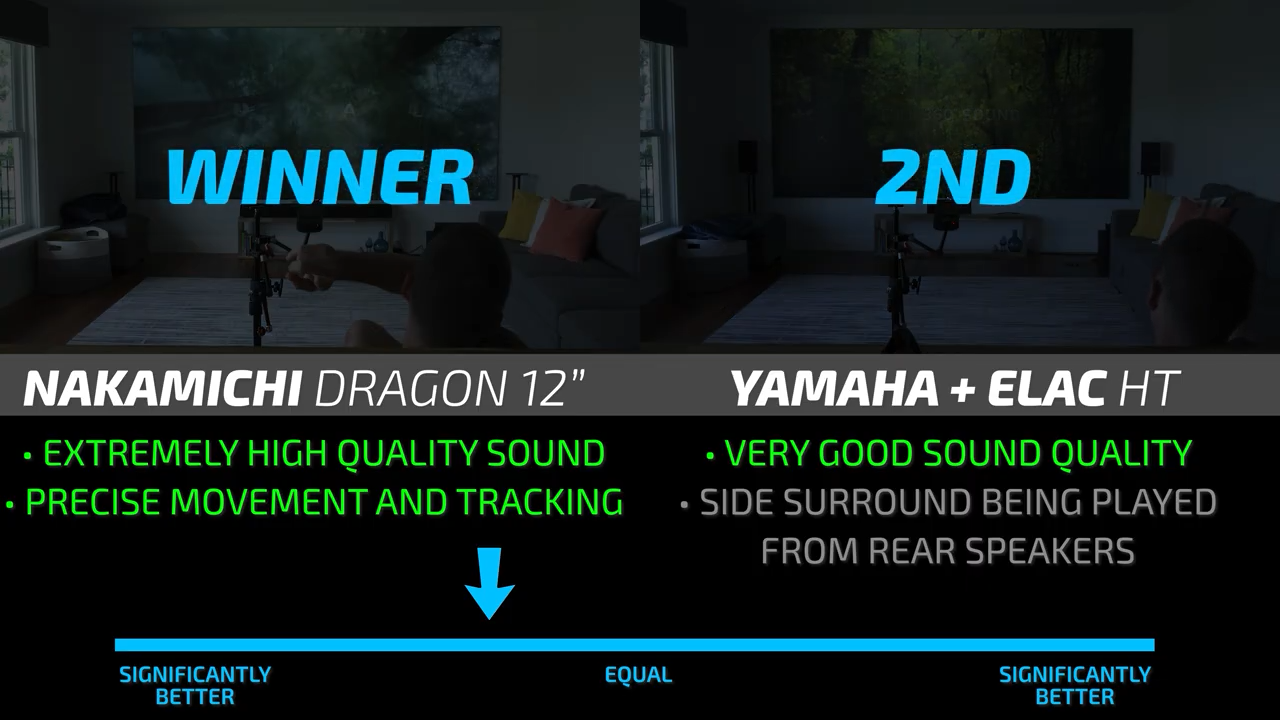
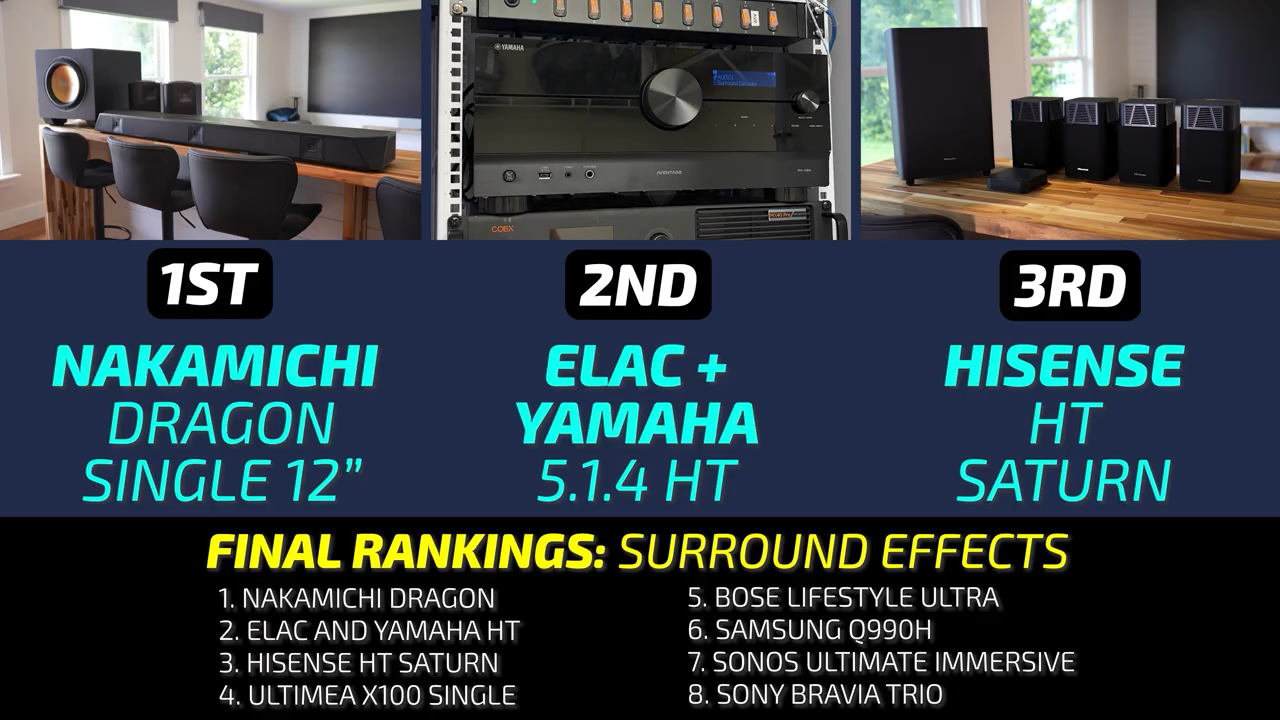
Here are the final rankings for surround effects, with the Nakamichi Dragon beating out my ELAC system using its side firing woofer tweeter combos. I had expected the Ultimea X100 to do a little better here since it has separate speakers for the rear and side surrounds, but while the spatial effect was very good, I thought that the sound quality from the satellite speakers was lacking which took away from the overall experience. The surprisingly worst performer for me here was the Sony Bravia Trio with the Rear 9’s and when listening it seemed like sounds were abruptly jumping from one speaker to the other instead of making a gradual transition.
Height Effects Tests
Moving on to height channels, these sound bar systems attempt to make effects come from directly overhead by bouncing sound off the ceiling using upfiring drivers and theoretically based on their specs they should be able to produce two, four, or as many as six distinct height channels. For this test, I used microphones placed roughly at ear level pointed at the ceiling, and in the first clip we’re looking for the missiles to travel overhead from back to front, while in the second clip the sand should travel overhead from front to back.
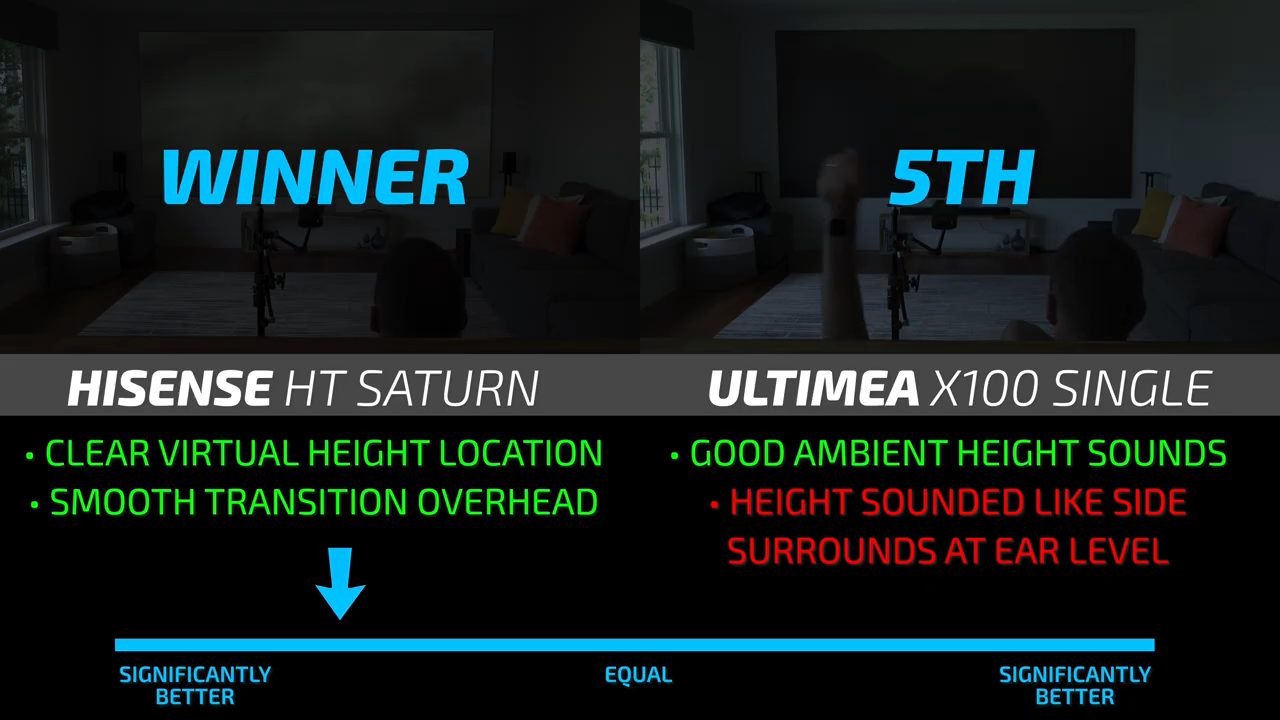
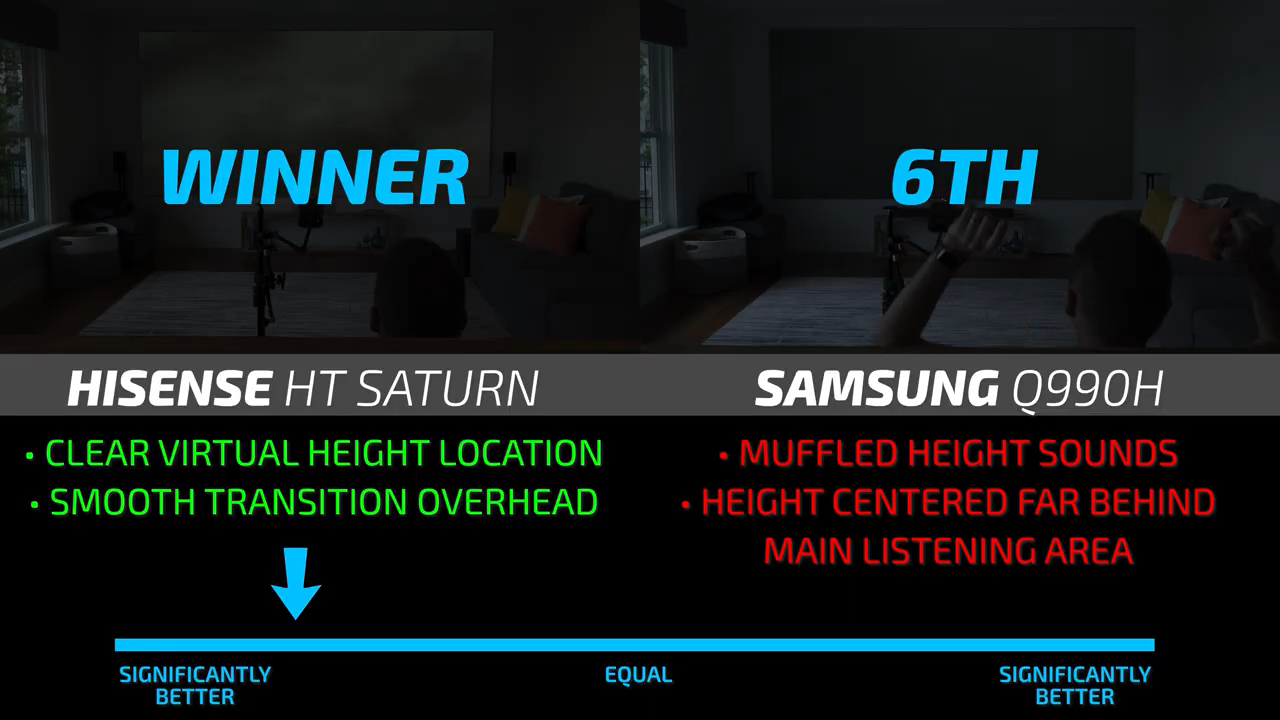
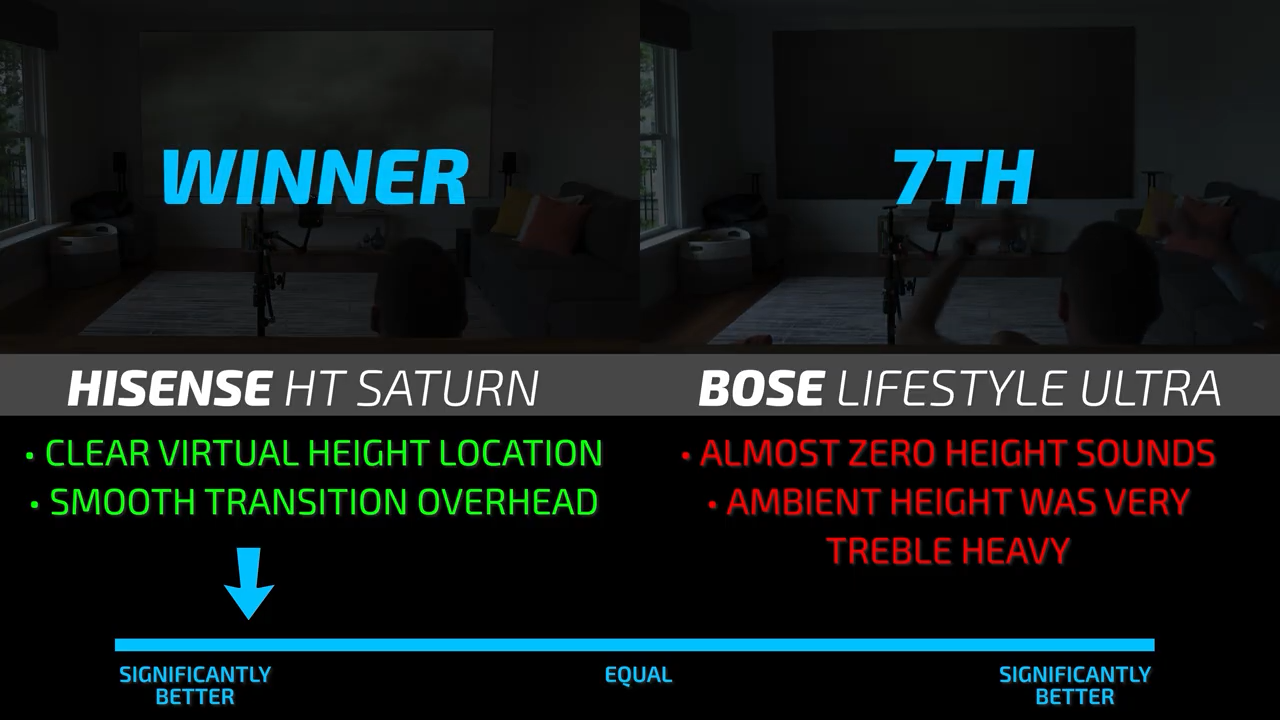
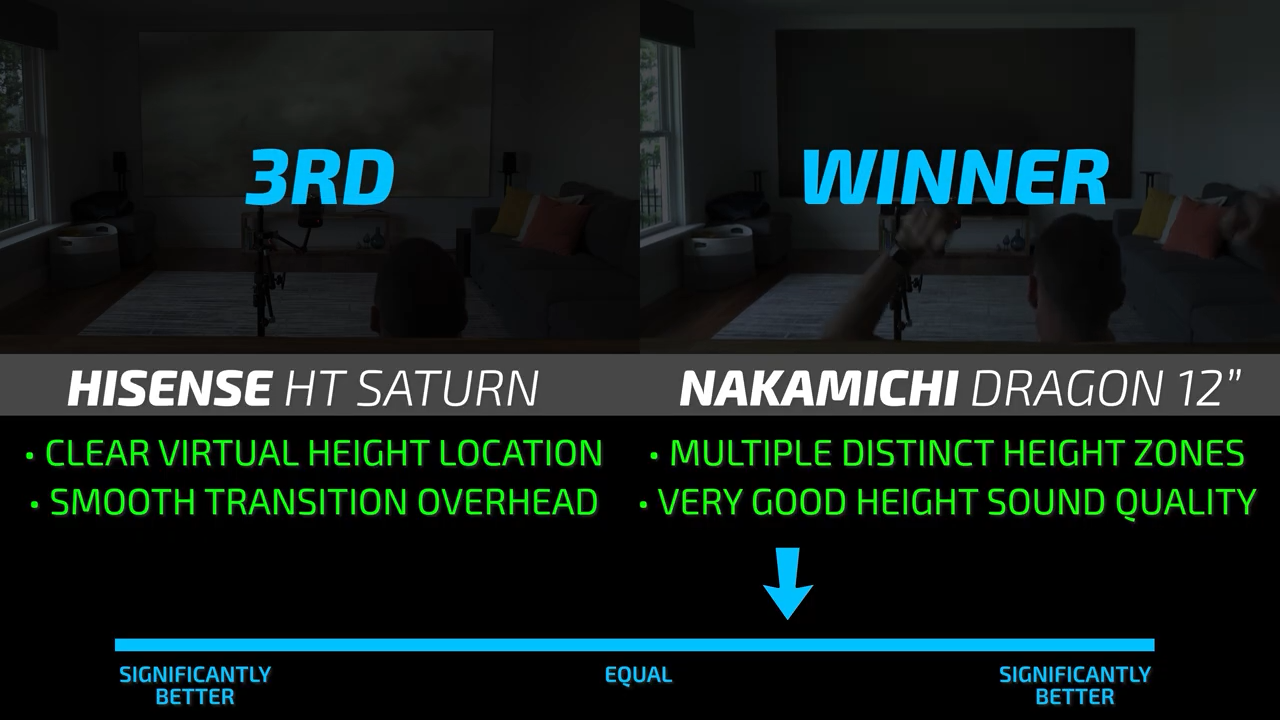
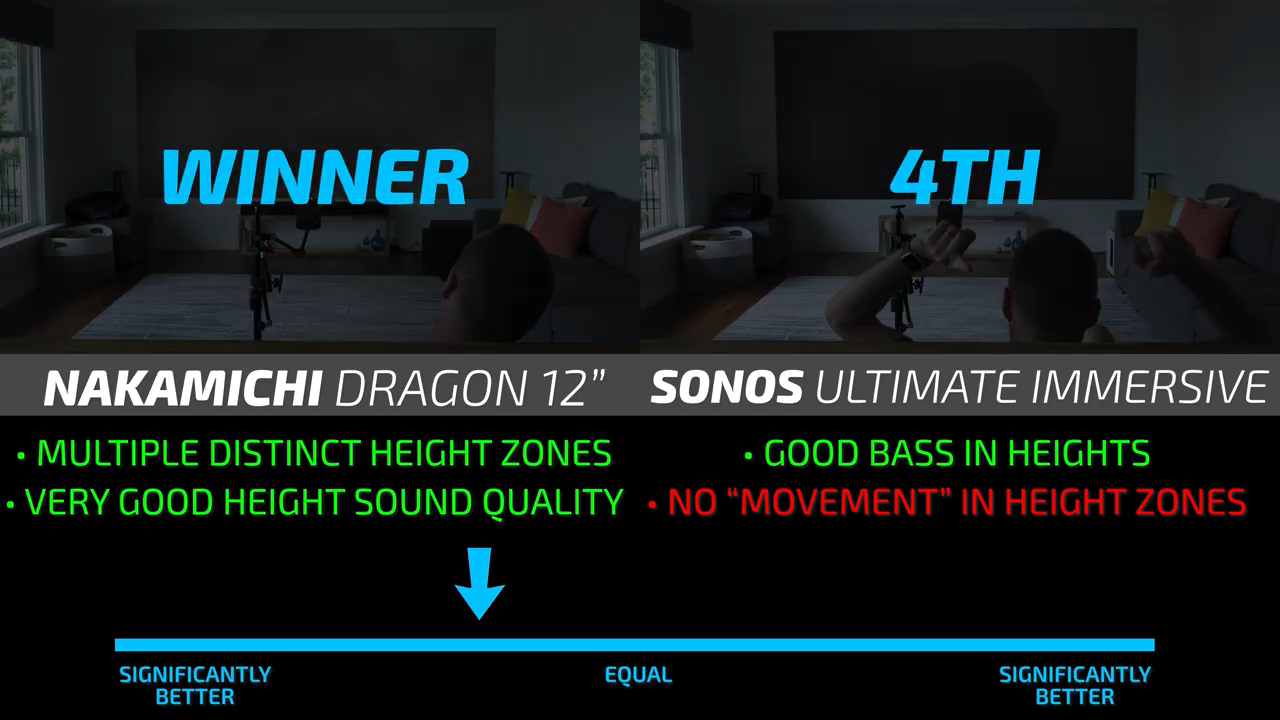
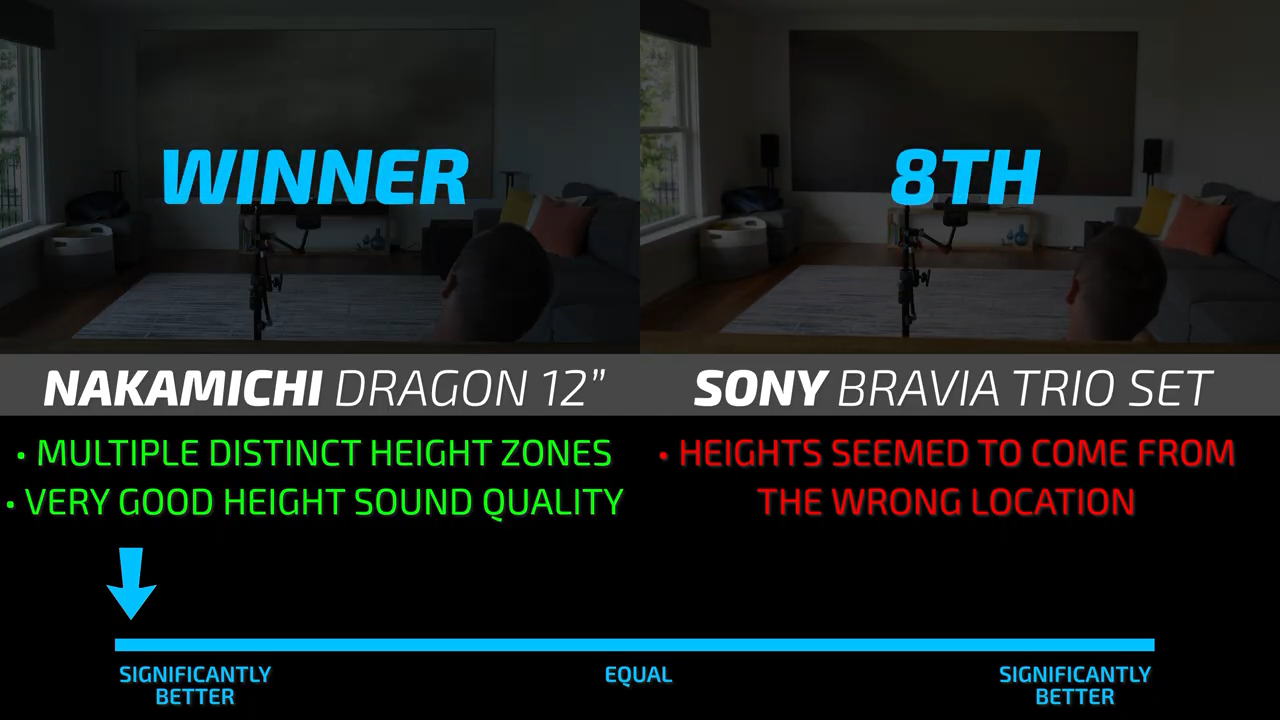
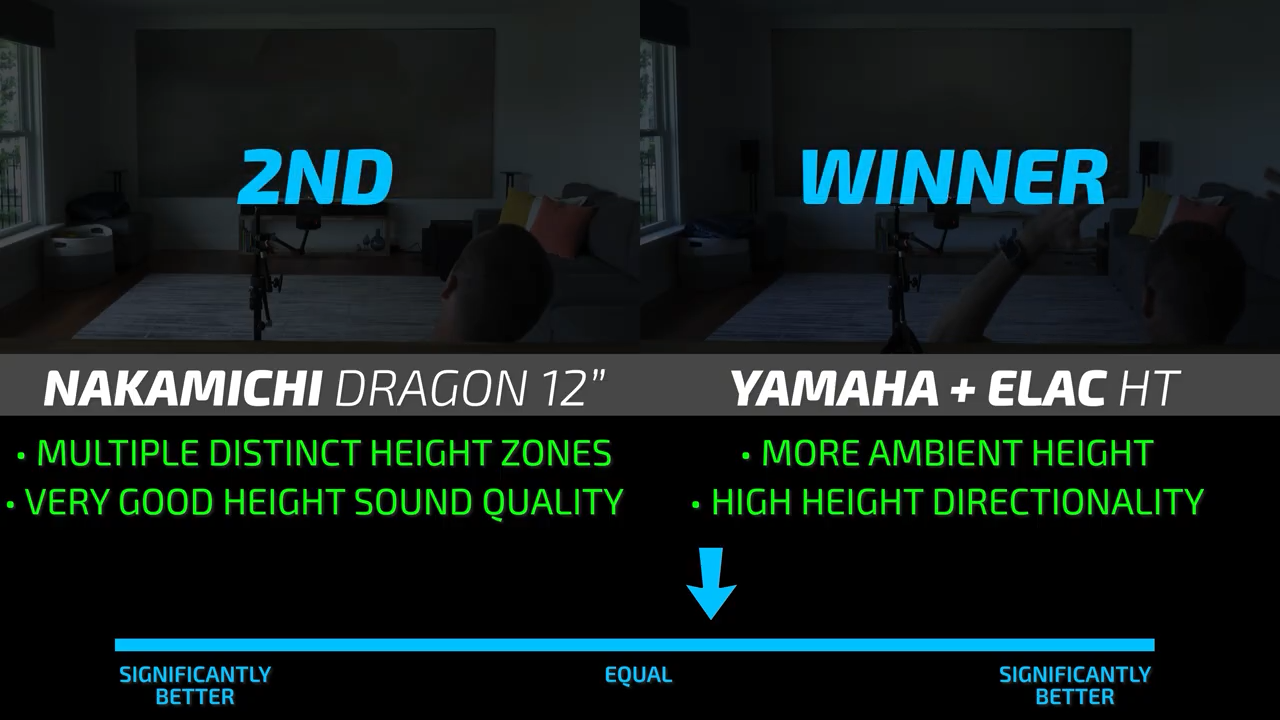
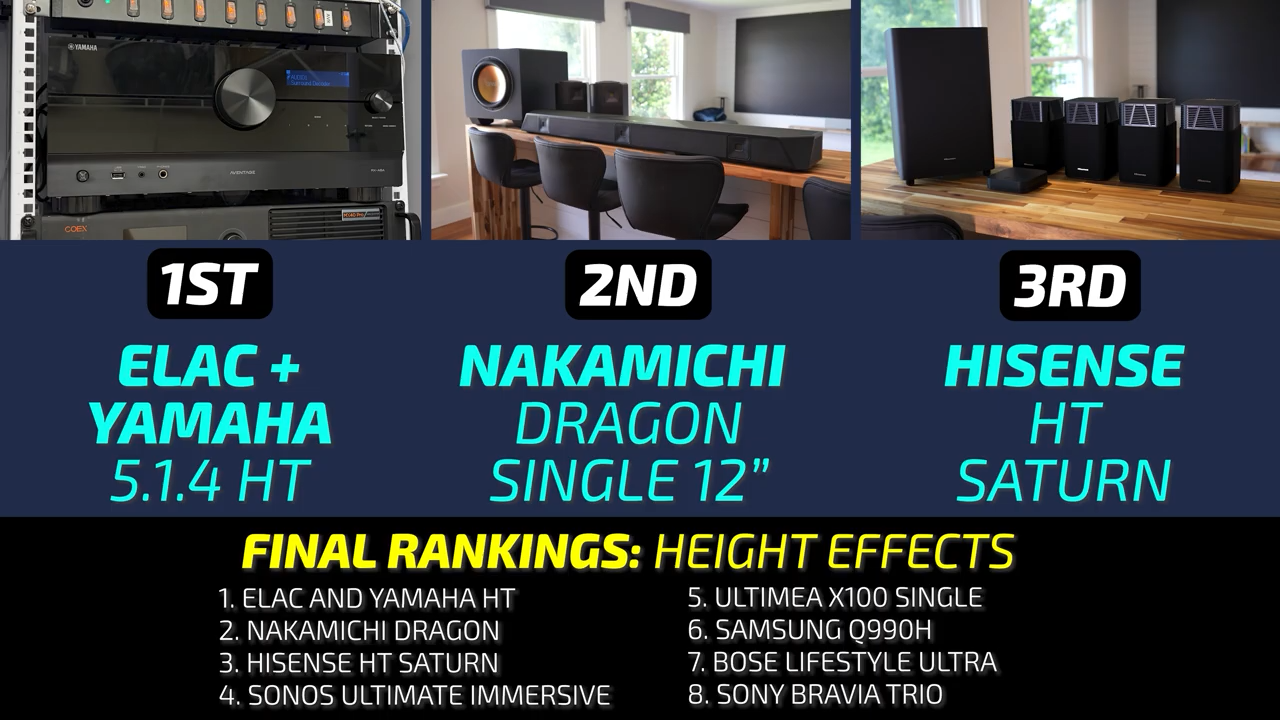
Here are the final rankings for height effects, where predictably all of the soundwave bouncing and DSP options stood no chance against my home theater system that has four speakers actually mounted in the ceiling, but the Nakamichi Dragon did surprisingly well, and the Hisense HT Saturn also produced extremely convincing height effects, possibly due to the fact that it’s only trying to create two height channels using DSP instead of four.
Low Frequency Effects (LFE) Tests
Next is the LFE or Low Frequency Effects channel. Depending on your headphones you may or may not be able to hear the differences in the lowest frequencies that the subwoofers can produce, but you should also be able to judge based on how much the room shook.
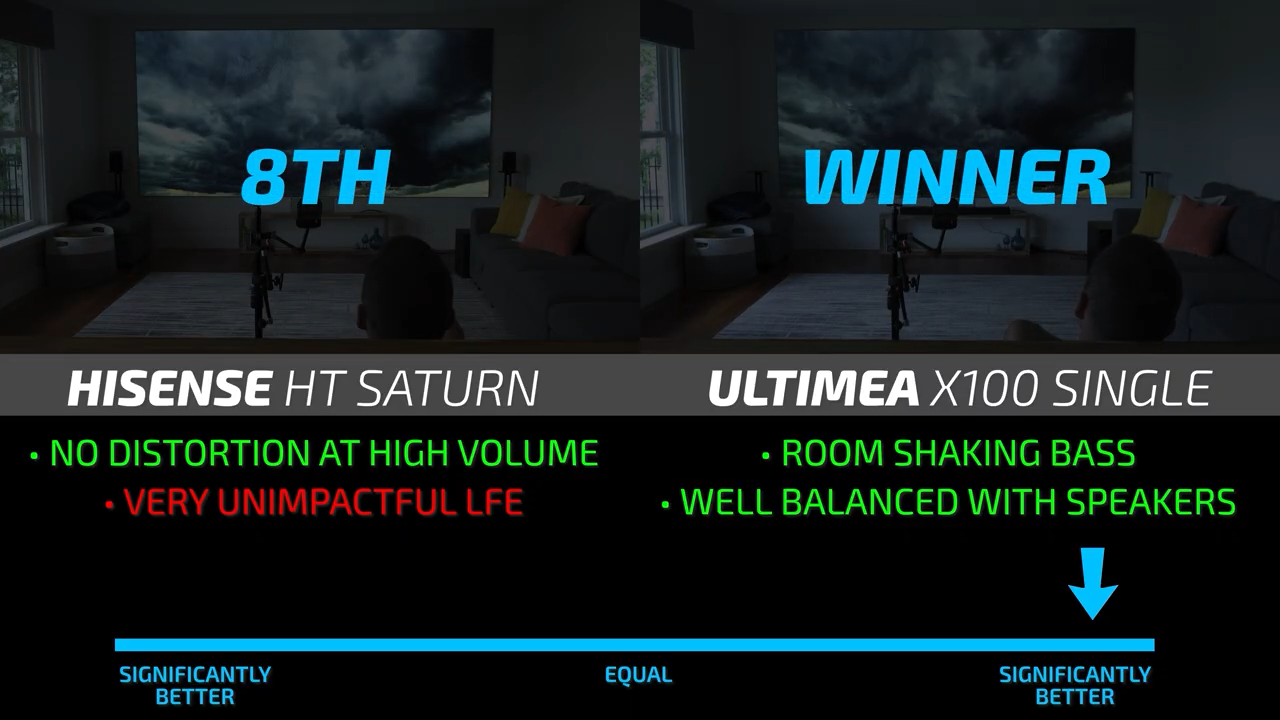
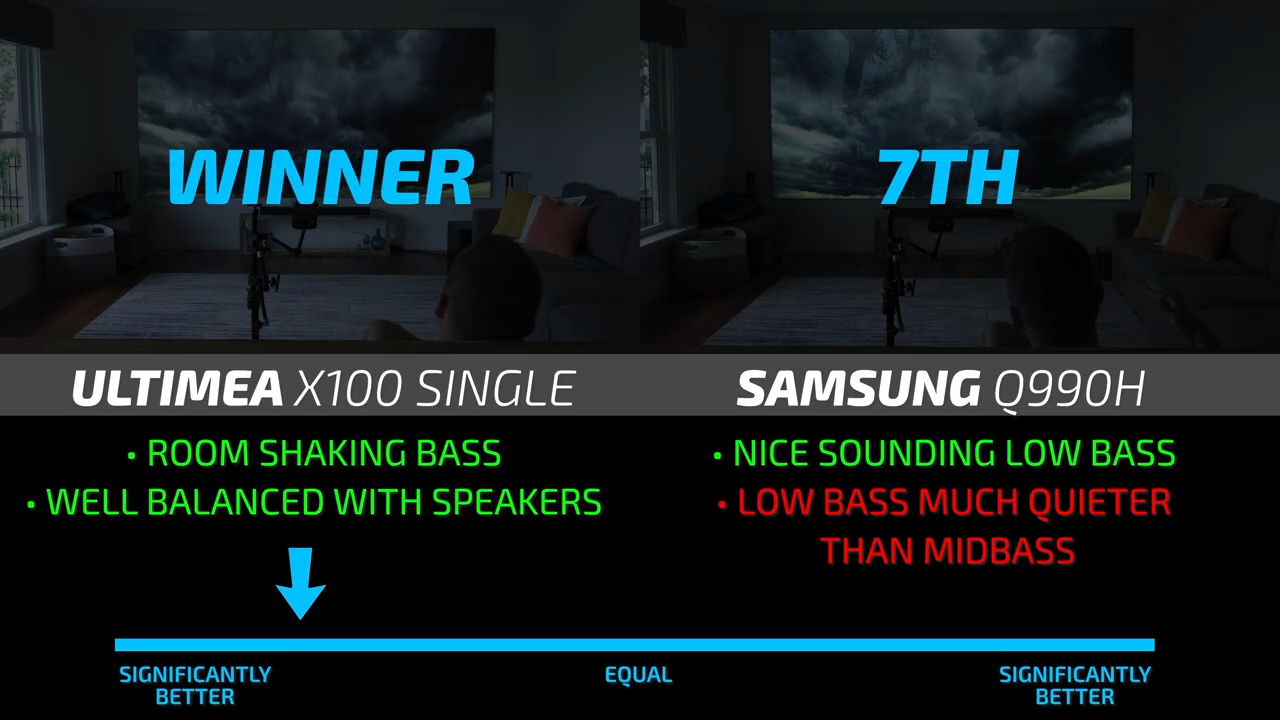
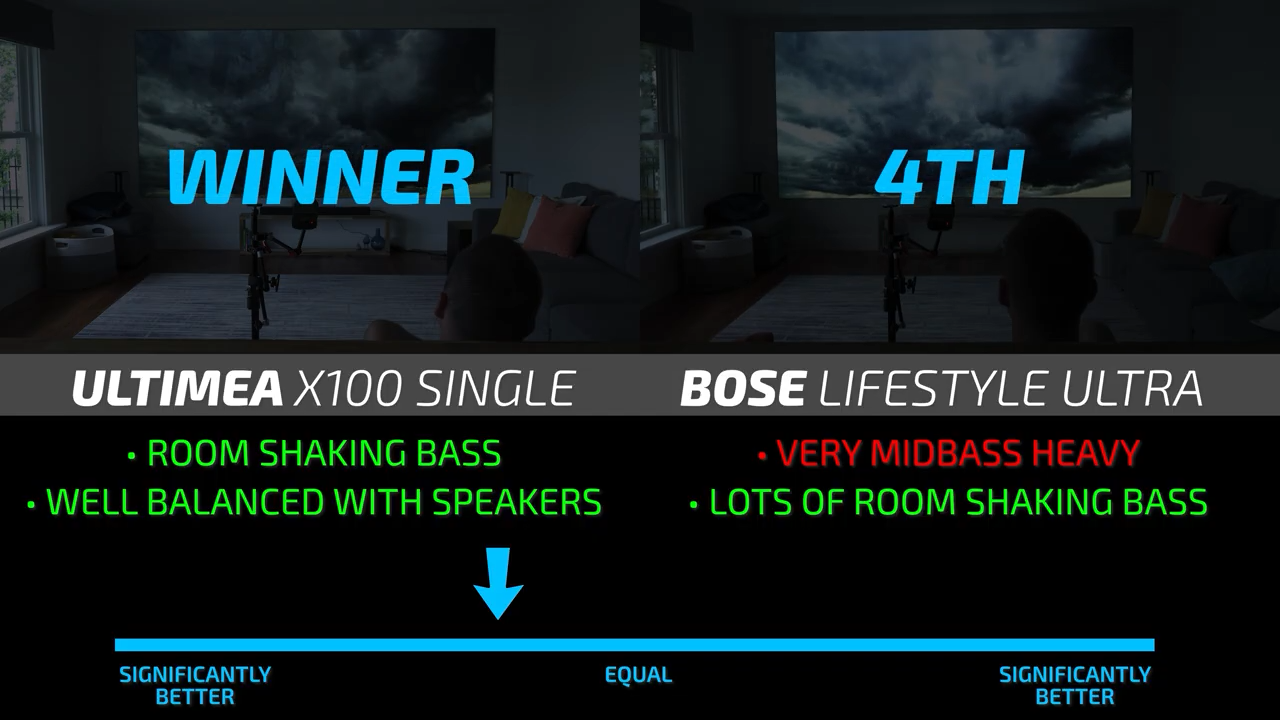
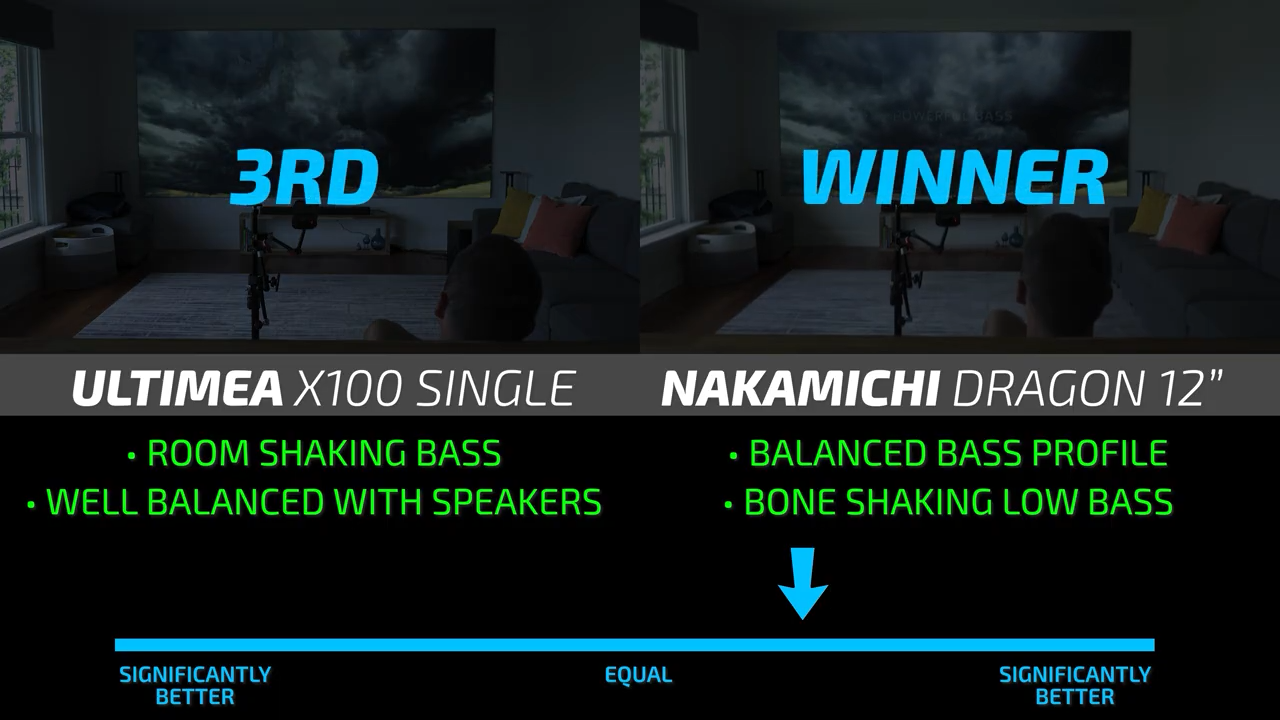
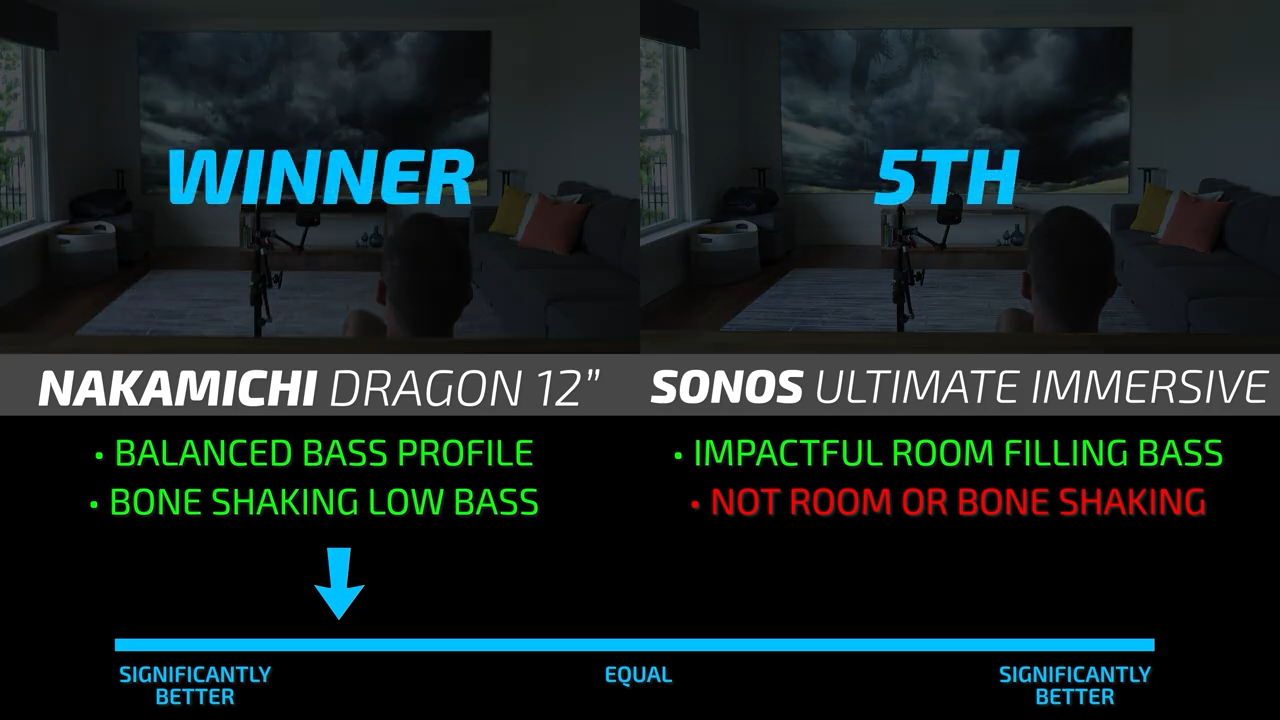
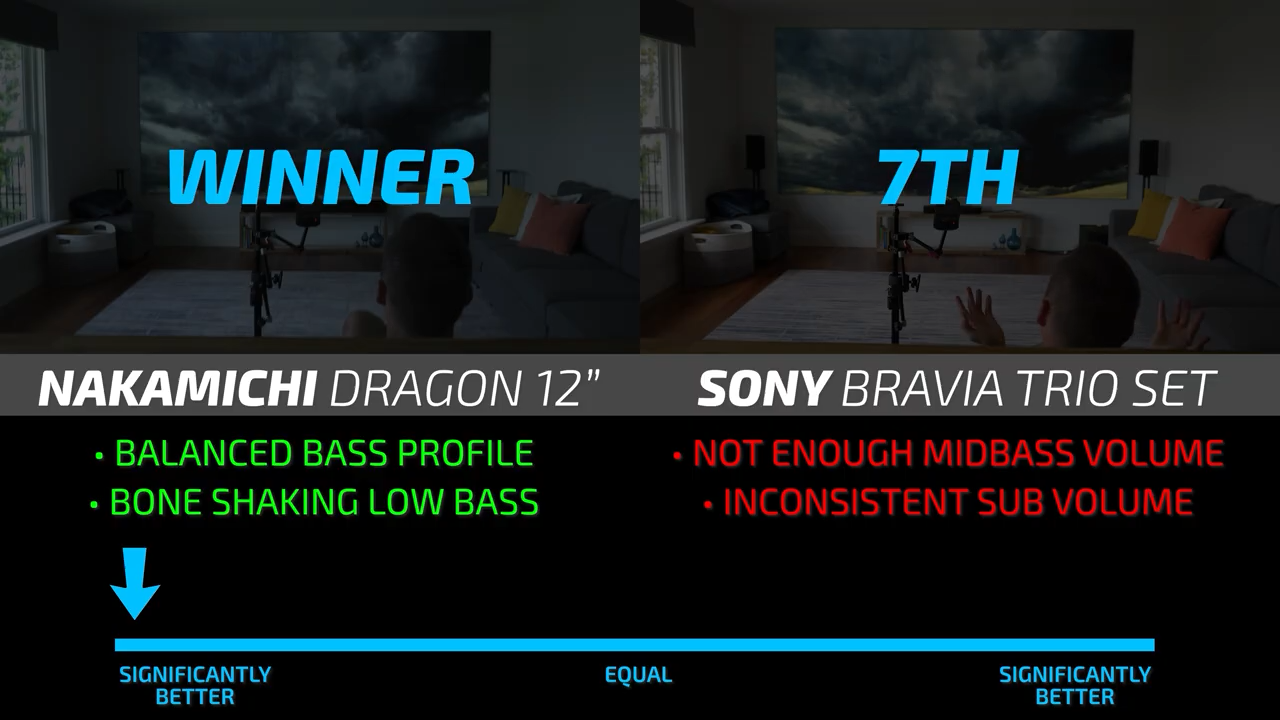
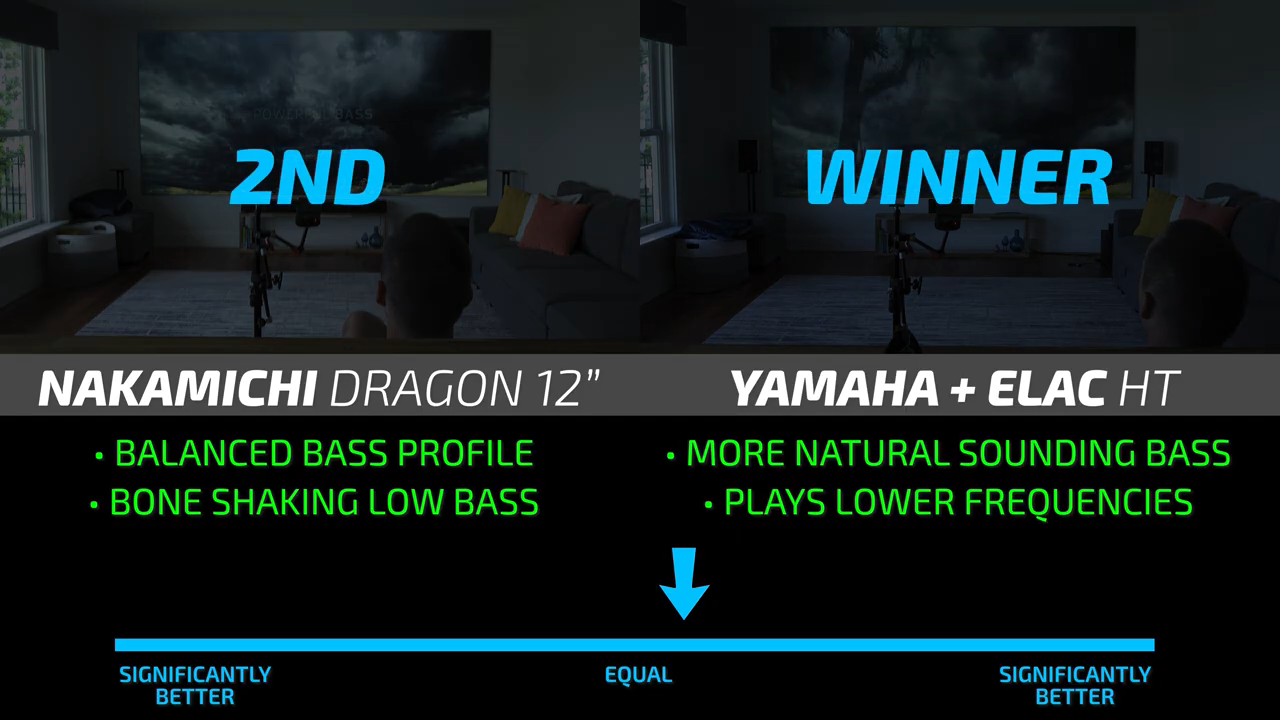
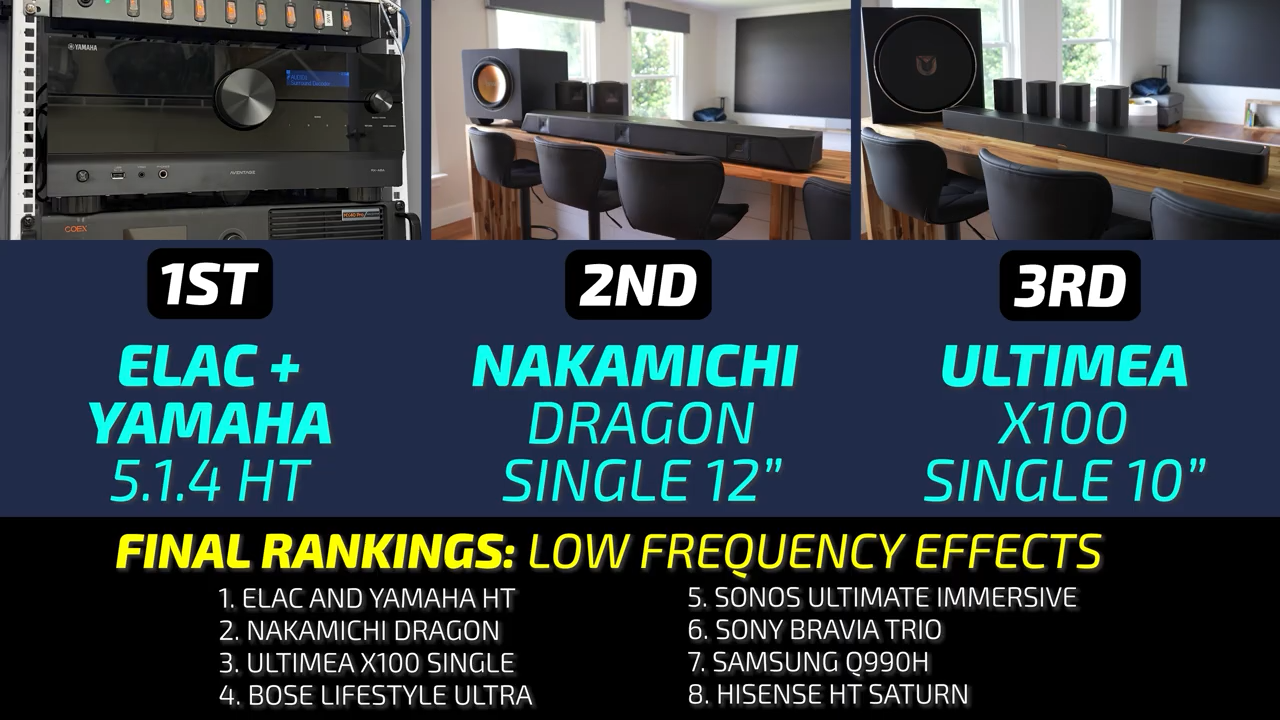
Here are the final rankings for LFE and based on your headphones you may or may not have noticed that the ELAC subwoofer was definitely hitting lower than the Nakamichi, but the Nakamichi was shaking the room a lot more. That’s due almost entirely to the fact that my ELAC sub is set to only play sounds below 80Hz, while the Nakamichi from the factory had its crossover set to 200Hz, which I found kind of annoying because it seemed like the subwoofer was participating in too much of the directional audio. So, before recording all these tests, I reduced the crossover to 150Hz, which is still high, but gives the Nakamichi a calmer sound with better spatial effects since the subwoofer isn’t as involved. For the rest of the rankings, they pretty much just followed along with their subwoofer diameter with the exception of the Sony Sub 9, which I thought was just not that impactful and I was expecting a huge step up going from the SW5 to the SW9, but it just wasn’t there.
Audio Bubble Tests
The last set of clips not only test a sound system’s ability to fill the entire room with sound, which I call the audio bubble, but they also test whether the system keeps anything “in the tank” to properly playback the crescendo and climax moments in a film that are designed to give you chills. For this, you’re hearing all four stereo microphones combined into a single stereo track.
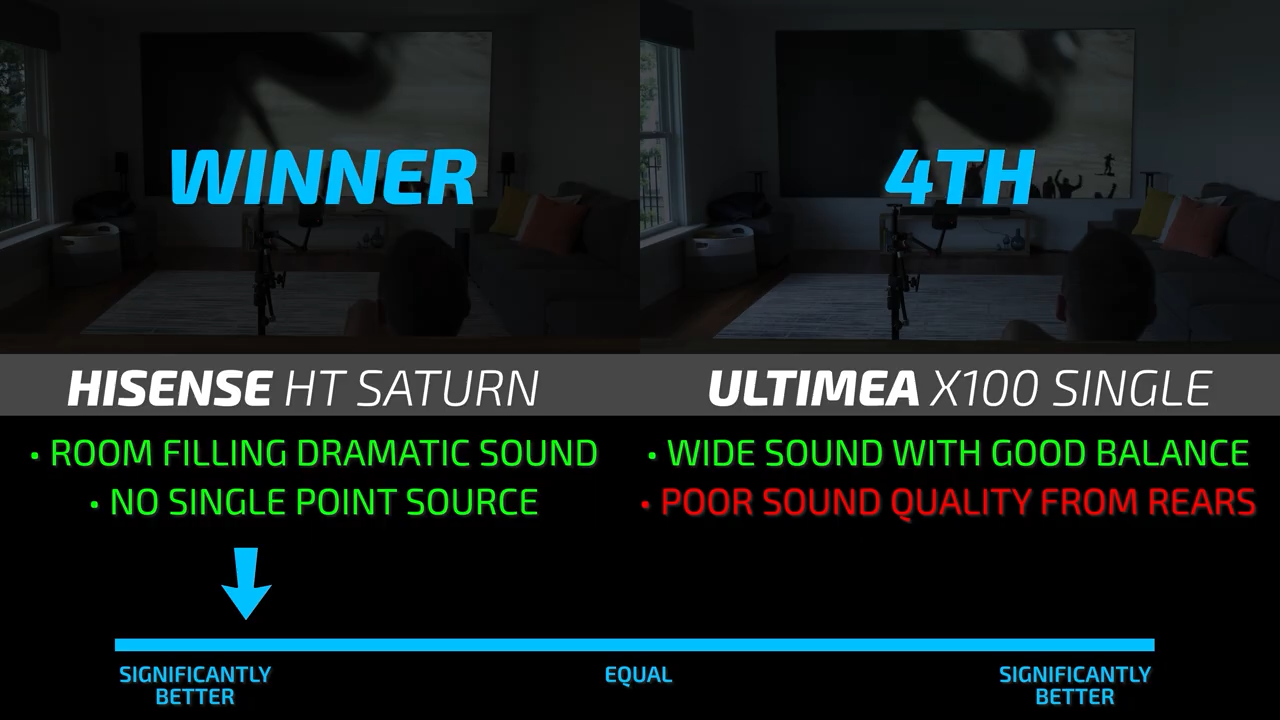
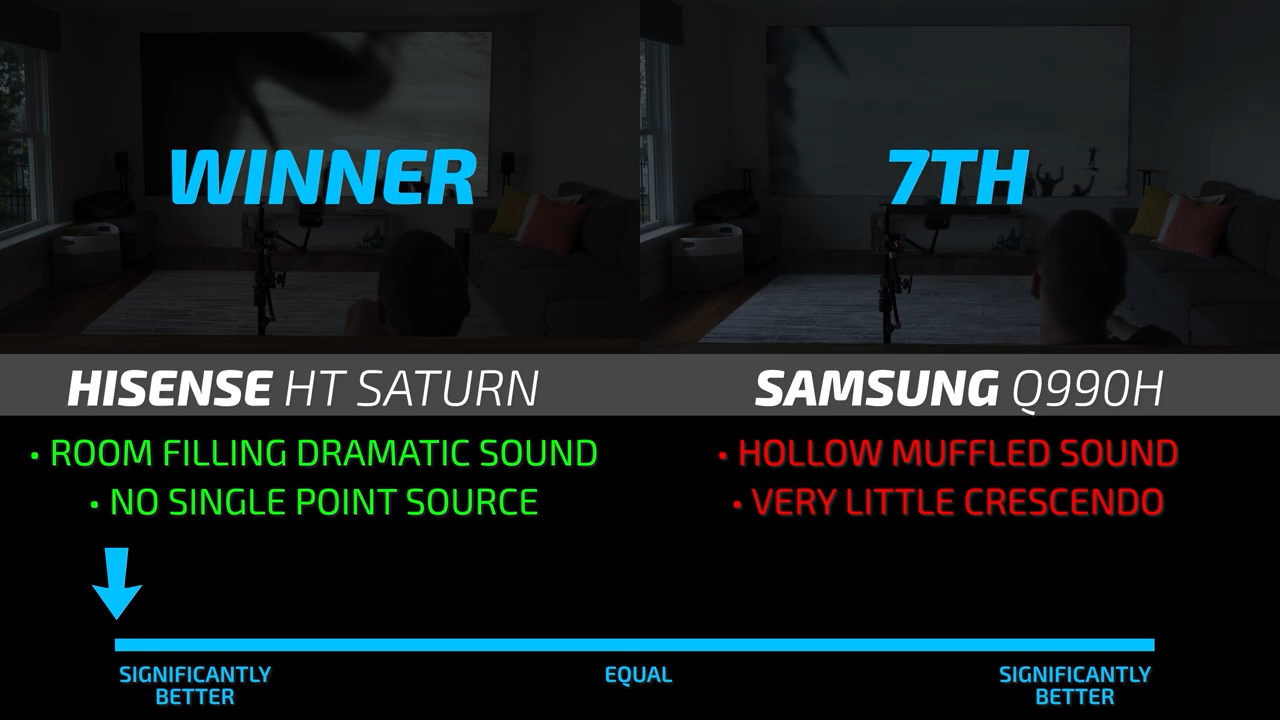
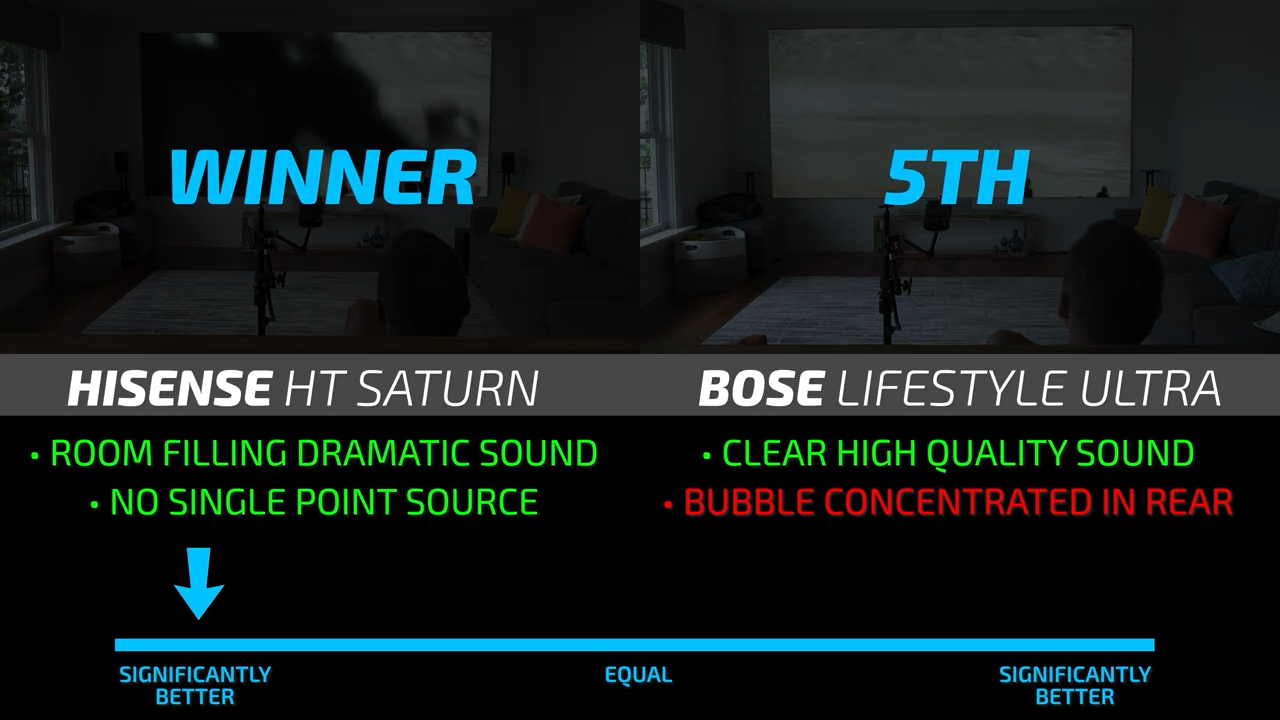
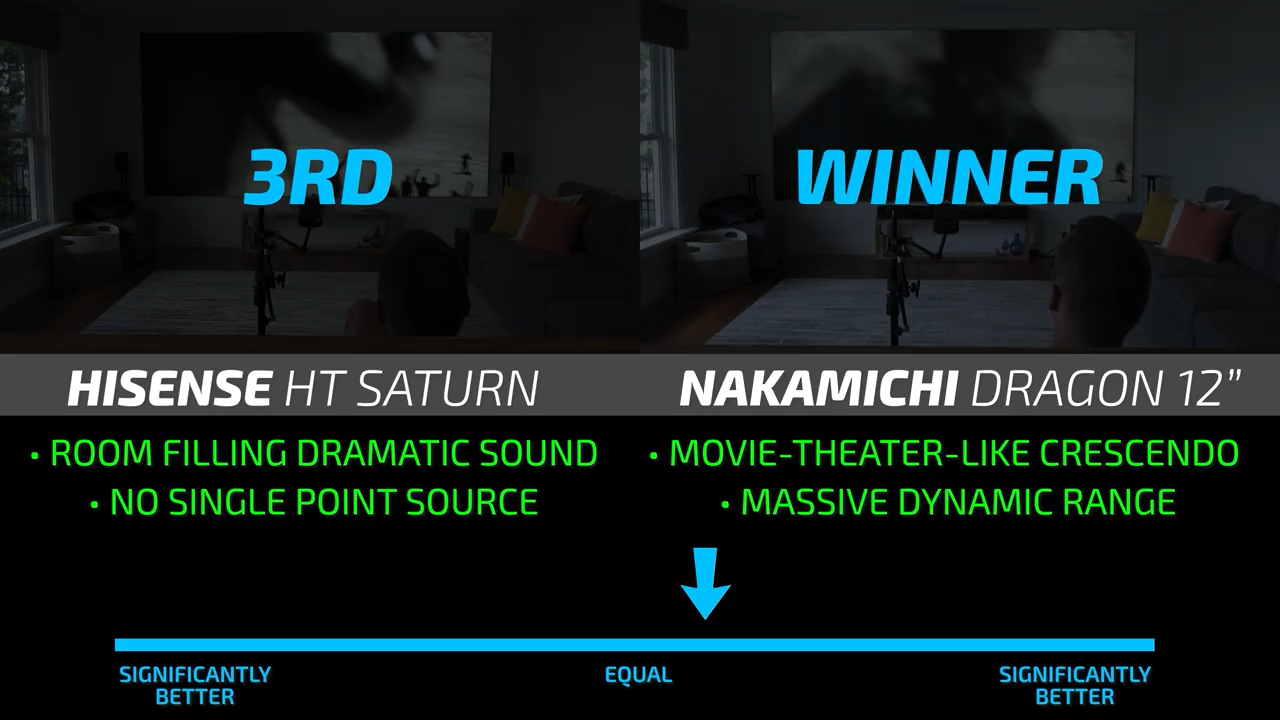
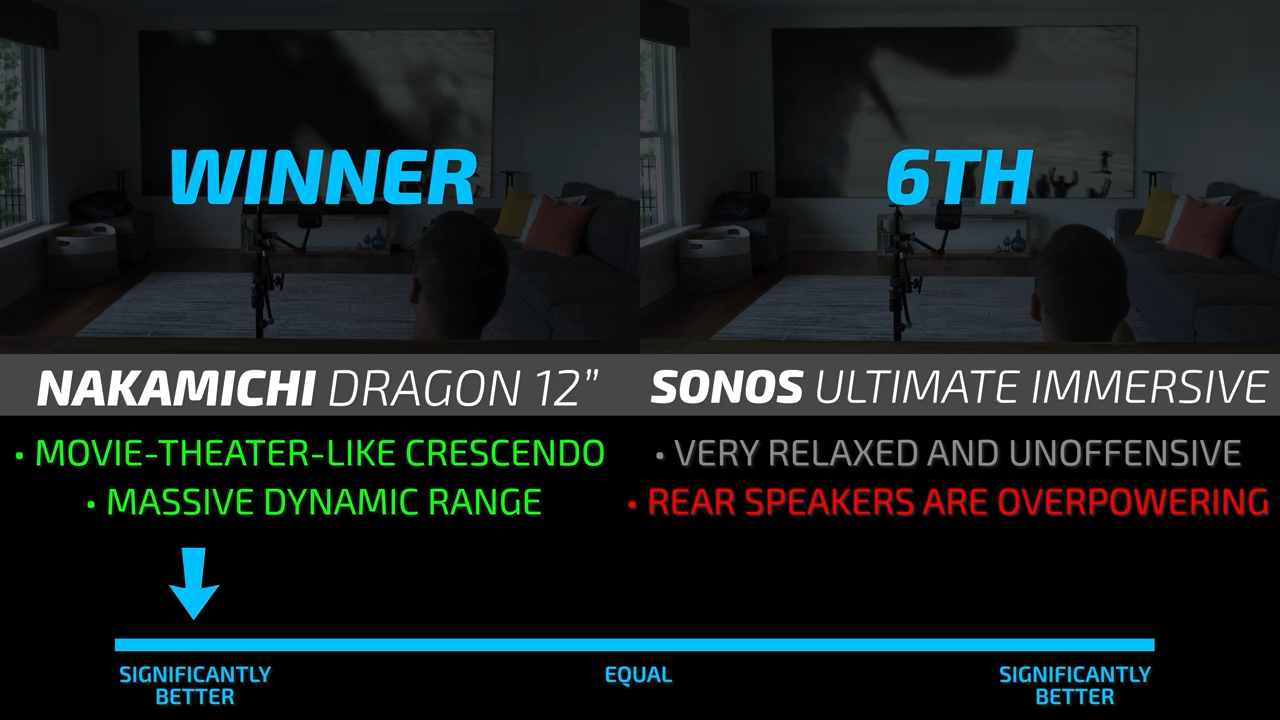
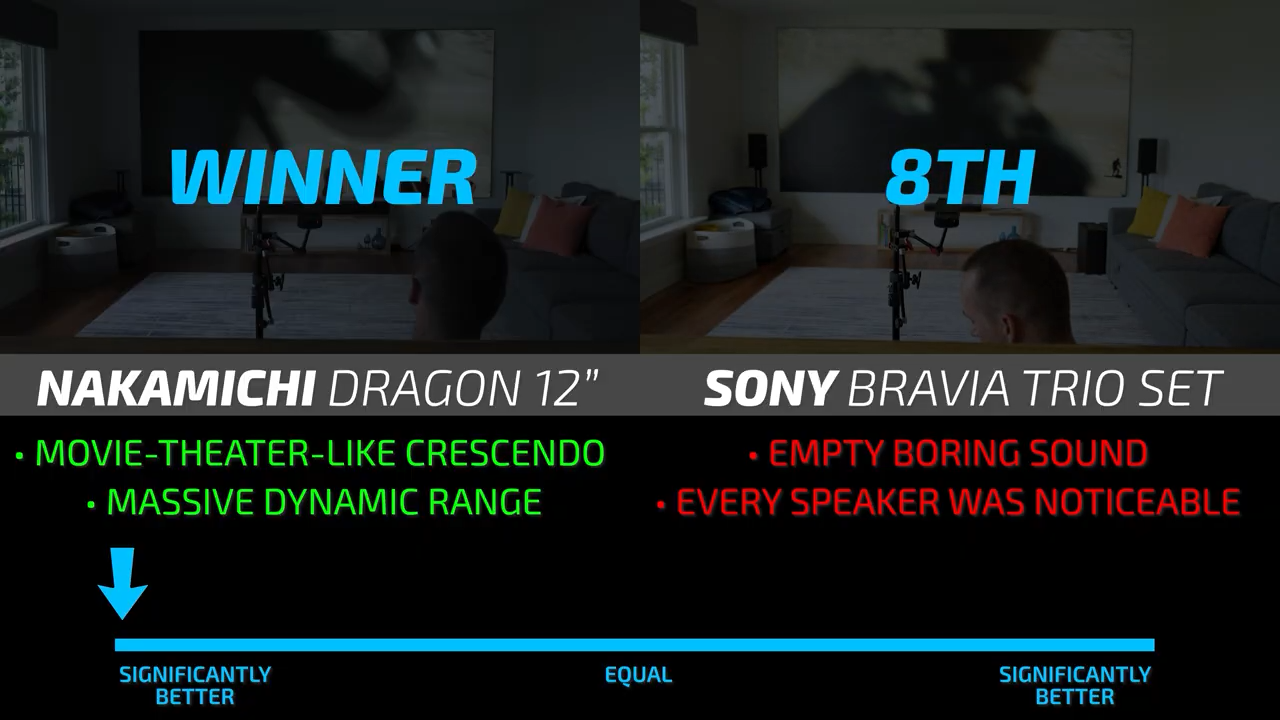
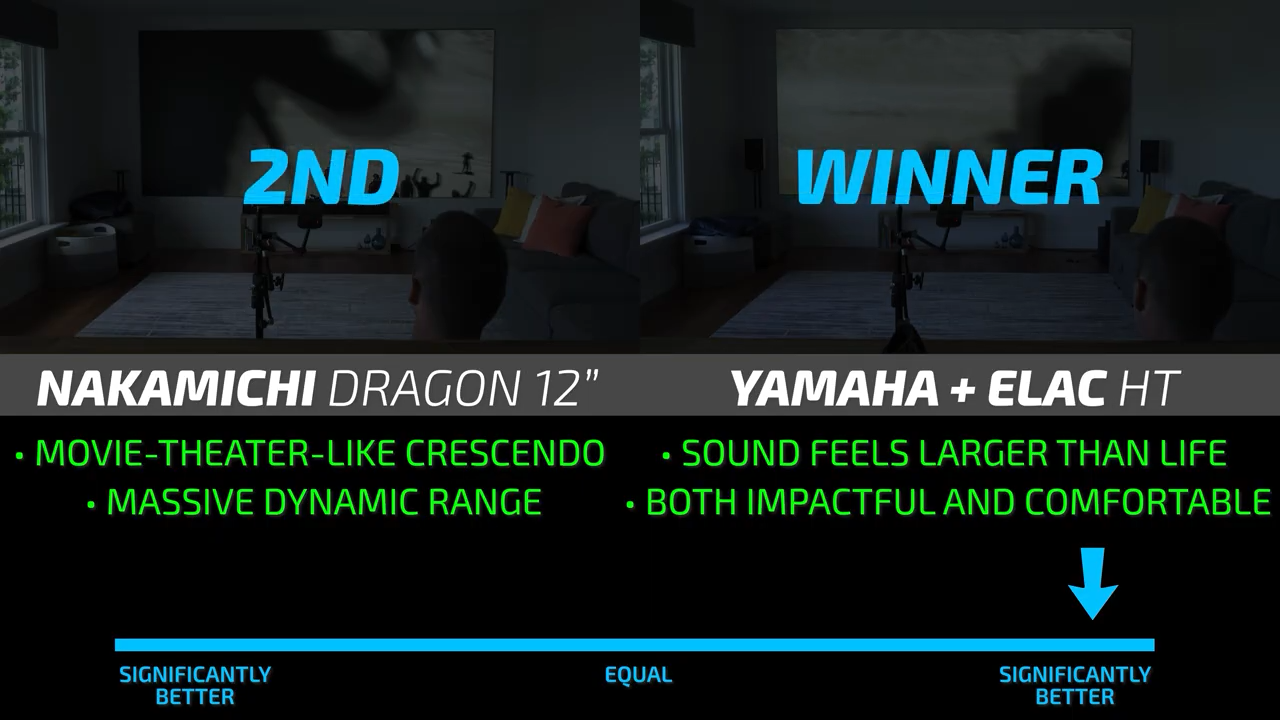
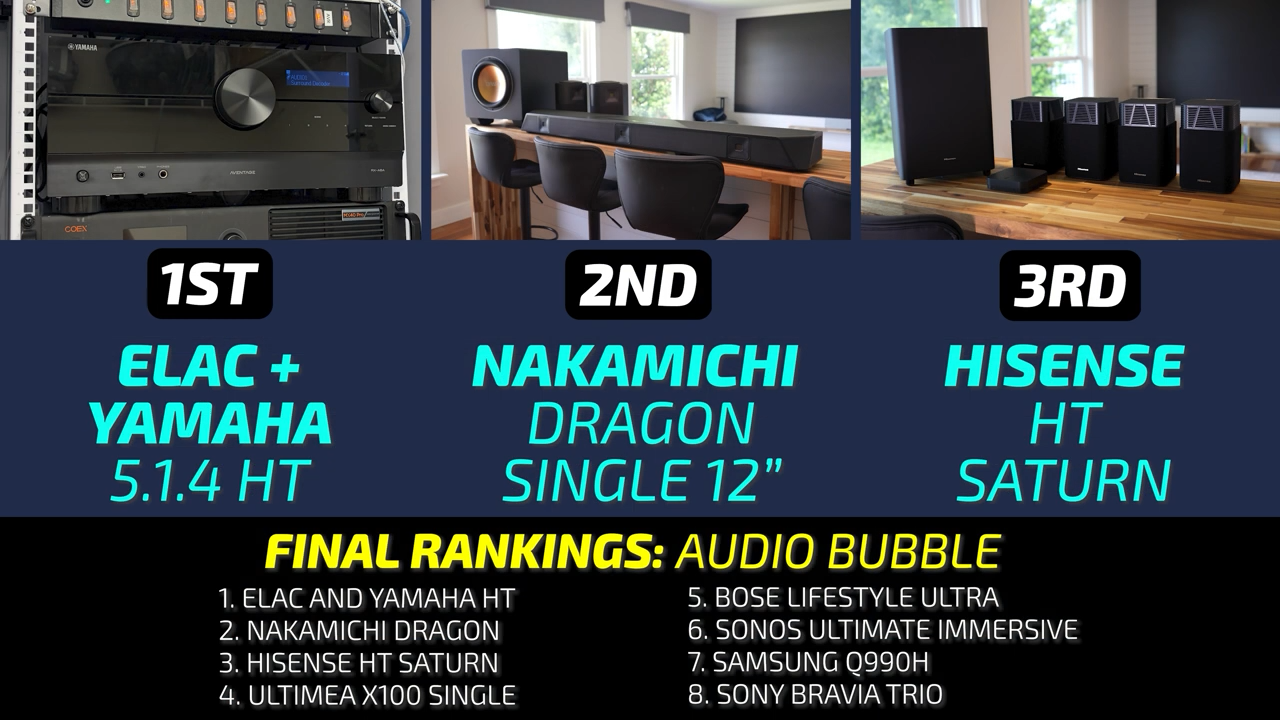
Just like the last time I tested the Hisense HT Saturn, its performance in climax moments is one of its biggest strengths, and that fist pump and smile was because I had tested four systems before the HT Saturn and had been pretty underwhelmed. But the low-end presence and clarity of the Nakamichi Dragon, especially from the AMT tweeters, gave it an advantage over the Hisense. When talking about the overall audio bubble, it’s hard to compete with speakers mounted in the ceiling, and my ELAC system still edged out the top spot.
Combined Overall Scores
Combining all of the scores together, my $6000 home theater system that took me two whole days to install climbing around in my attic and cutting holes in my walls and ceiling just barely edged out the $2900 Nakamichi Dragon system that took me less than 30 minutes to set up. Honestly, if I had known how similar the performance would be, I doubt I would have bothered with my separate speaker setup.
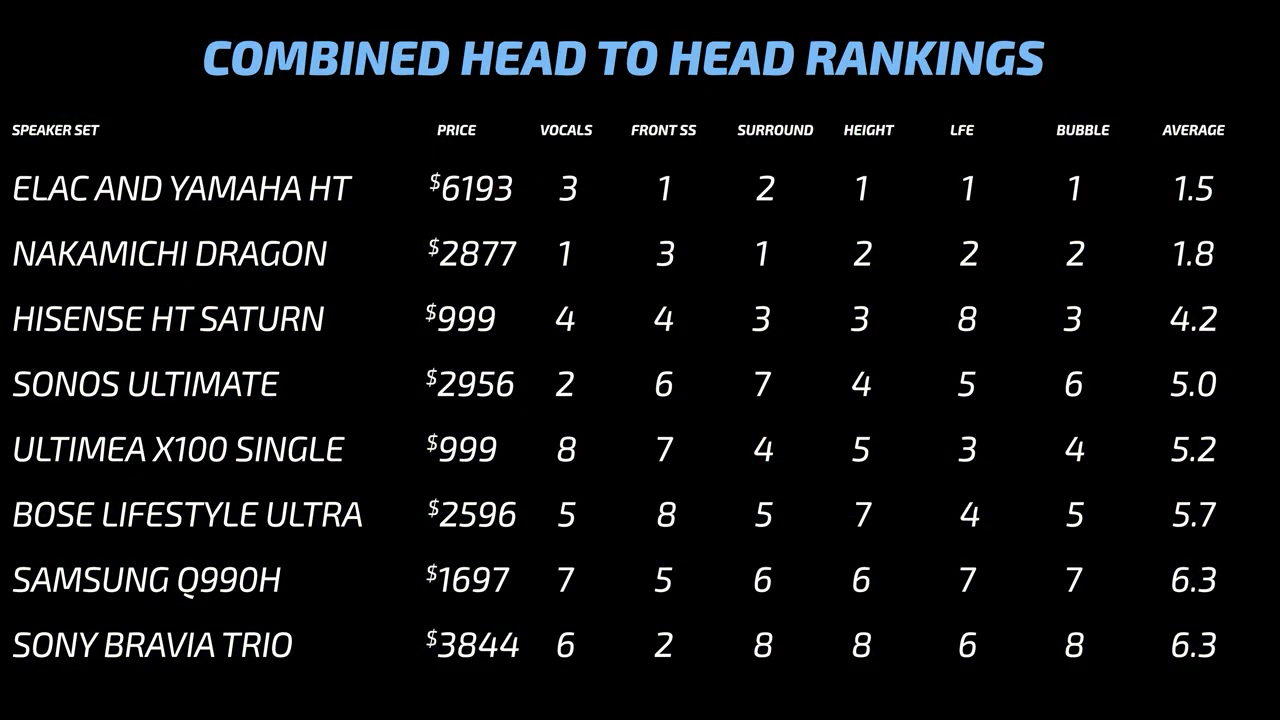
However, and pay attention because this is important, I also don’t think the Nakamichi Dragon is right for most people who are in the market for a soundbar.
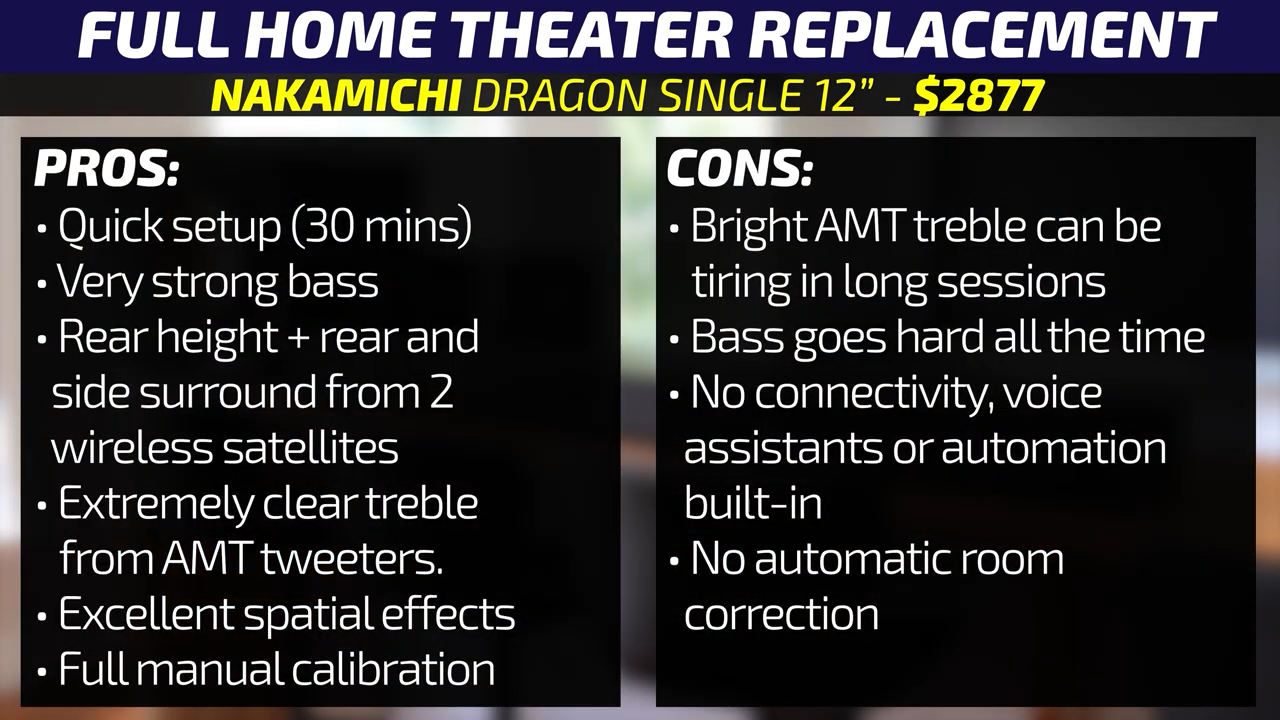
There’s no question that the Dragon outclassed every other soundbar in this video, and listening to it is an absolute experience, but it’s also a little tiring. While it re-creates the theater experience for watching a blockbuster movie and the spatial effects and low-end performance are the kind of thing you’d want to demo for your friends, I personally wouldn’t want to use it to binge eight hours of a sitcom or spend an entire day watching football with the Dragon pumping out stadium sounds. I think Nakamichi knows this because they include two buttons on the remote to switch between programmable presets and a hotkey to turn the subwoofer off entirely. But regardless of settings, the Dragon is still a lot and should be considered more of a home theater system replacement than a living room soundbar.
Soundbar ONLY Performance
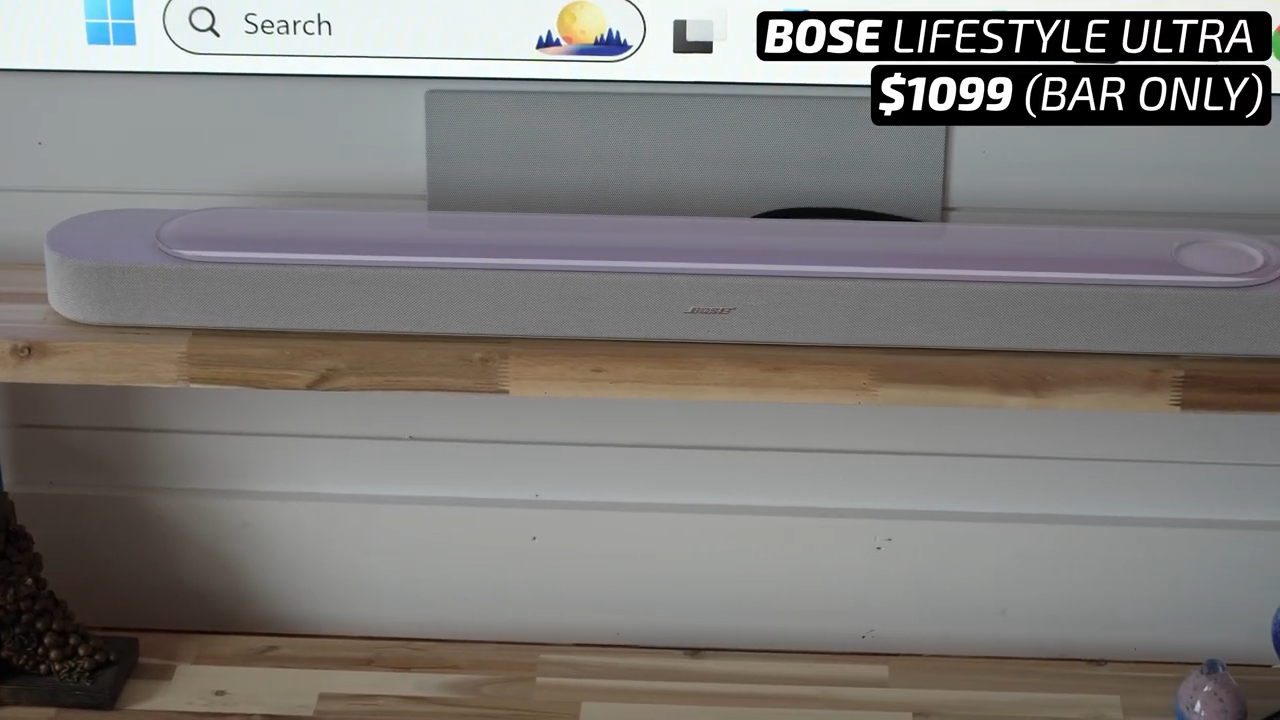
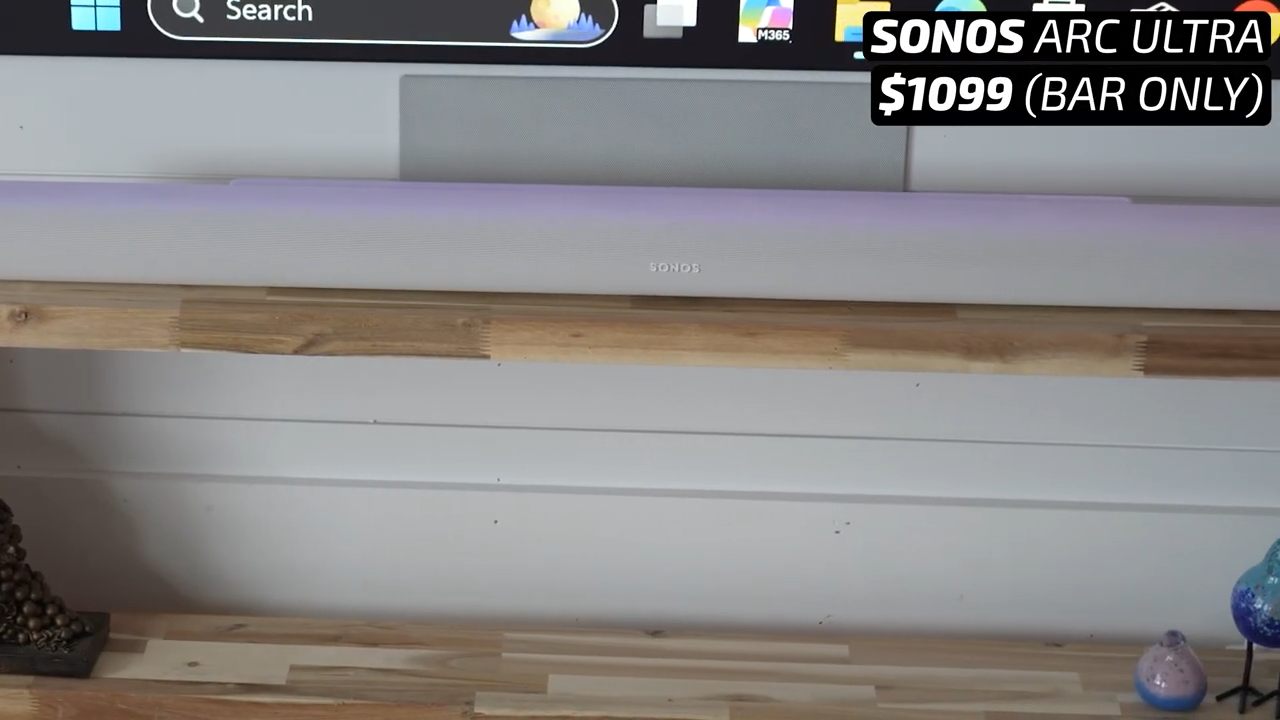
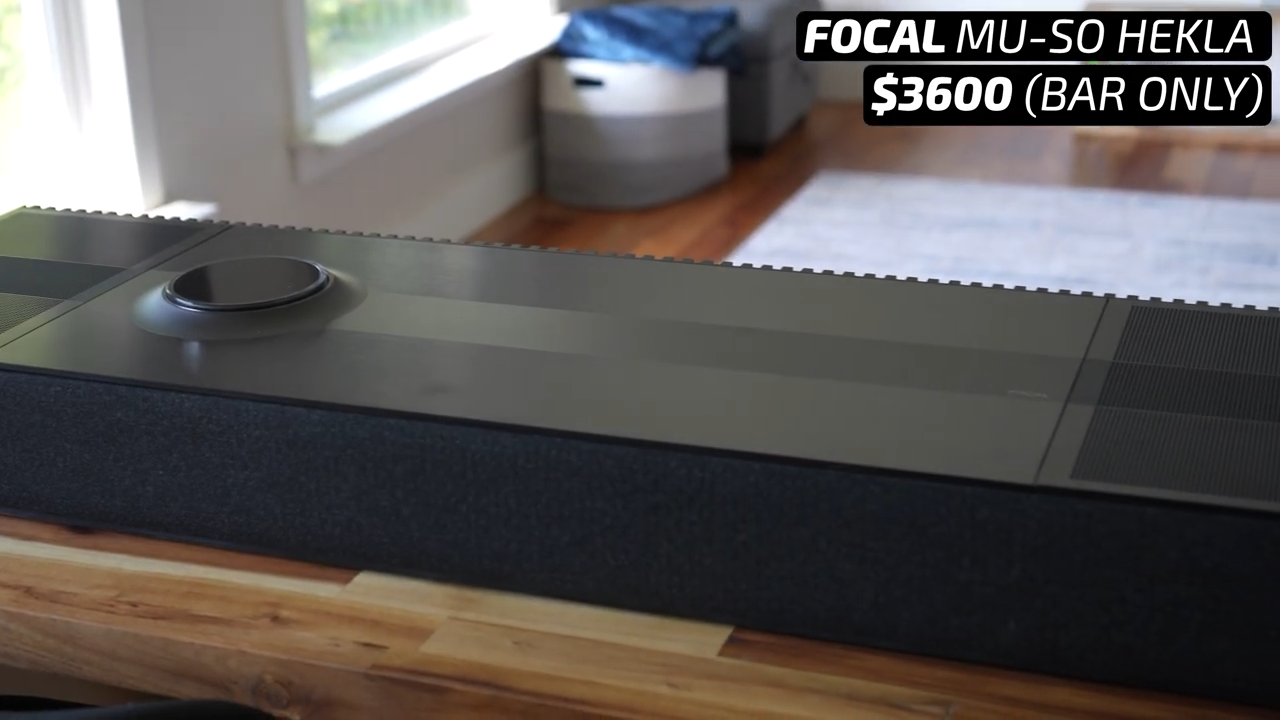
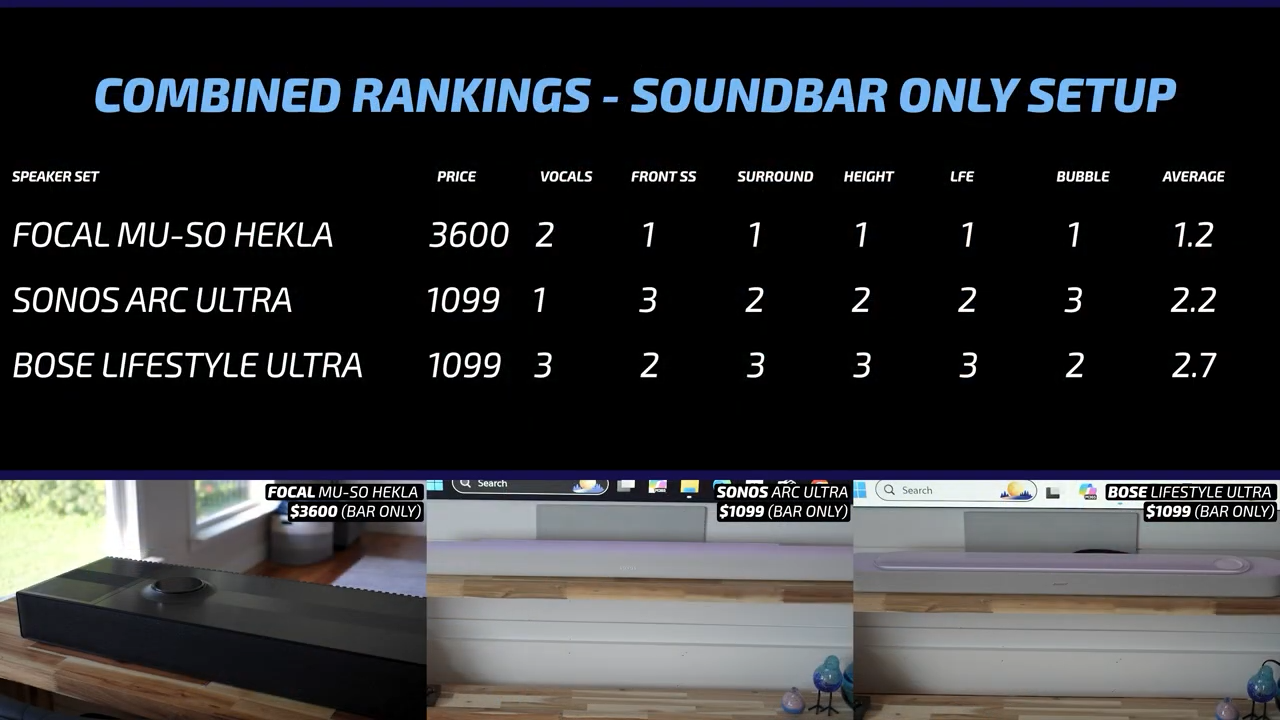
When considering a soundbar for a living room, a less exciting but more comfortable sound profile is preferrable and other things like voice assistants, connectivity, and ease of use shouldn’t be ignored. So with that in mind, I also wanted to test bar-only performance for people who don’t want to bother with surround sound speakers and an extra sub. The only two bar-only options we’ve seen so far are the $1099 Bose Lifestyle Ultra Soundbar and the $1099 Sonos Arc Ultra. But I do have one more option, which is the Focal Mu-So Hekla, an ultra-high end $3600 bar only solution, as long as you still consider a 12” deep 35lbs slab of glass and metal a soundbar.
Bar Only Testing
Looking at the same evaluation criteria, here’s vocal clarity from worst to best.
As you could probably tell, there wasn’t a huge difference between the three systems here, and I also didn’t think there was a massive difference between the front sound stages.
But that’s where the similarities ended, and the Focal absolutely dominated in terms of spatial effects.
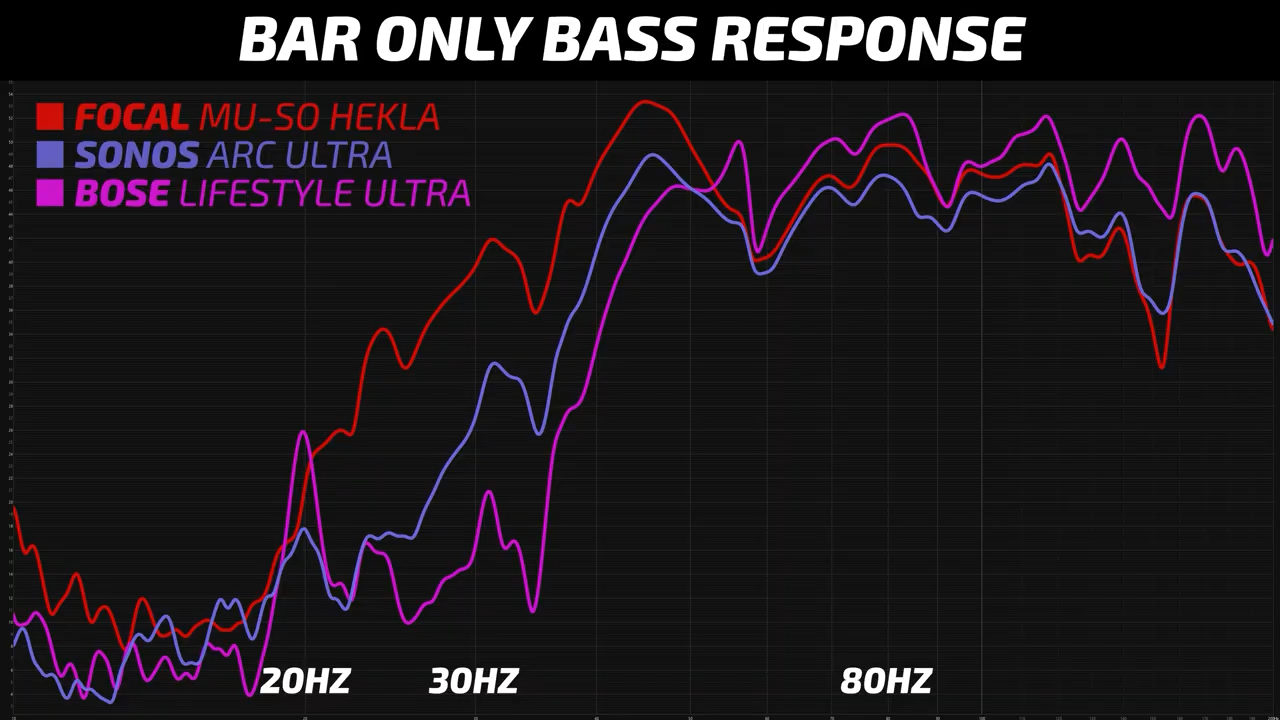
The LFE on the Focal actually reached slightly lower than the Hisense HT Saturn’s sub and it was considerably lower than the Sonos and Bose lifestyle bar only solutions.
My only complaint about the Focal, other than its massive size and price tag, is that it doesn’t seem to leave anything in the tank for climax moments and doesn’t give the same dopamine rush that the Hisense, Nakamichi, and ELAC systems can.
Conclusions and Recommendations
Taking a quick look at the combined scores for the bar-only systems, I’ve got some very simple and straight forward recommendations for anyone in the market for a premium soundbar.
First, if you’re looking for an easier way to get a full home theater style setup with big, exciting sound, the Nakamichi Dragon is the only pick and none of the other systems came close to challenging a true home theater setup. The performance you get for $2877 is actually crazy considering a Marantz AVR capable of delivering a similar channel count is $2800 by itself.
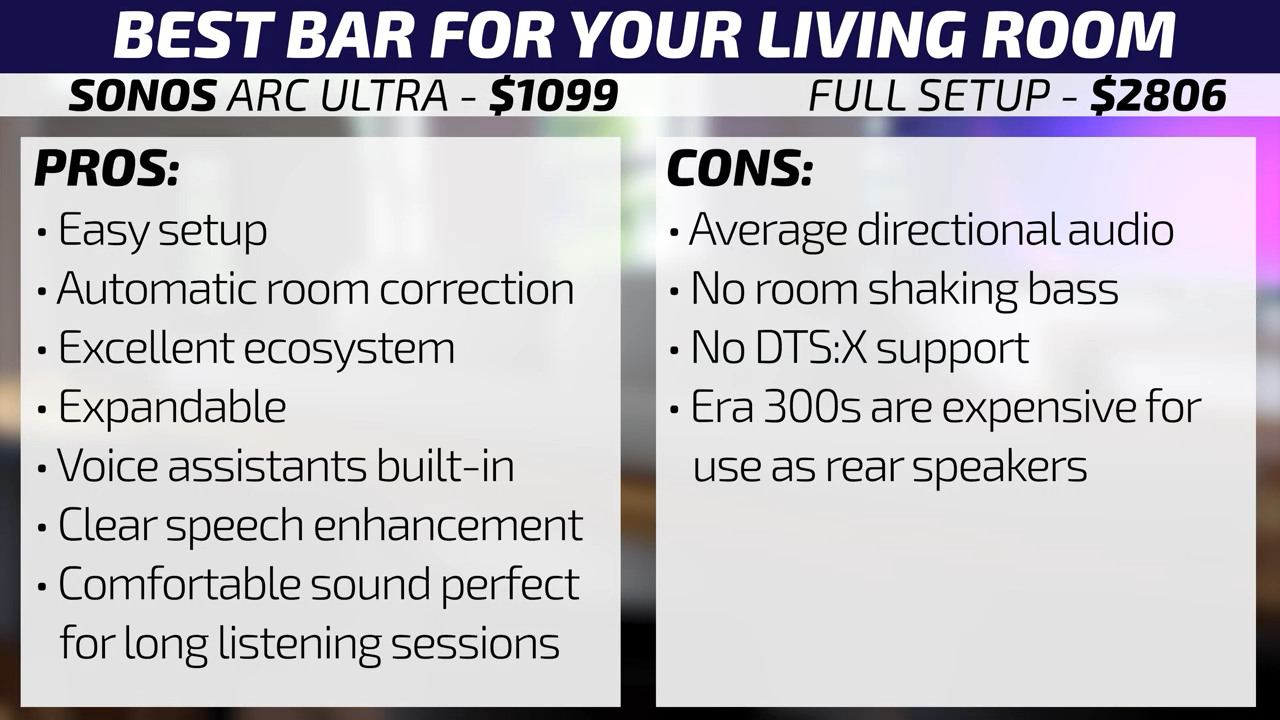
However, if what you’re looking for is a bar that’s simple to set up, has a great ecosystem with room correction and voice assistants built in and very pleasing sound, the Sonos Arc Ultra is definitely the way to go. I actually wouldn’t recommend jumping right into the entire Ultimate Immersive package from the start because the Arc Ultra is very capable on its own for $1099 and you might decide that it’s totally sufficient for your room. If not, you can always add the other pieces later. But given the option of the Sonos versus its direct competitors which are the Bose Lifestyle Ultra and Sony Bravia Trio, I’m choosing the Sonos every time.
If you’re looking for big sound on a budget, the Hisense HT Saturn has blown me away every time I’ve used it, and aside from a very undersized subwoofer, it punches way above its price in terms of spatial effects and DSP.
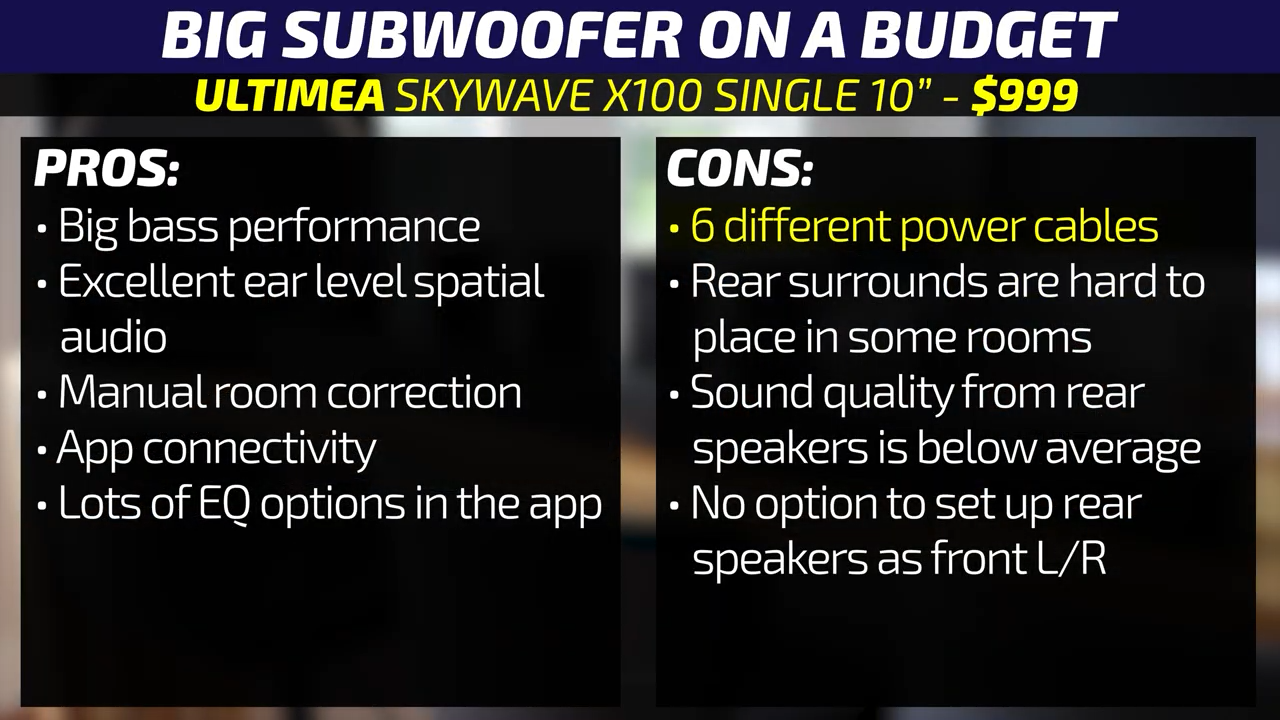
If you crave the extra bass on a budget, the Ultimea X100 also performed decently well, but needing to run power cables for four surround speakers, a soundbar, and a sub feels less like a soundbar and more like a home theater in a box. I wish there was an option to set up two of the X100’s satellite speakers as left and right front channels instead of just surrounds because I think it would be much more useful for people whose couches are all the way up against a wall.
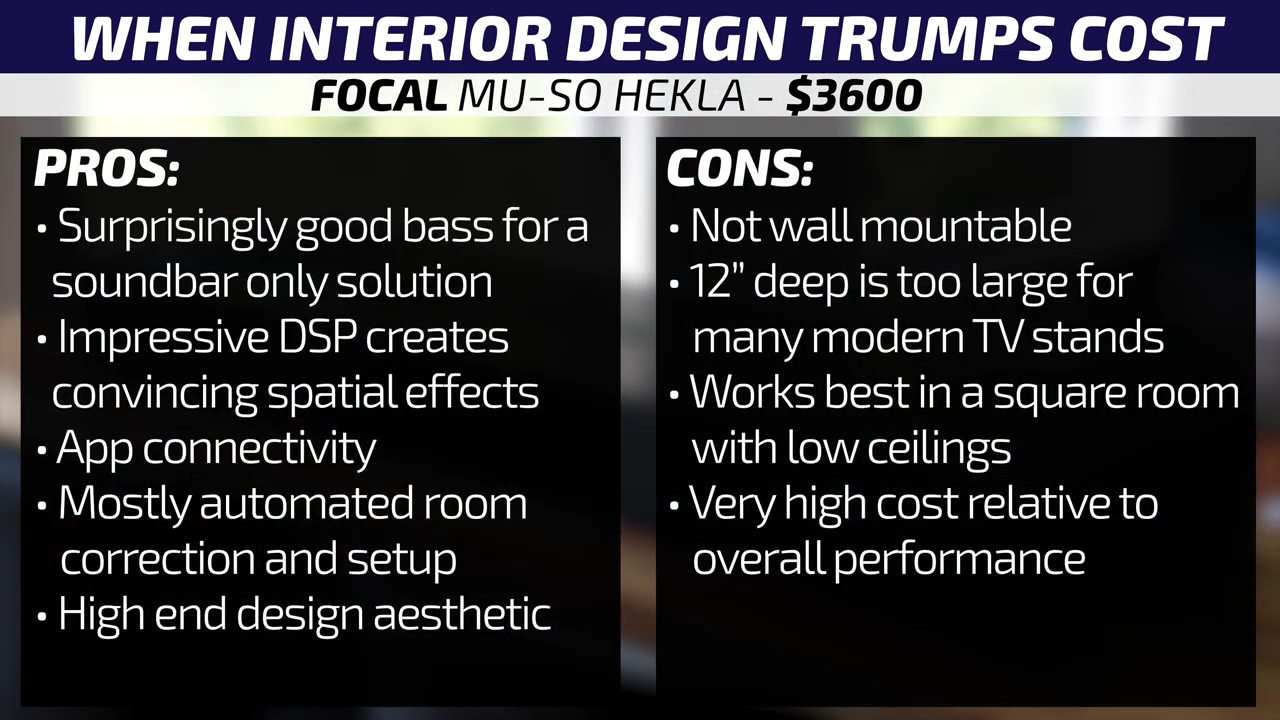
Then there’s the Focal Mu-So Hekla, and at this point you probably already know if it’s the right fit for you. If you absolutely want a bar-only solution, you have a console table or TV stand large enough to fit the Hekla, and you don’t mind its $3600 price tag, there’s no other bar-only solution that comes close to the spatial effects and tonal range of the Hekla. But with that said, it’s still just a soundbar and overall performance was more similar to a more budget friendly four piece system like the Samsung Q990H, or better yet the Q990F which is basically the same system with fewer DSP options, for considerably less money, though I would personally never choose the 990H or F over the Hisense HT Saturn.
As always, there are no sponsored reviews on this channel, but I do have links below for all of the systems in this video, and as always, I appreciate it when you use those links since as an Amazon affiliate I do earn a small commission on the sale at no cost to you.
I’d also like to thank all my awesome patrons over at Patreon for their continued support of my channel, and if you’re interested in supporting my channel, please check out the links below. If you enjoyed this video, please consider subscribing to my YouTube channel and, as always, thanks for watching The Hook Up.