Best Long Throw Projector Screens – 2026 Buyer’s Guide
June 25, 2026Did you just back the XGIMI Titan Noir Kickstarter or treat yourself to a new triple laser projector from Valerion, Hisense, or JMGO, and now you have no idea which screen to buy for it? In this video, I’ve got 10 different standard throw projector screens ranging from $140 to $4500 and I’m going to put them head to head, explain their strengths and weaknesses, and help you pick out which one is right for you.
Screen Types
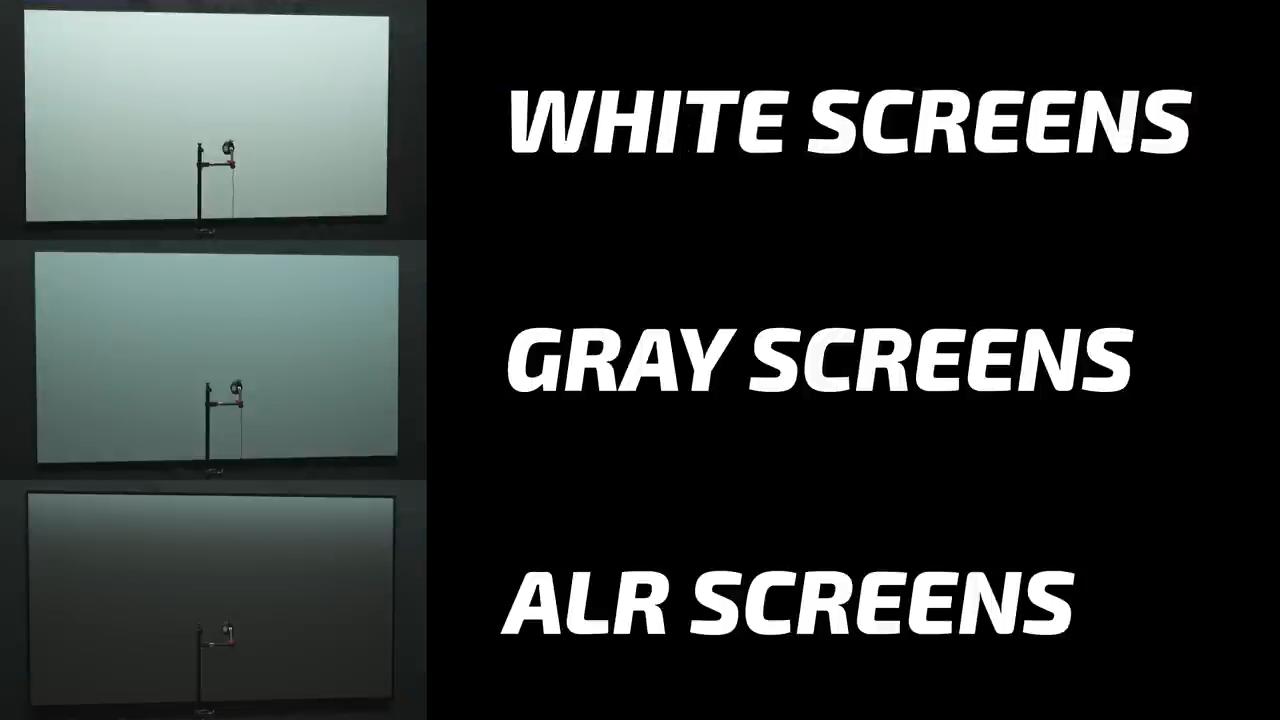
The first thing to know is that there are three basic categories of screen materials: white, gray, and ambient light rejecting screens. The white screens in this video are the CineWhite UHD-B from AKIA/Elite Screens, Silver Ticket WAB, and Valerion PureVision. The gray screens are the ScreenPro 3C and Spectra Element Gray. The ambient light rejecting screens for this video are the Valerion Long Throw Fresnel, Spectra Shadowscape, Nothing Projector Lenticular Long Throw, Vividstorm Fusion, and the absolute pinnacle of a FOMO screen, the Screen Innovations Black Diamond Fusion.
Screen Gains and ALR Properties
I’ll start out by testing screen gain and ambient light rejection which are similar qualities but not quite the same. Screen gain is a measure of how much of the total light hitting the screen is reflected back to the viewer, while ambient light rejection is a measure of how much less light from non-projector sources is reflected when compared to the screen gain.
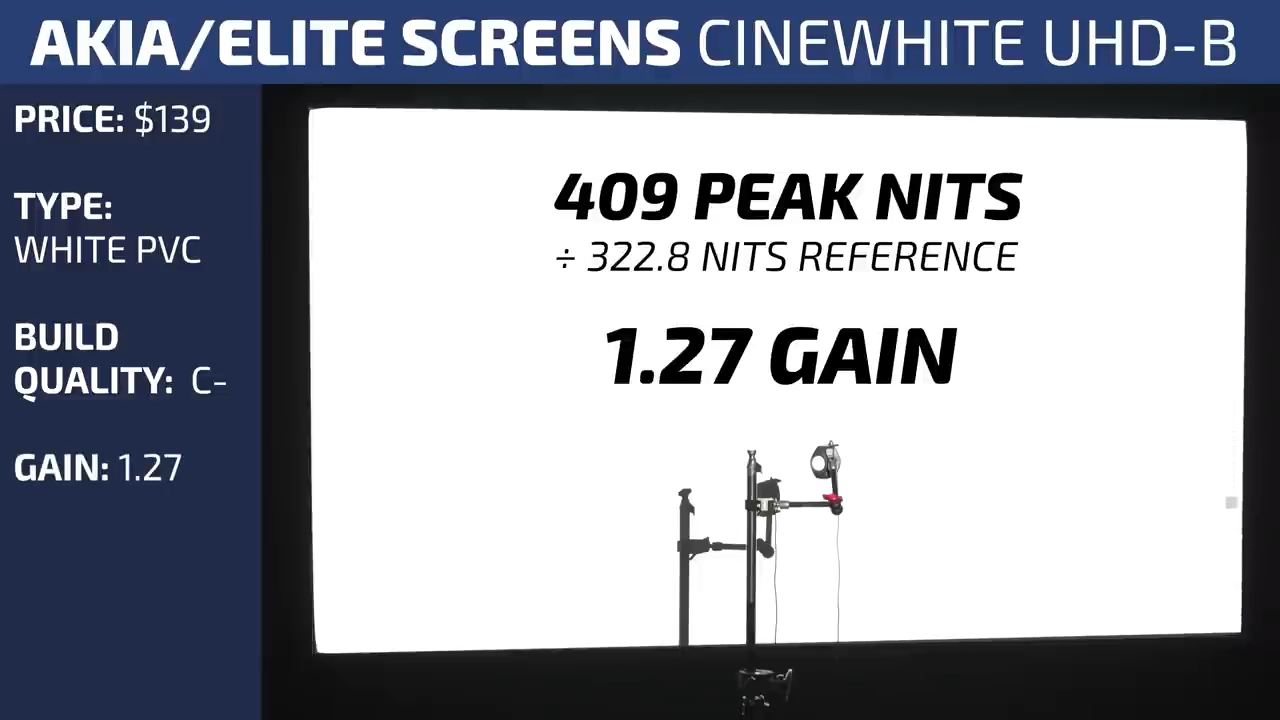
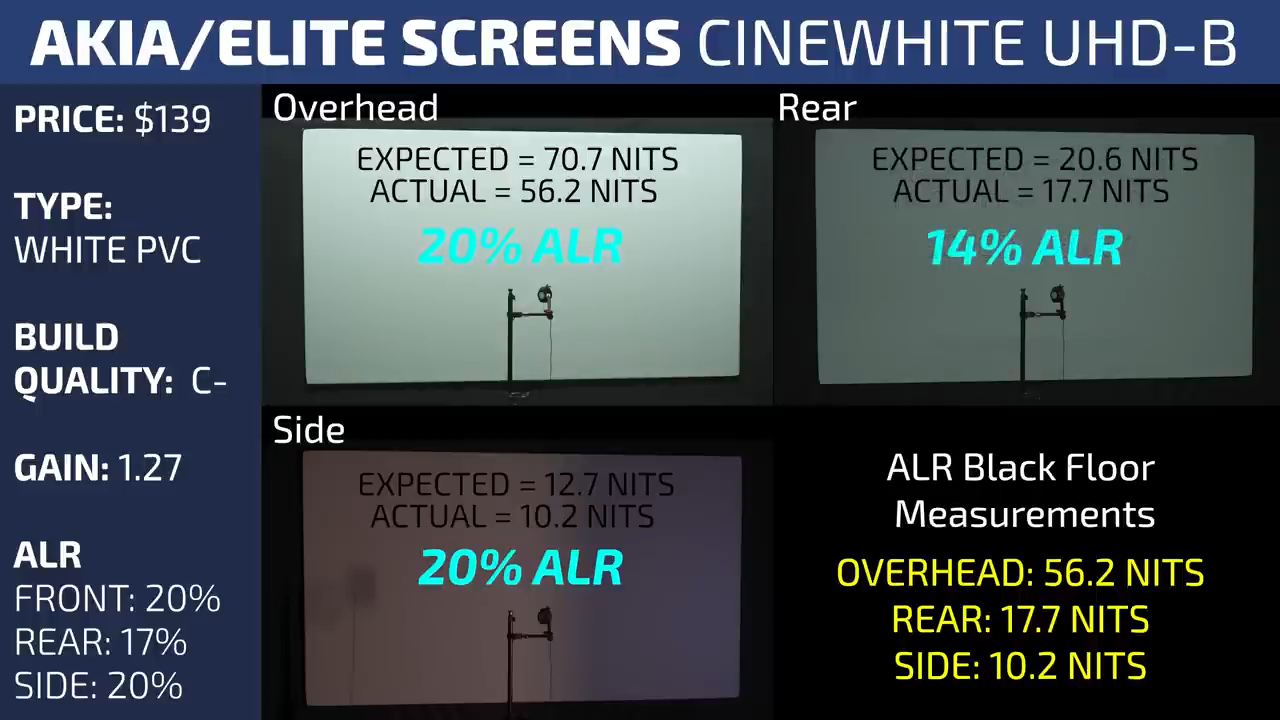
Starting with the least expensive screen, for $139 you can get a 100” Fixed Frame AKIA/Elite Screens CineWhite UHD-B. Using an XGIMI Titan Noir Max, I measured 409 peak nits on the UHD-B material compared to 322.8 on the reference 1.0 gain material, which for this video is Stewart StudioTek 100. That makes the calculated gain on CineWhite UHD-B 1.27, which is pretty close to the listed gain of 1.3. For ambient light rejection, I turned the projector off and used three different light sources, one directly overhead, one overhead in the back of the room, and one off to the side and measured the brightness of the screen, again, compared to the StudioTek 100 reference. Interestingly, the CineWhite UHD-B did have some ALR properties and reflected less light from non-projector sources than you would expect given its 1.27 gain. It had 20% ambient light rejection from both the front and side sources and 14% ambient light rejection from the rear overhead source.
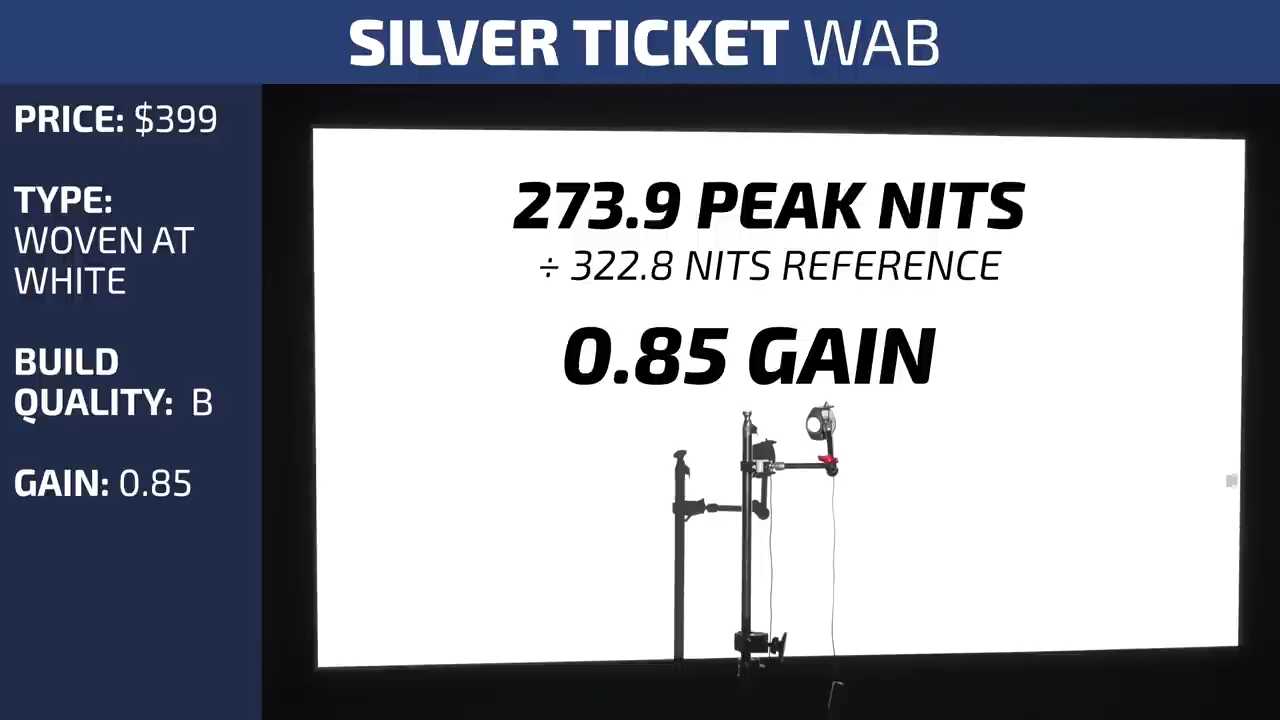
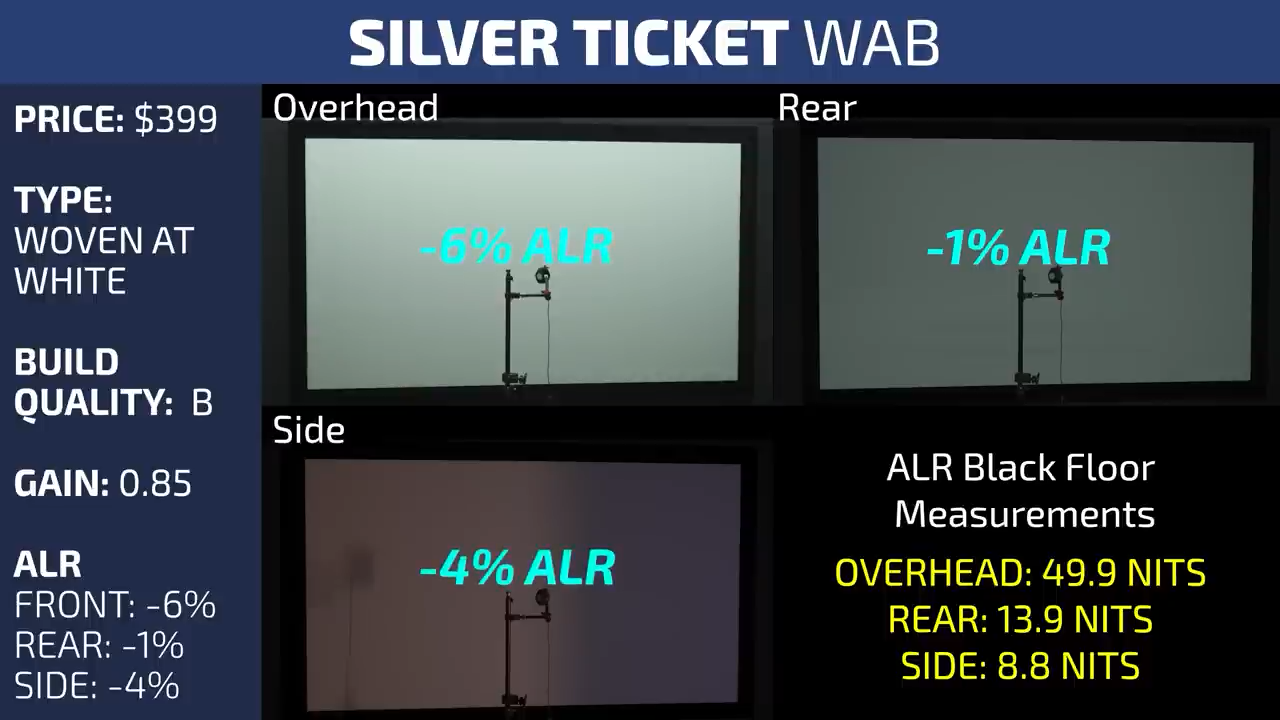
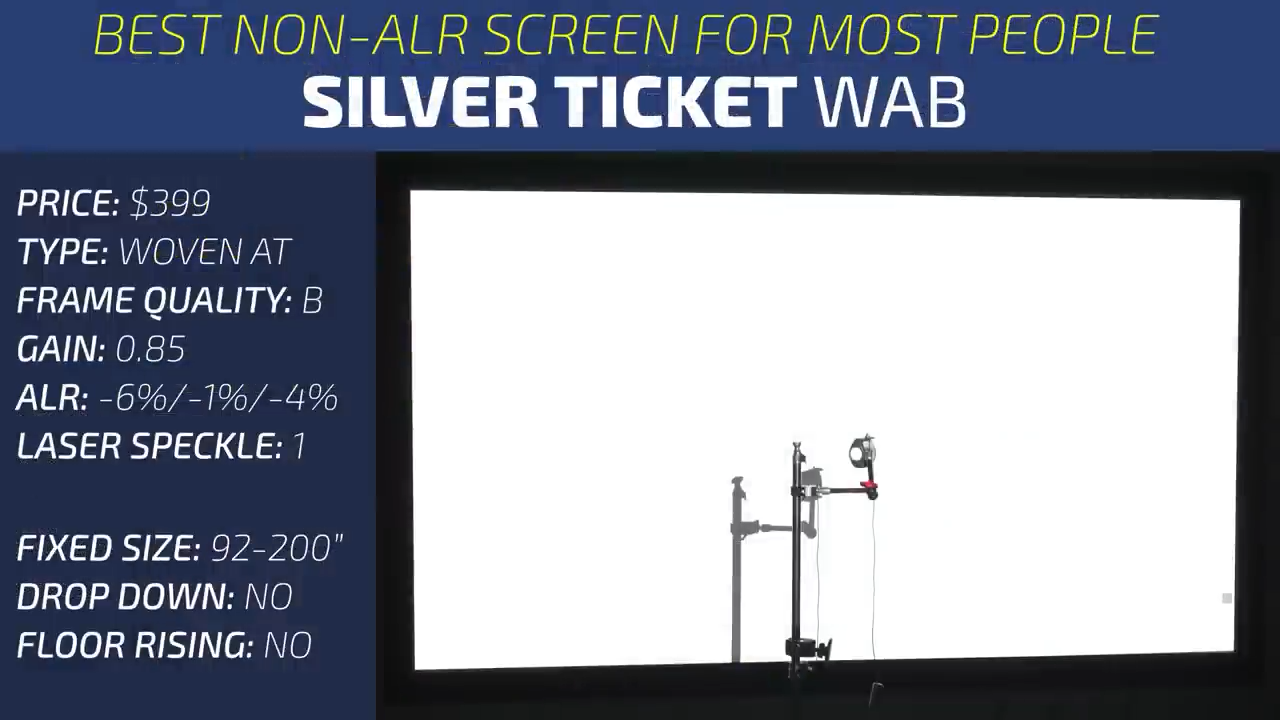
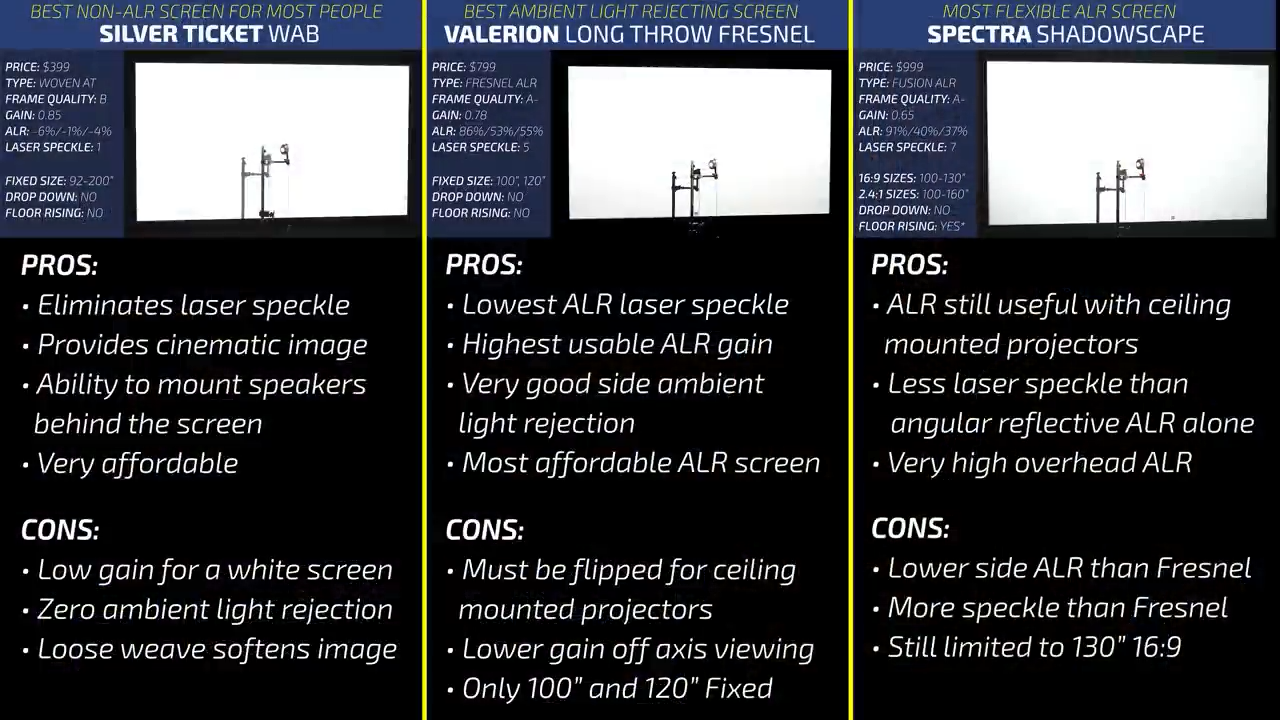
After that for $399 is the 100” fixed frame Silver Ticket WAB. It is a woven acoustically transparent screen, which means you can put your speakers behind the screen for a more immersive experience. WAB measured 273.9 nits peak white, giving it a calculated gain of 0.85, and interestingly it actually had slightly negative values for ambient light rejection, reflecting about 1% more than expected from the rear source, 6% more from the front overhead light, and 4% more from the side.
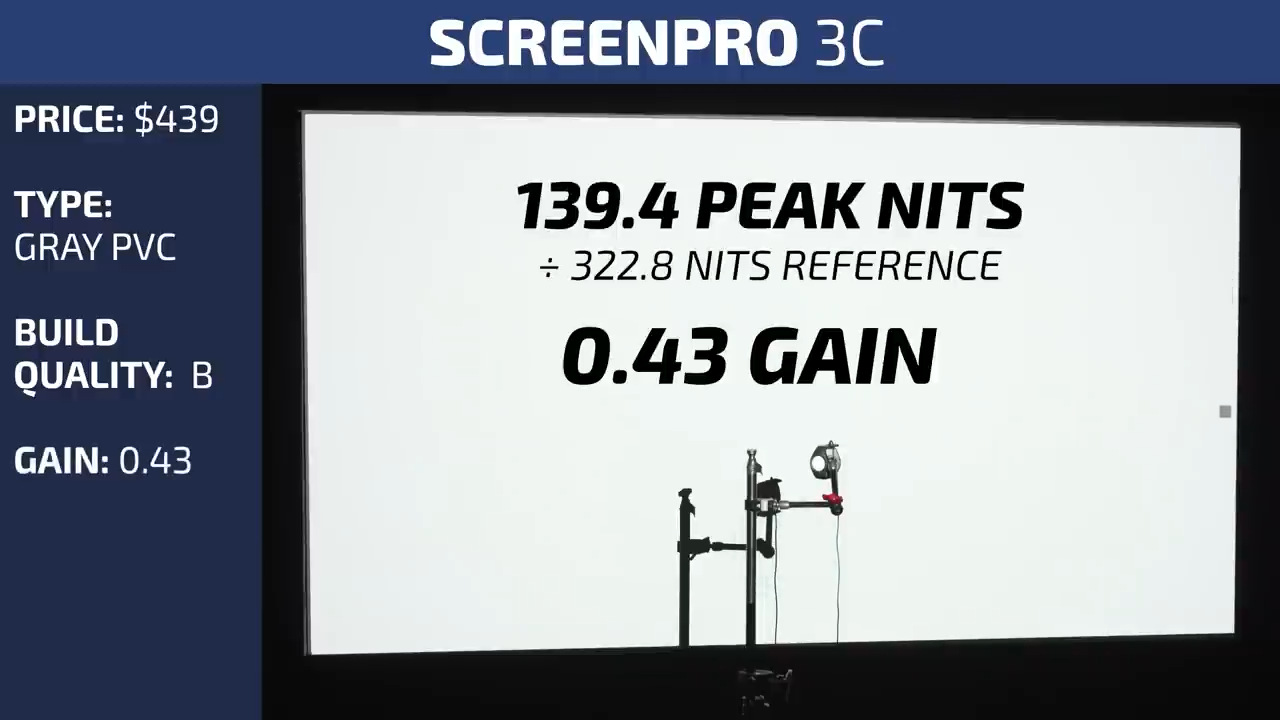
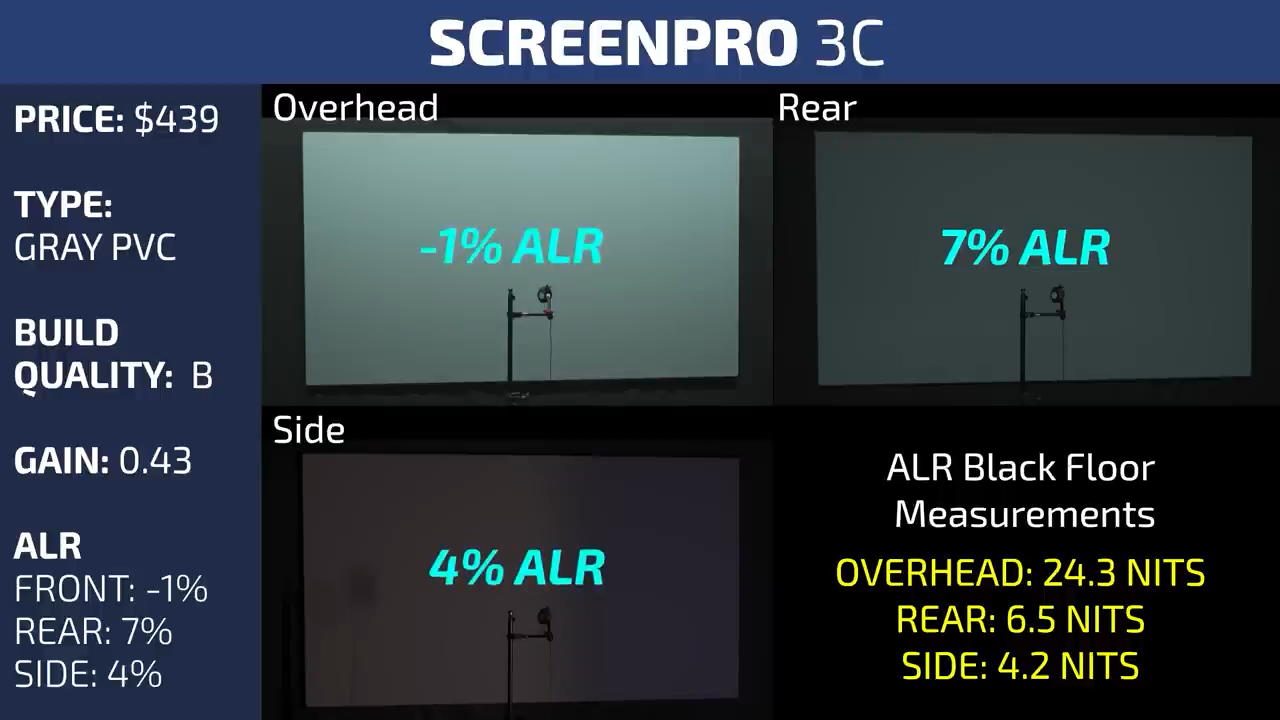
Next for $439 is the 100” fixed frame ScreenPro 3C, which is a low gain gray screen marketed for its laser speckle reducing properties. 3C measured just 139.4 nits on peak white, giving it a calculated gain of 0.43, and it had almost no ambient light rejecting qualities and rejected 7% from the rear source and 4% from the side, but was 1% brighter than expected from the front overhead source.
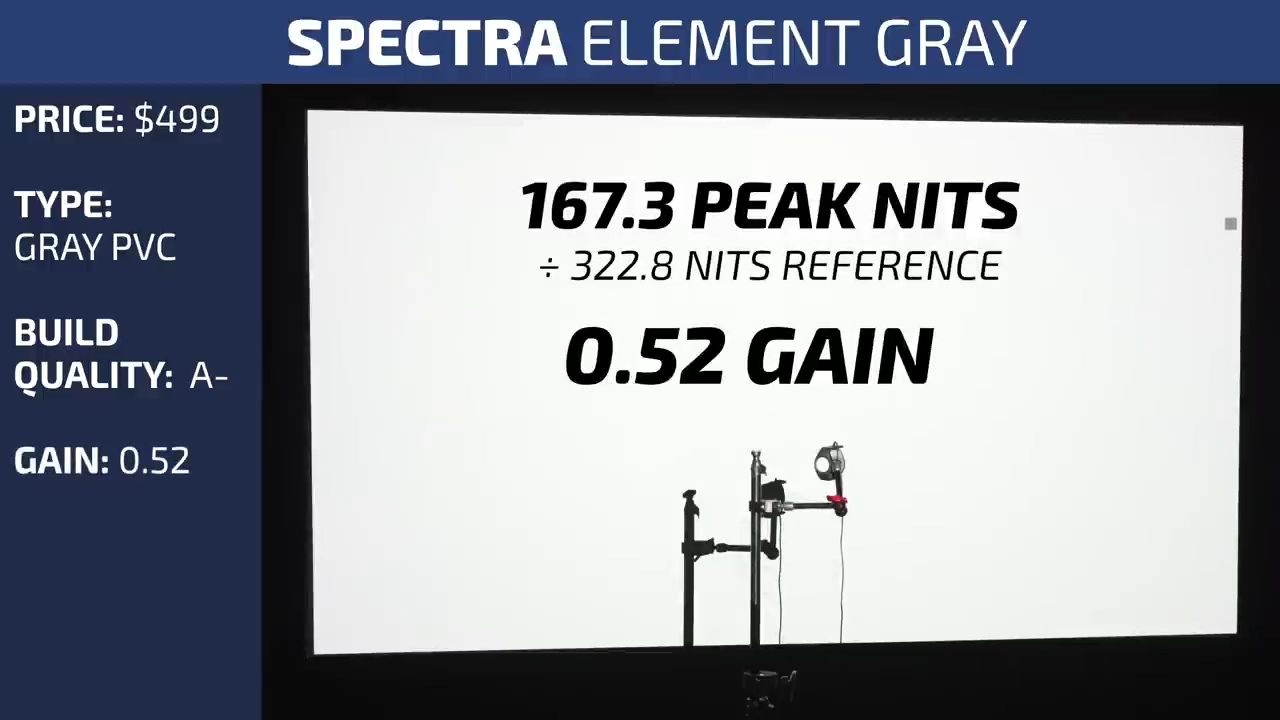
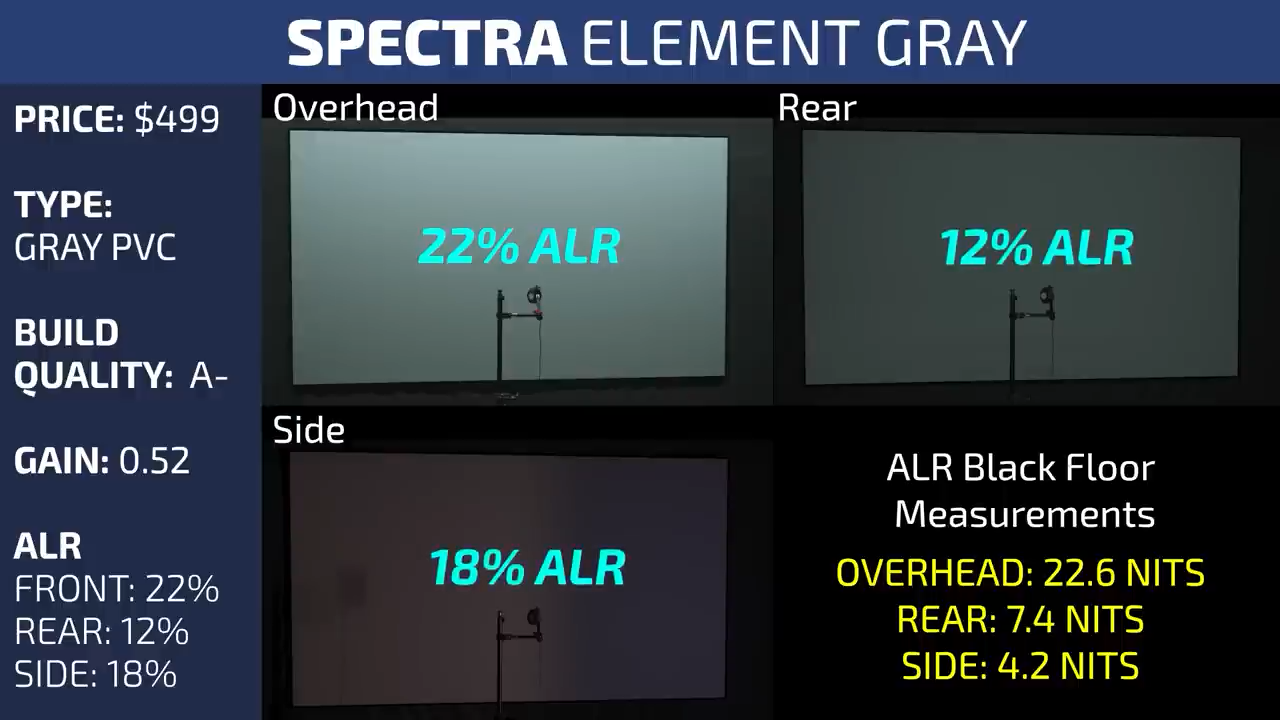
Then for $499 is the other gray screen the Spectra Element Gray 100” fixed frame, which measured 167.3 nits on peak white, giving it a calculated gain of 0.52, slightly higher than ScreenPro 3C. But unlike 3C, the Element Gray did have some ambient light rejecting qualities and rejected about 22% of light from directly overhead, 12% of ambient light from the rear, and 18% from the side source.
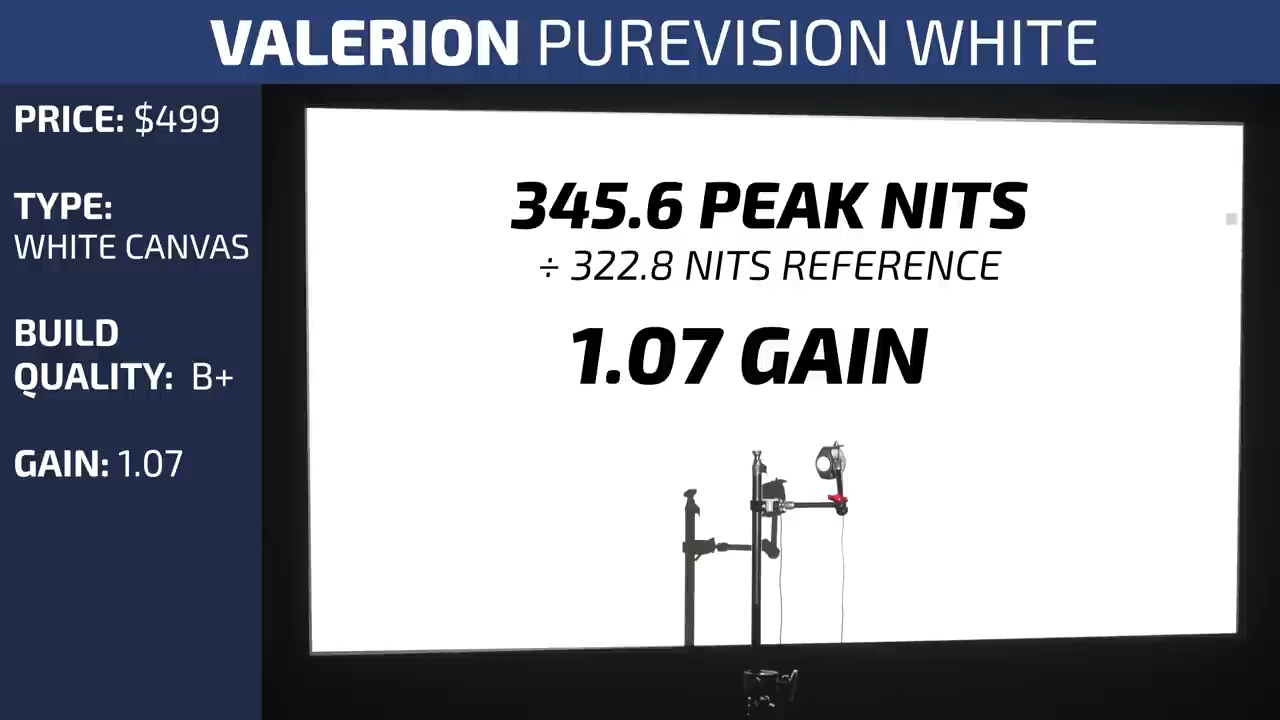
Then also for $499 is the 100” fixed frame Valerion PureVision white screen, which like the ScreenPro, is marketed for its laser speckle reducing properties. The Titan Noir Max measured 345.6 nits on the PureVision material, giving it a calculated gain of 1.07, very close to its advertised 1.1 gain, and the PureVision screen had literally zero ambient light rejecting properties and measured exactly 0% ALR from all three sources.

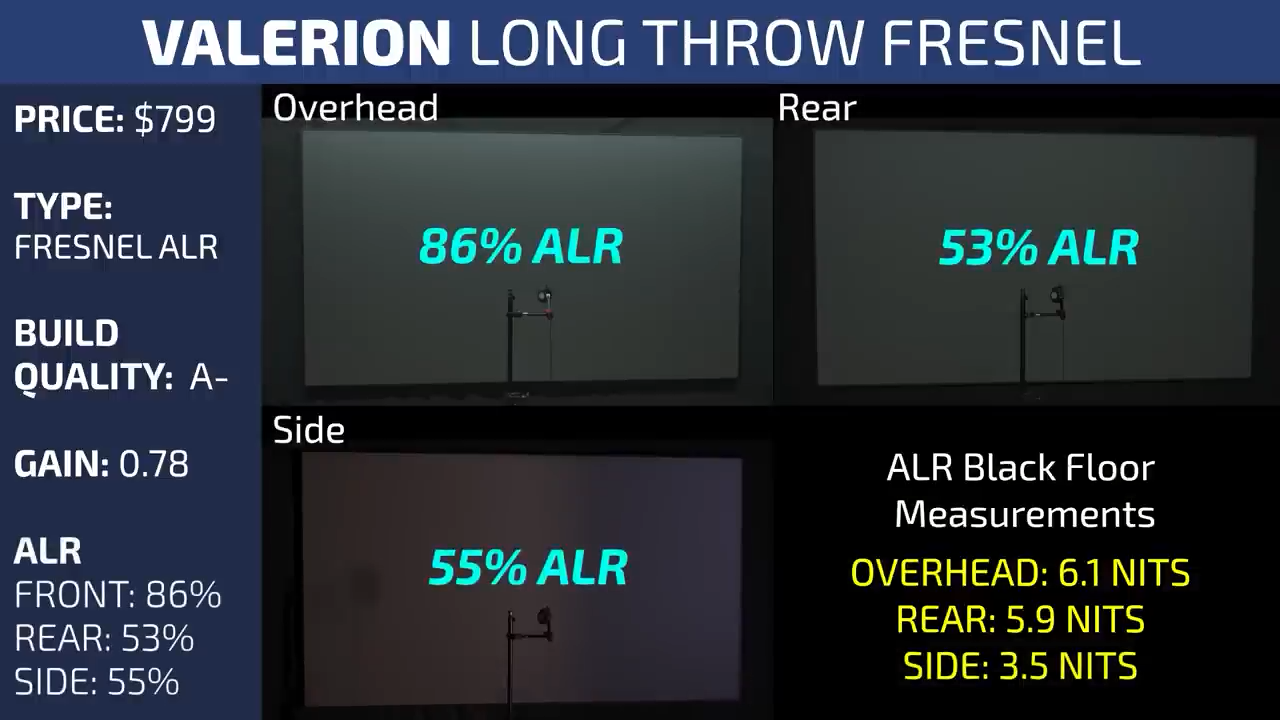
Next for $799 is the 100” Fixed Frame Valerion Fresnel ALR screen, and this one has two sets of measurements because I had the Titan Noir mounted above the screen, and the Valerion Fresnel is directional, meaning the screen should be inverted for ceiling mounting, but that also reduces the ALR capabilities from overhead sources. Assuming you have the screen flipped in the correct orientation for your projector, the Valerion Fresnel has a calculated gain of 0.78, and if your projector is below the screen you can expect about 86% ambient light rejection from directly overhead, 53% from rear overhead sources, and 55% from side sources, but if you flip the screen over for a ceiling mounted projector the ambient light reduction goes down quite a bit to 50% rejection from directly overhead, and actually 2% more light reflected from rear overhead sources, but increased side ambient light rejection at about 58%.


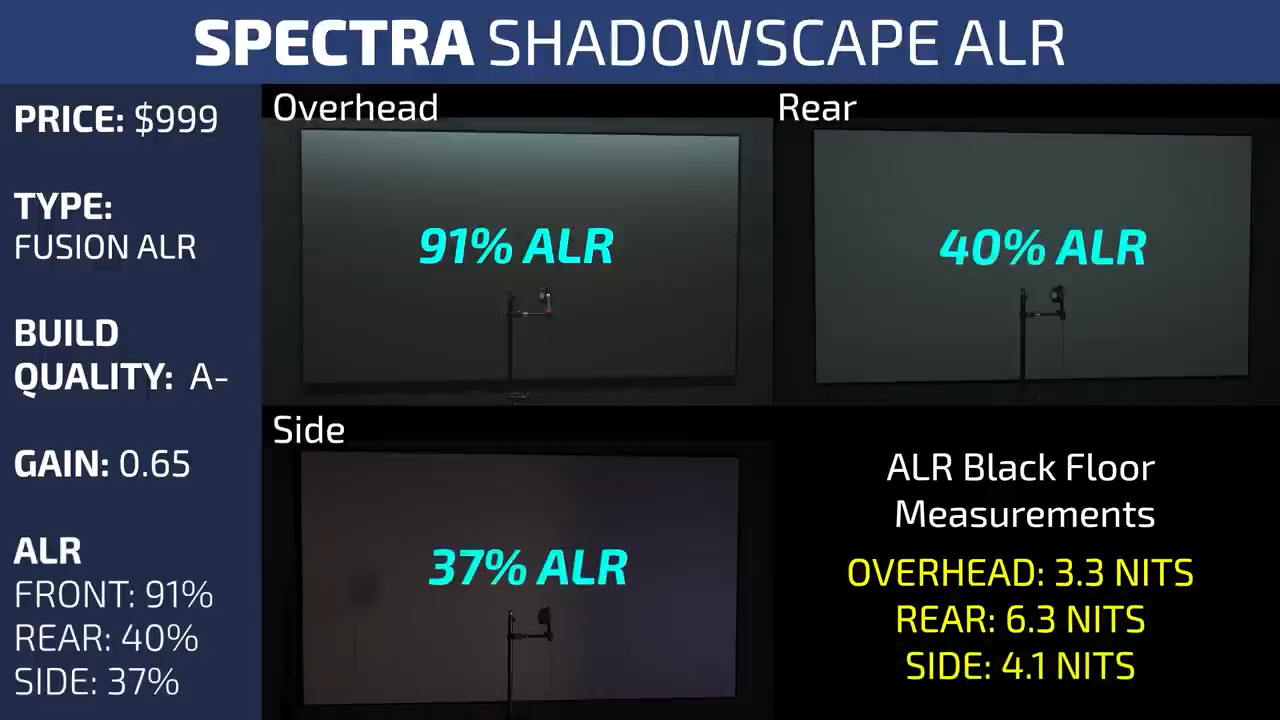
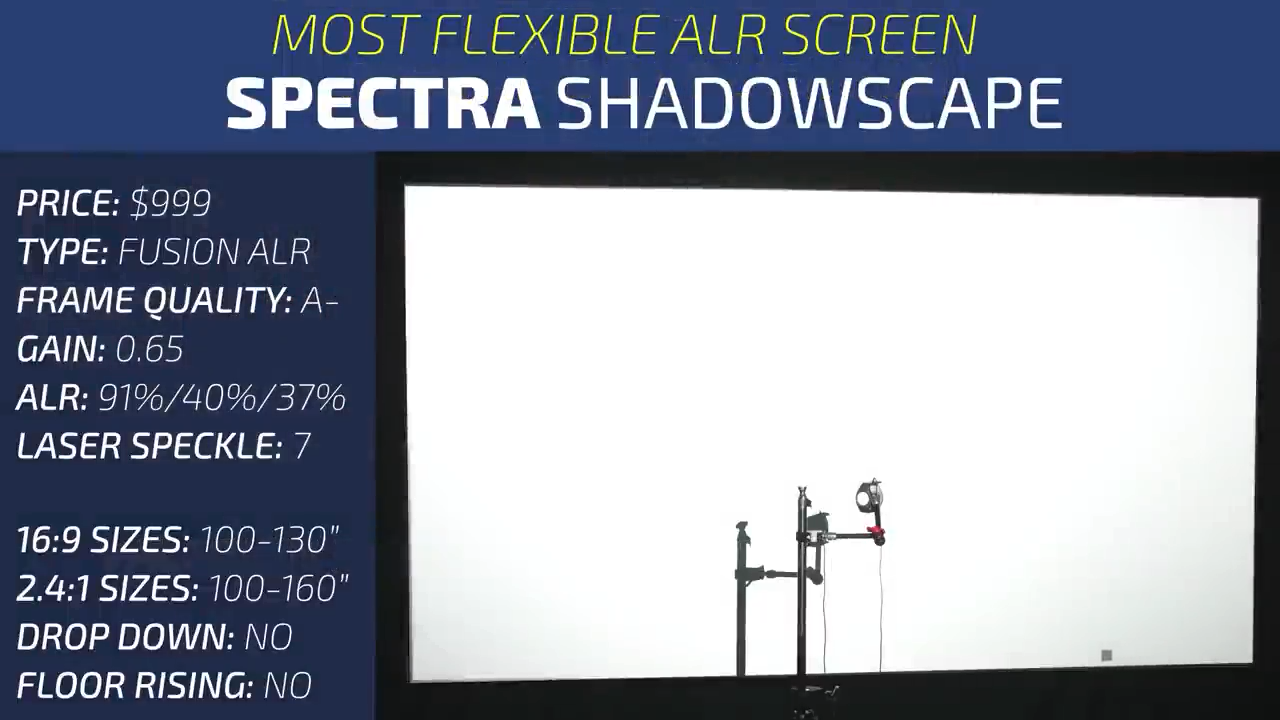
After that for $999 is the 100” fixed frame Spectra Shadowscape ALR screen that is the first of the “fusion” screens that combine a Lenticular ALR structure with an angular reflective coating. Unlike the Valerion Fresnel screen, there doesn’t seem to be any directionality to the screen despite the sticker on the back showing which direction should be up. The Shadowscape measured around 210 nits on peak white in either orientation giving it a calculated gain of 0.65 and it rejected 91% of the ambient light from directly overhead, but only 40% from the rear overhead source, and 37% from the side, which kind of makes sense given the structure of the screen’s Lenticular ridges.

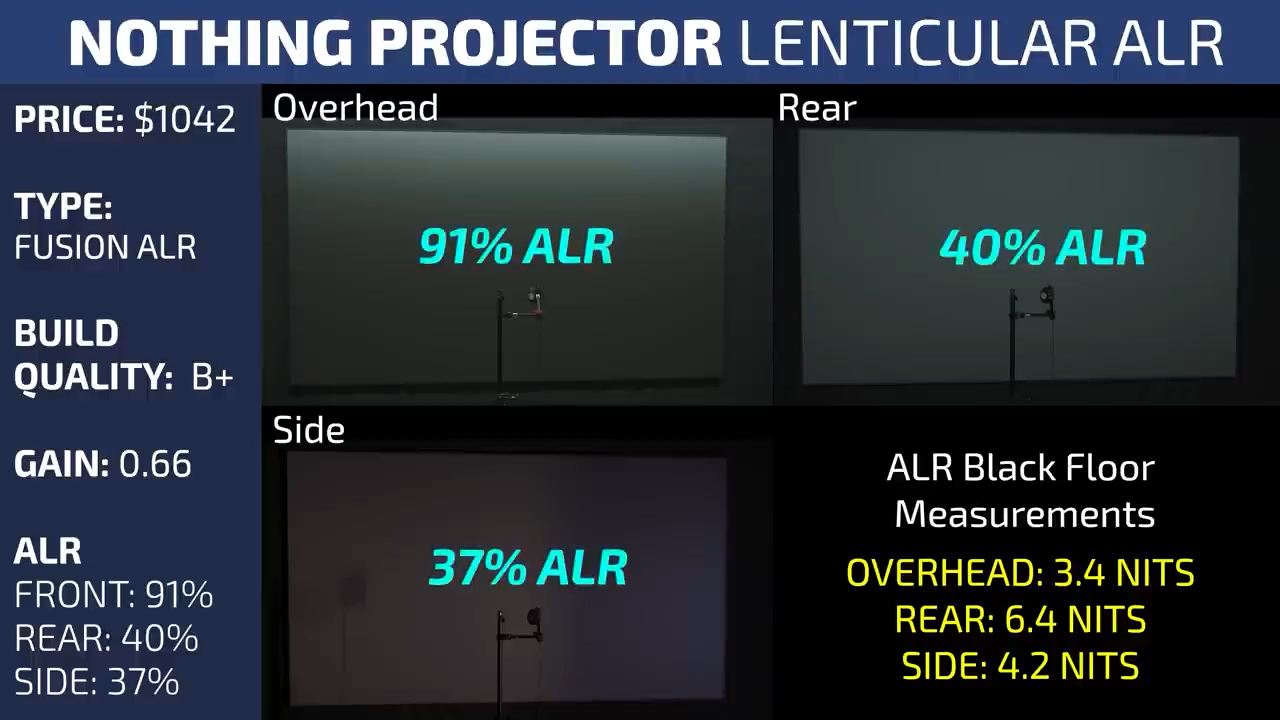
Next, for $1042 is another 100” fixed frame Lenticular “fusion” type ALR screen from Nothing Projector, and just like the Shadowscape this screen wasn’t actually directional despite having a direction sticker and measured 212.1 nits, giving it a calculated gain of 0.66 and it had literally the exact same ambient light rejection as the Spectra Shadowscape at 91% from directly overhead, 40% from the rear overhead and 37% from the side.

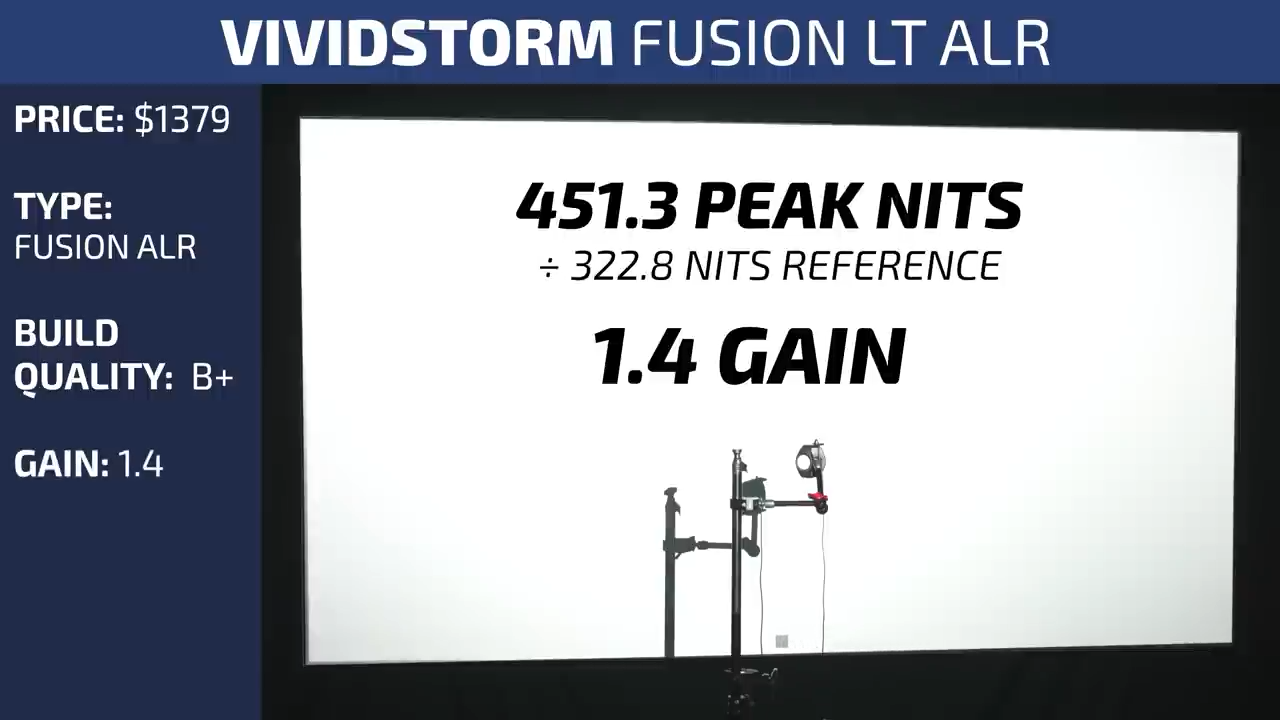
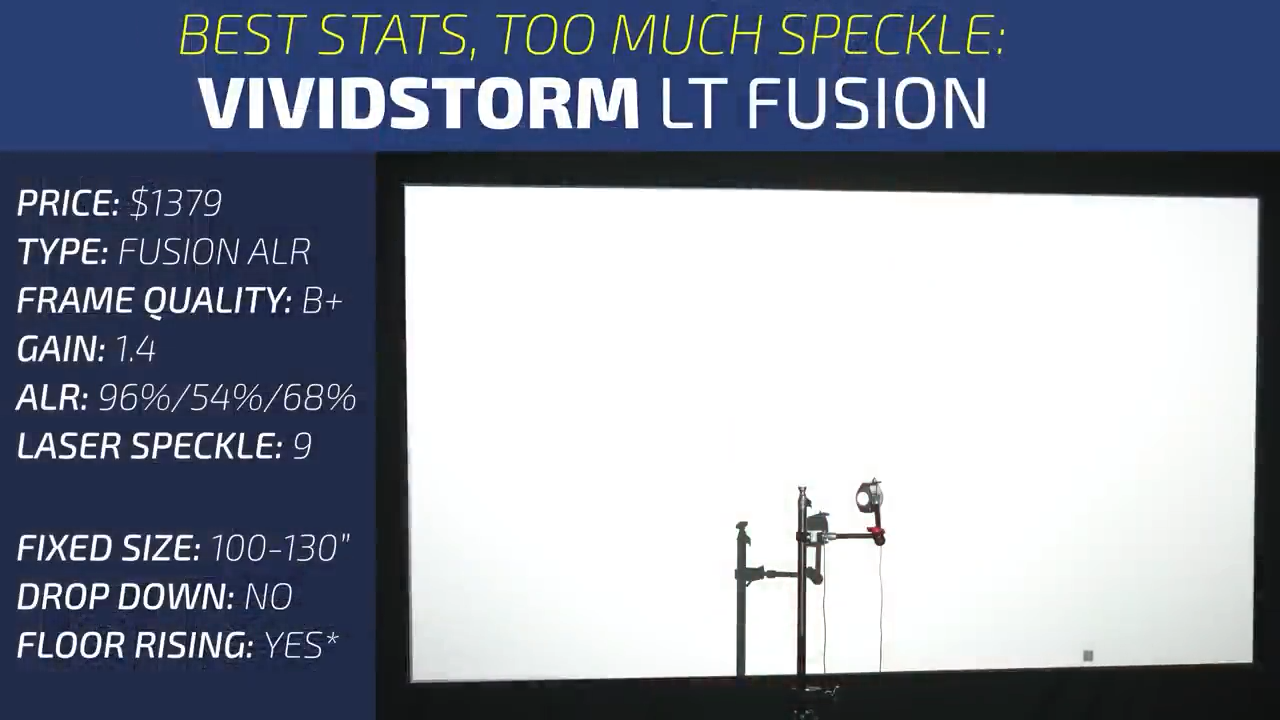
Then for $1379 is the Vividstorm Fusion ALR screen, another part Lenticular, part angular reflective screen, but the Vividstorm is noticeably different and measured 451.3 nits peak white, the brightest yet, giving it a calculated gain of 1.4, and it also had the highest ambient light rejection yet at 96% from directly overhead, 54% from rear overhead, and 68% from the side.

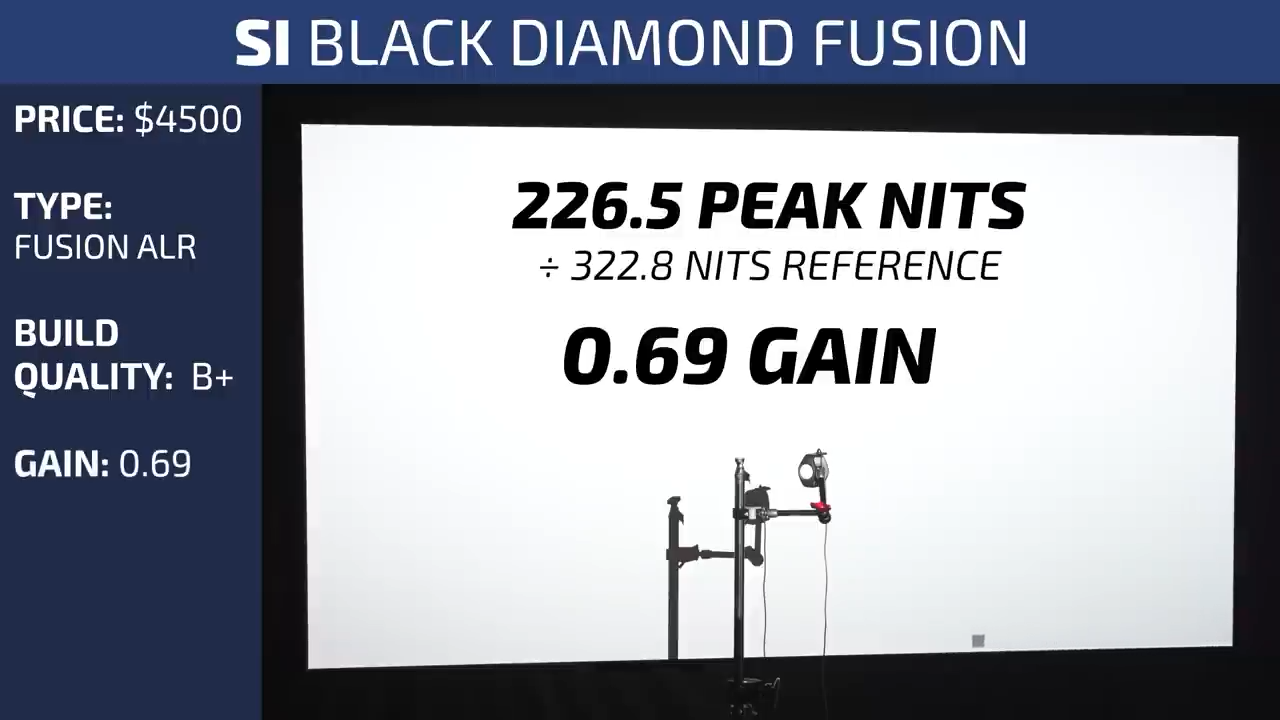
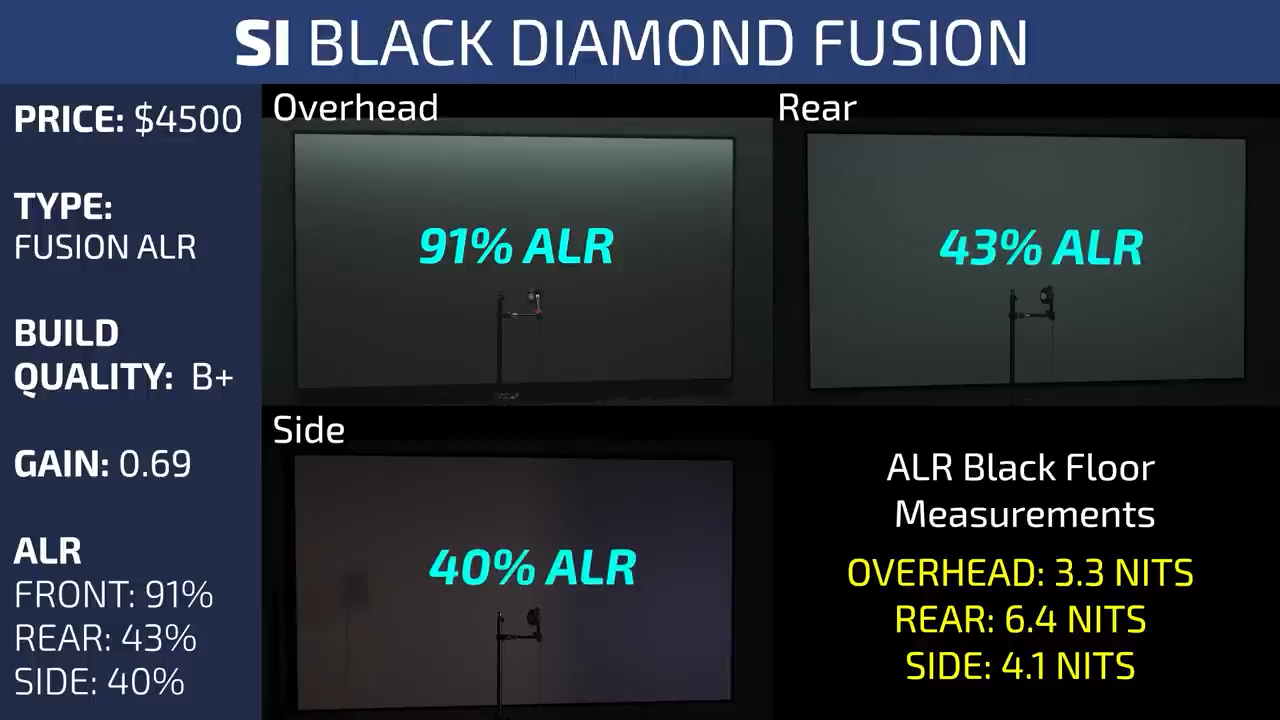
Last, with an insane price tag of $4500 for a 100” fixed frame screen is the Screen Innovations Black Diamond Fusion, which as the name implies is another fusion of Lenticular and angular reflective ALR technology. Black Diamond Fusion is also non directional but unlike the other fusion screens it doesn’t have a labeled “up” or “down” orientation. Using the Titan Noir Max, the Black Diamond Fusion measured 226 nits peak white, giving it a calculated gain of 0.69, slightly higher than the Spectra and Nothing Projector screens, and like those screens it rejected 91% of ambient light from directly overhead, but 3% more from the rear and side sources at 43% and 40% respectively.
Contrast Testing (Titan Noir Max)
I also measured the native contrast of the Titan Noir Max on each screen, and you can see that the ambient light rejecting screens give a slightly higher native contrast since they’re able to reject room reflections, resulting in a lower overall black floor. Oddly, the CineWhite UHD-B also had a slightly higher native contrast value.

With ambient light in the room the contrast values took a huge hit, but unsurprisingly the ALR screens were the ones that maintained the best contrast ratios, especially the high gain screen from Vividstorm.

Laser Speckle Testing
That might seem like enough information to make a perfectly informed decision on your screen purchase, but there’s more. The big wildcard that has been added to screen selection in the last couple of years is laser speckle. All types of laser light sources can have speckle on some colors, but pure RGB laser projectors like the XGIMI Titan Noir, Valerion Max, and Hisense XR10 speckle on every color. Some screens can eliminate speckle while others can make it much, much, worse.

I spent a few hours swapping out screens comparing them side by side with two XGIMI Titan Noir Maxes. I even cut out little pieces of paper to be able to rank and compare the speckle on each screen and what I figured out was that there are really two types of noticeable speckle. The first happens when there is a large single-color area on the screen and the speckle shows up if you move your eyes or head at all, and the second is when there is a panning shot across a mostly one-color object like a hockey rink or football field and that happens all the time if you’re watching basically any sport.
Starting with stationary speckle, Silver Ticket WAB is the only screen I’ve ever tested that just eliminates speckle completely. So, if laser speckle is something you’re sensitive to, WAB is probably the answer. But second, the biggest surprise from me in this video was how good the speckle reduction was on the Valerion PureVision screen and it was only very mildly worse than WAB.
For the ALR screens, the Valerion Fresnel had by far the least stationary speckle, and I thought it was noticeably less than the two gray screens that are advertised for their speckle reduction. The CineWhite UHD-B material also had slightly less stationary speckle than the gray screens, and there was no noticeable difference between the three “fusion” screens from Spectra, Nothing Projector, and Screen Innovations. The high gain Vividstorm Fusion screen had by far the most speckle and in my opinion was borderline unwatchable.

The moving speckle was a slightly different story, and while Silver Ticket WAB still had zero, the Valerion PureVision, Valerion Fresnel, and CineWhite UHD-B were slightly worse. The Gray Screens from Spectra and ScreenPro had considerably less moving speckle than they did stationary speckle, and all four of the fusion ALR screens had basically the same amount of moving and stationary speckle.

Conclusions
The last piece of the screen puzzle is figuring out if the screen material that you want comes in the size and form factor that you want.
For ambient light rejecting screens, the clear winner for me was the Valerion Long Throw Fresnel, which was not only the lowest price of the five ALR screens, but it also had lower laser speckle, higher ambient light rejection, and higher gain than all the other ALR screens except the Vividstorm. But the downside of a Fresnel screen is that unlike the other screen materials that are produced in large rolls that can be cut to size, a Fresnel screen needs to have its three-dimensional lens structure stamped onto each screen, so it’s only available in 100” or 120” screen sizes and custom sizes aren’t possible.
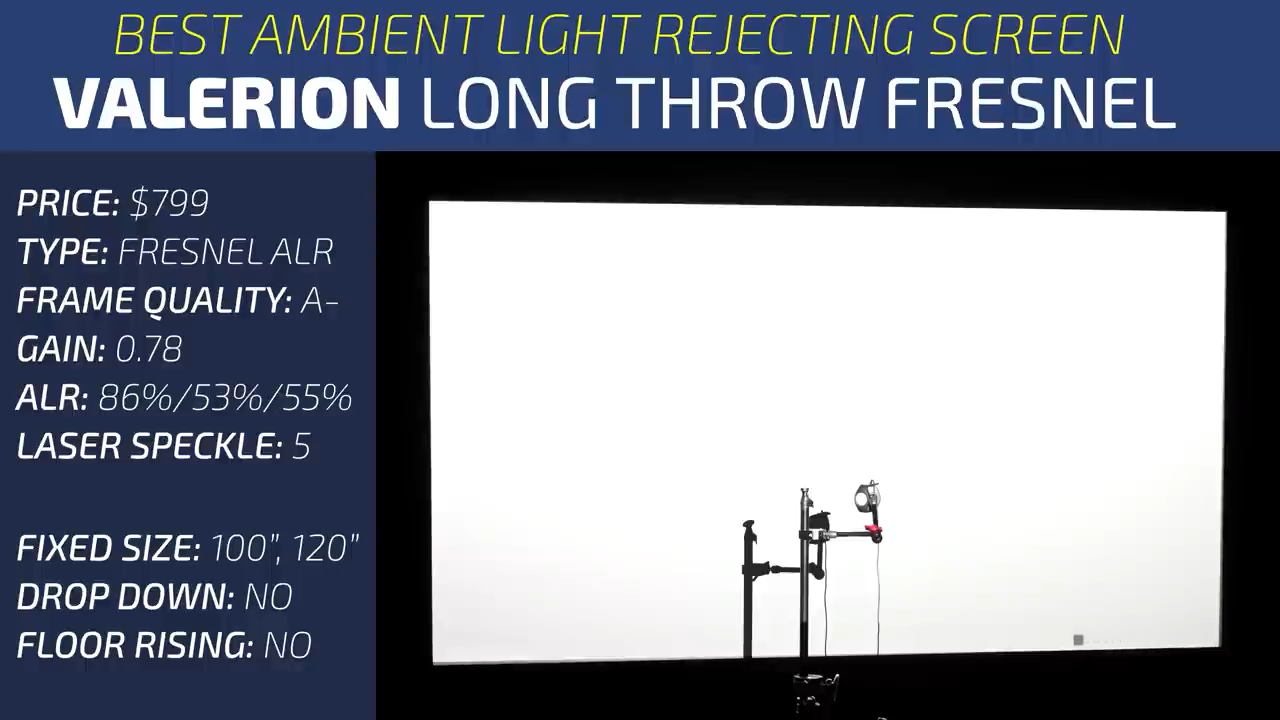
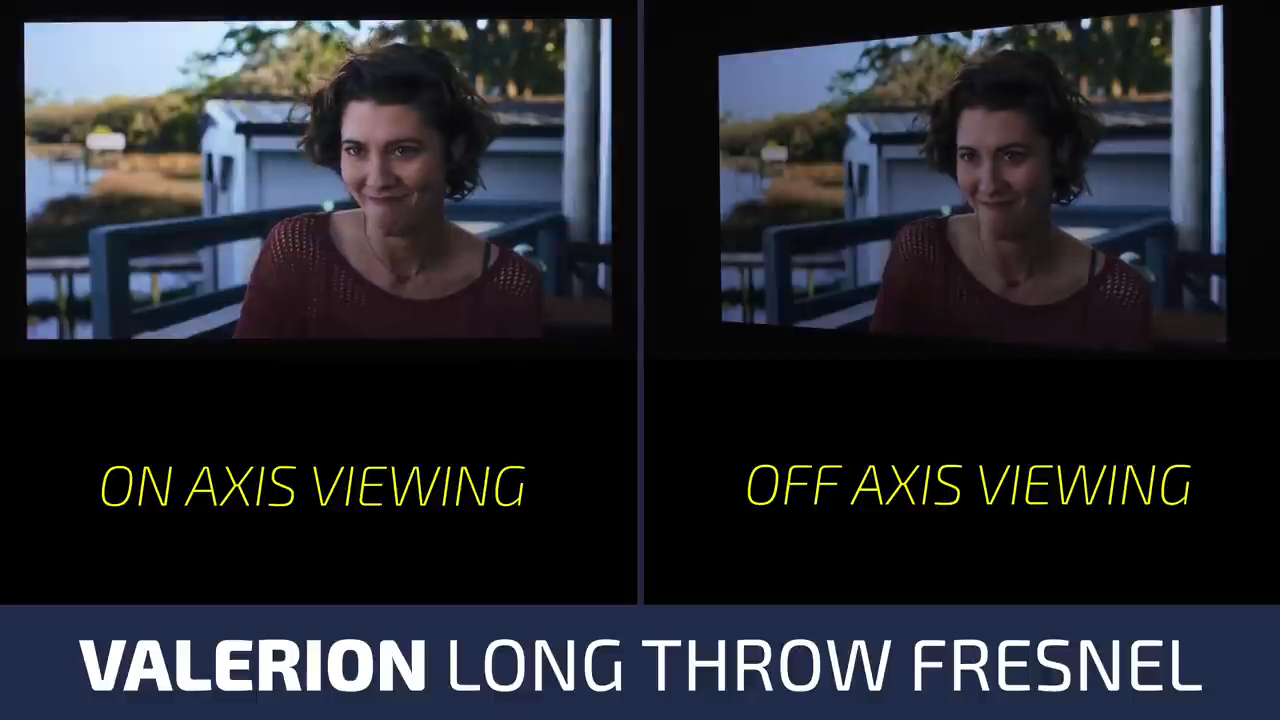
A Fresnel screen also has two other downsides. First, the ideal viewing cone is about 50 degrees in front of the screen and if you’re outside of that, the screen is noticeably dimmer. But unlike Fresnel screens for ultra-short throw projectors, there isn’t much hot spotting for off-axis viewing, just an overall lower gain. The second downside is that if you need to flip the screen upside down for a ceiling mounted projector the ambient light rejecting properties from overhead sources go way down.
So, if you want an ALR screen that comes in bigger sizes and is more effective when using a ceiling mounted projector, then the Lenticular Fusion style screens are a better pick. On paper, the Vividstorm Fusion looks the best with a high gain of 1.4 and very impressive ambient light rejection but watching actual content the screen had hotspots and a borderline unwatchable amount of laser speckle, and I think they went too heavy on the angular reflective coating.
So that leaves the Spectra Shadowscape, Nothing Projector Lenticular Long Throw, and Screen Innovations Black Diamond Fusion. I hate to say it, but despite their massive price differences I’m pretty sure all three of these screen materials came from the same factory off the same roll. Not only did they perform almost identically, but they look the exact same under a microscope, and they all have the same screen size limitation, which is due to the width of the roll that the material is produced on so 130” is the maximum 16:9 screen you can get. But if you want a wider CinemaScope screen you can go all the way up to 160” since it would keep the same screen height.

Compared to the Valerion Fresnel, the three fusion screens have more stationary laser speckle, but a similar amount of moving laser speckle, and they have an overall lower gain, but better off axis viewing. As I mentioned, the main advantage is that they retain their ambient light rejecting properties even when using a ceiling mounted projector, but like all screens, based on angular reflective technology, they function best with longer throw ratios of at least 1.5:1.
I really do think that ALR screens are useful no matter how good the light control is in your room, but they do limit you in terms of size and form factor. In terms of fixed frame screens, Silver Ticket WAB, Spectra Element Gray, and ScreenPro 3C are available in sizes all the way from 92” to 200”.
Between the three, I think Silver Ticket WAB is right for most people with a triple laser projector and to me, the relatively loose weave of WAB produces an incredibly cinematic image and completely eliminates laser speckle resulting in a very calm image while maintaining the excellent color and motion clarity that you get from a triple laser DLP projector.
If you have ambient light in the room a low gain gray screen can help lower black levels, but it comes at the expense of reduced overall brightness, so there’s no actual contrast increase. In a mostly light controlled room low gain screens make a lot less sense now that a mechanical iris is becoming a more common feature on projectors, since closing the iris lowers brightness, but also results in an increase in native contrast, so it’s the preferred method of reducing brightness compared to a low gain screen.
Even though ScreenPro 3C was low gain, lacked ALR properties, and still had a moderate amount of speckle, the one major benefit it has over the rest of the materials in this video is that it’s available in drop down and floor rising versions, which can be useful for convertible home theater spaces.

Before I leave you with some side-by-side footage of the screens, here’s a quick TL;DR wrap up of which screen materials I recommend and why you might choose one screen over another.
As always, there are no sponsored reviews on this channel, but I do have links below to all the screens in the video, and as always, I appreciate when you use those links since as an affiliate I do earn a small commission on the sale at no cost to you.
Enjoy the side-by-side footage, feel free to leave a comment on my YouTube channel if you’ve got specific questions about which screen would be right for your space, and as always, thanks for watching The Hook Up.