Projector Advertising Is Broken, I’m Fixing It
November 6, 2026There are four specific issues that make shopping for a projector extremely difficult right now, and I’ve started a new company called “Truth In Brightness” to try to fix them all.
Unusable Brightness Modes
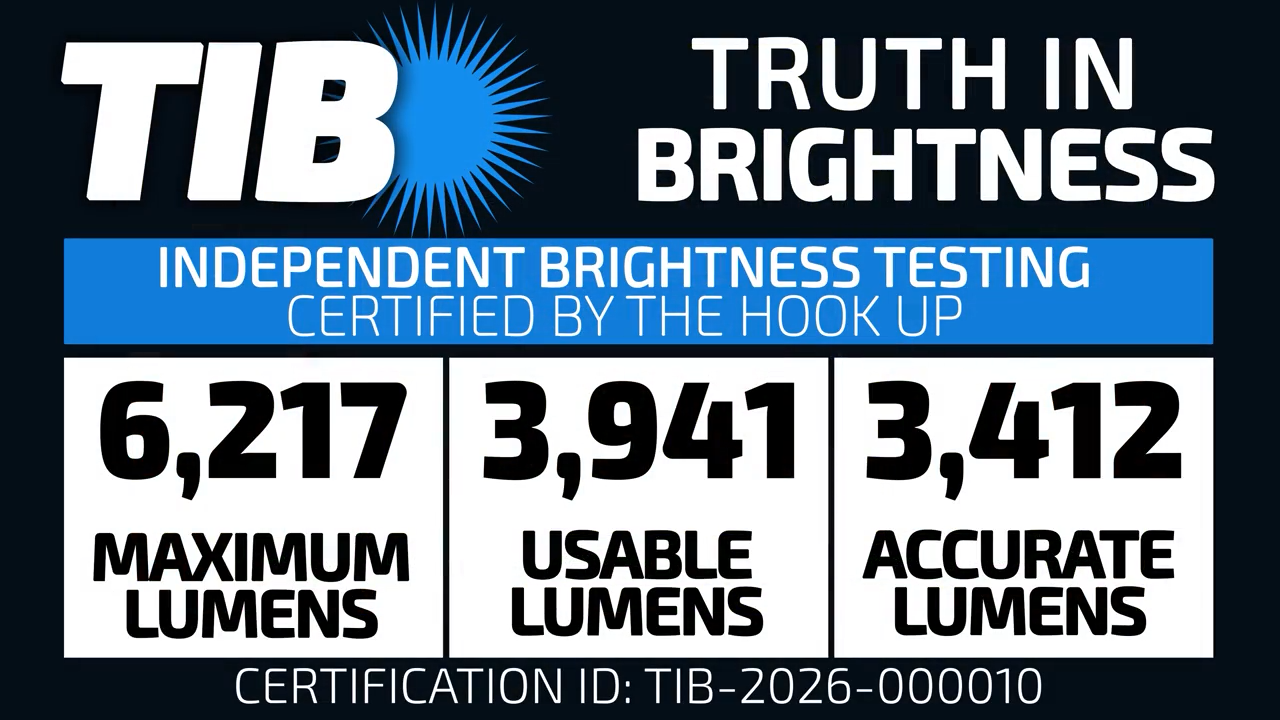
First, brightness is one of, if not the most, important things to consider when choosing a projector. Projector companies are currently in an arms race to make the brightest projectors for the least money to earn your business, but in almost all cases right now, the maximum brightness of the projector only exists in a mode you’d never want to use because of high fan noise, poor color accuracy, or both. So Truth In Brightness defines three different brightness values: Maximum, Usable, and Accurate.
Maximum brightness is exactly what it sounds like and aims to verify the brightness values listed by the manufacturer. Interestingly, the ISO standard requires advertised brightness to represent the average of production units but allows individual projectors to measure as low as 80% of that value. So for a projector advertised at 5,000 lumens, the minimum allowed brightness would be just 4,000 lumens, which is a pretty significant difference from what a consumer might expect, but is still a passing result.
Usable brightness is defined by Truth In Brightness as having a white color temperature between 6,000 K and 11,000 K and a color accuracy grade of at least a “C”, meaning the average SDR color error when measured in Calman Ultimate is less than 12. I’ll include a link to my color accuracy testing methods below, but most people would consider the Usable brightness mode to be completely acceptable for watching shows or sports on a daily basis.
The final distinction is Accurate brightness for watching movies as the director intended, which means a white balance between 6300 K and 7500 K and an “A” color accuracy score, which means an average SDR delta error under 3. Those relatively strict requirements mean that not every projector will have a color accurate brightness, and in those cases, the best accuracy grade will be listed in its place.
Projector Brightness Standards
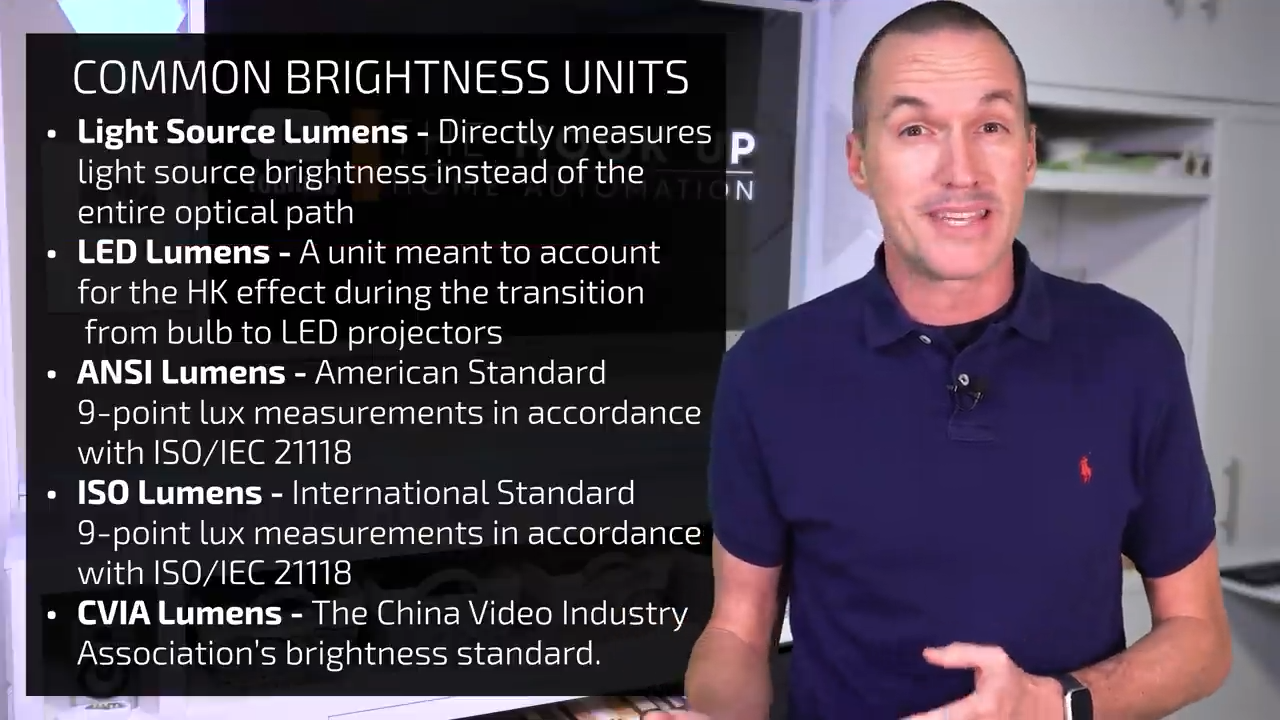
The second problem is that there is still a lot of confusion around the different brightness standards companies use to advertise their projectors. Thankfully, things like Light Source and LED lumens are much less common now, but ANSI, ISO, and CVIA lumens are still commonly used. Despite what you may have read on the internet, and what I thought for a long time, ANSI and ISO lumens have been measured using essentially the same method since 2005, and as of 2023, ANSI officially adopted ISO/IEC 21-118 as an American National Standard.
Truth In Brightness will also adhere to ISO 21-118, which means taking nine separate lux readings using calibrated lux meters facing the lens of the projector, averaging them, and multiplying by the screen size in square meters. ISO also specifies that the diagonal screen size needs to be between 40 and 70”, so my testing rig uses a 70” screen since many projectors have trouble focusing smaller screen sizes.
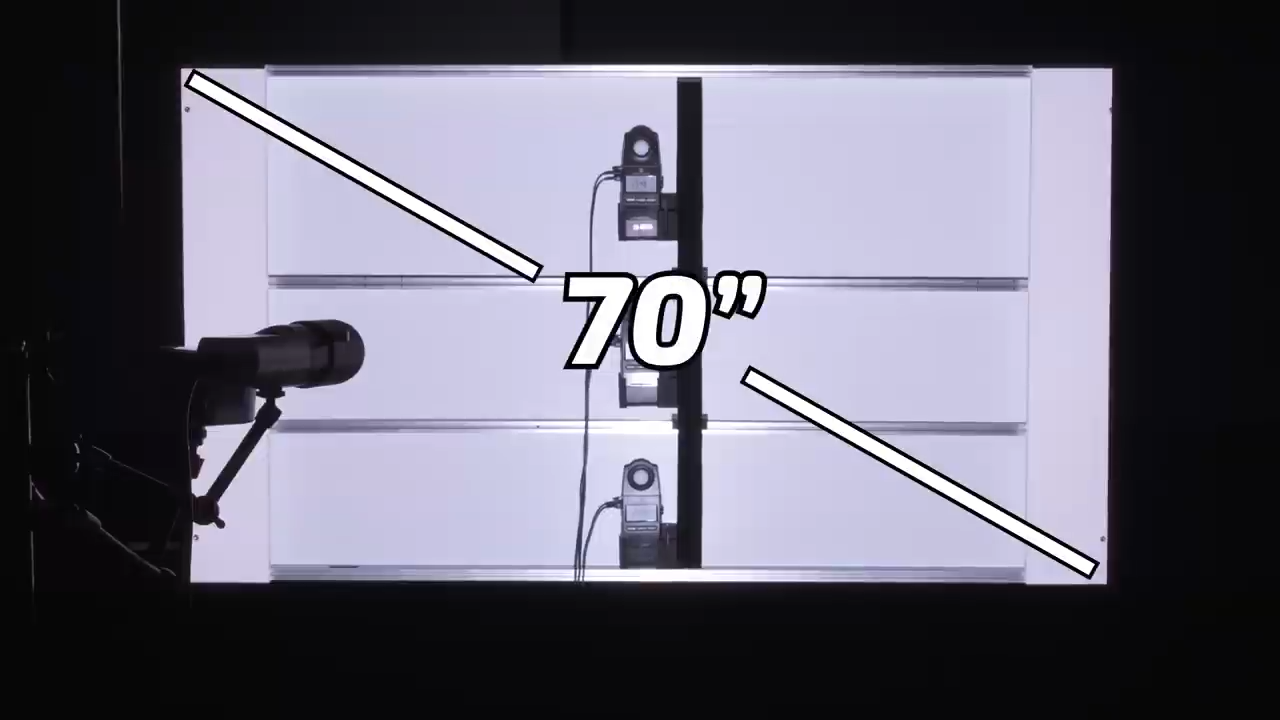
I’ve spent roughly 100 hours designing, building, and, most importantly, exhaustively validating my ability to get consistent and repeatable results using this setup.
That’s the biggest difference between Truth In Brightness and simply creating a new testing standard and asking manufacturers to self-report. All the data is collected using the same equipment, procedures, and methodology, so results will be consistent and directly comparable between brands.
But if you combine the roughly $10,000 in lux meters I’ve got tied up in this measurement rig with the $7,000 JETI 1501 Hi-Res and $7,000 Klein K10A that I use for color accuracy testing, that leads right into the next issue I hope to solve, which is influencer videos that are made with no testing, or maybe worse than that, incorrect testing.
Influencer Testing
Eye candy and hype videos have a place and are honestly extremely important for projector marketing, but if the only data those influencers have available to them are the manufacturer-listed specs, then that’s what they’re going to include in their videos, which may lead consumers to think they’re getting a 7,000 lumen projector with 10,000:1 contrast ratio, when in reality, those two things don’t exist in the same mode, and it’s possible that neither exists in a mode you’ll want to use.
It’s my goal that Truth In Brightness becomes a valuable tool for content creators who are welcome to reference Truth In Brightness measurements and reports directly in their videos. If they want to attempt testing with their own equipment, they can use the Truth In Brightness measurements as a baseline to make sure the numbers they get make sense, because sometimes it’s not as simple as just buying the right meters. There are all kinds of other small tricks to look for like forced laser dimming and brilliant color modes that someone who doesn’t spend their life measuring projectors might miss.
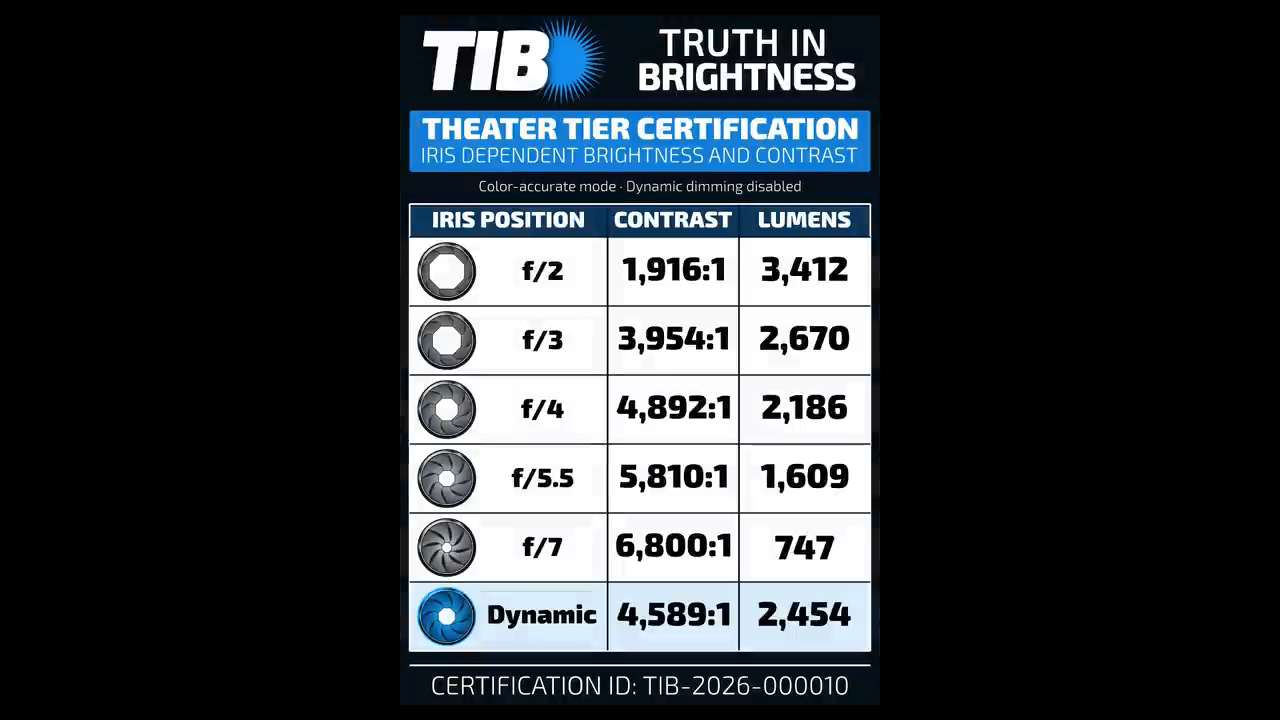
As mentioned earlier, Maximum brightness modes that have high fans and a green shifted image are nothing new, and basically every manufacturer uses them, but more recently, native contrast measurements have fallen into a similar trap where projectors that have an iris will have one iris mode that maximizes contrast by reducing brightness so far that no one would ever realistically want to use it.
My testing room has no windows, a black ceiling, black floor, and black curtains surrounding the screen. It measures 0.00 lx on my Konica Minolta T10A Lux Meters, and my Stewart StudioTek 100 screen material measures 0.00000 nits with the Klein K10A when no projector is on. This allows me to take extremely precise contrast readings for manufacturers that opt for the Tier 2 – Theater certification level testing. I provide contrast and brightness at each iris setting on the testing report, which other content creators can reference, as well as in a graphic that manufacturers can use on their listings.
Pre-Orders and Golden Samples
Speaking of influencer reviews, I definitely don’t intend for Truth In Brightness to replace full reviews. When I see people say they’re going to wait for my review on The Hook Up before they spend their hard-earned money, I’m flattered and grateful, but it can also be a little stressful if I’m working on a different video and need to spend nights and weekends measuring new projectors so everyone can make an informed decision.
Truth In Brightness not only gives manufacturers a clear testing and reporting timeline so they can plan their pre-order and Kickstarter campaigns, but it also gives me a more standardized streamlined testing protocol to get those measurements done, hopefully during reasonable work hours.
Usually, if I’m testing a projector during a pre-order period, it’s going to be an engineering sample, which can differ from what the customer actually gets. Whenever a manufacturer provides a review unit, there’s always the chance that it’s a golden sample, which basically just means that small variations in manufacturing tolerances produced a better than average projector that is then handpicked and given to an influencer.
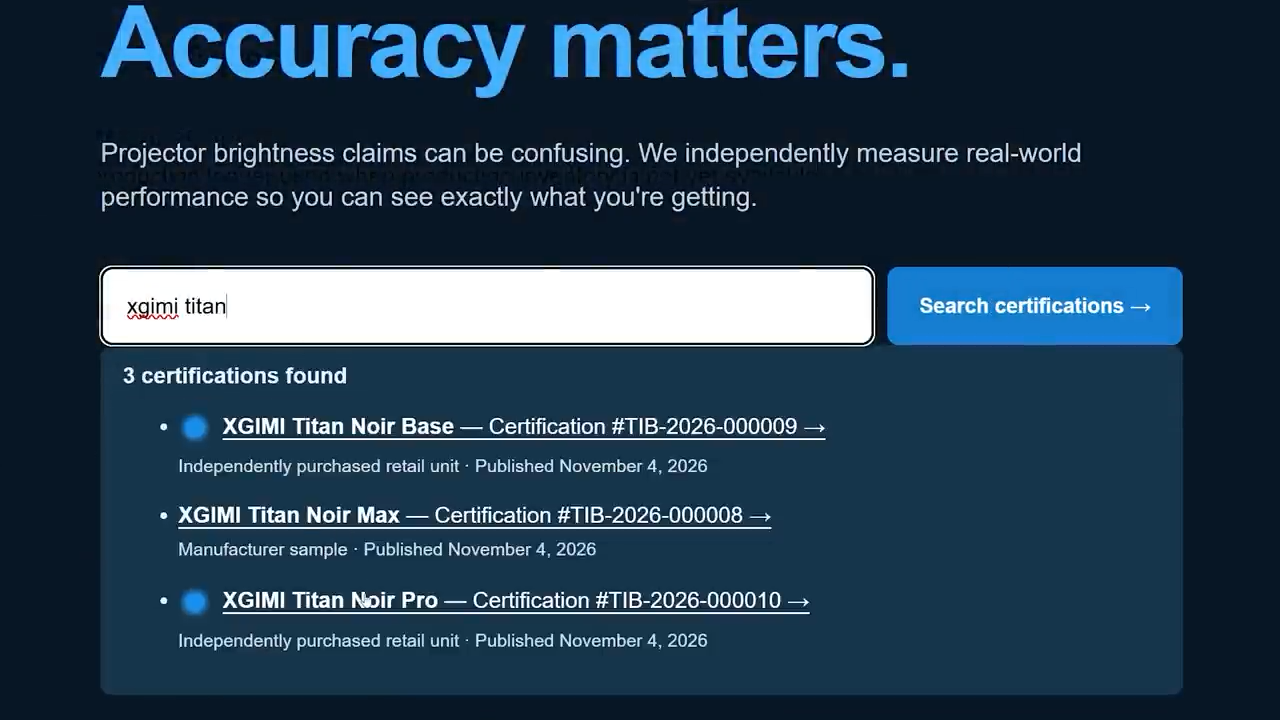
To account for this, every projector on Truth In Brightness will list the sample type. If it was tested prior to a full production run, it will be listed as an engineering sample. If it was provided as a loaner unit directly from the manufacturer, it will be listed as a manufacturer sample. For the highest level of testing, I will buy the projector from existing retail stock which will be marked as an independently purchased retail unit. On the search page, those reports will be highlighted with the Truth In Brightness logo next to their name.
Conclusions
As the name implies, one of the most important things I want to establish with Truth In Brightness is transparency. Manufacturers are paying for lab testing, not for any specific result. If a manufacturer contracts me for testing and the results aren’t what they had hoped, there’s no option to keep them out of the testing database and every test is published regardless of whether the manufacturer decides to advertise the results. If a retest is ordered, the original results remain available.
That transparency extends to the business side too. I’ve publicly listed all the certification and licensing fees on truthinbrightness.com, so anyone can see exactly what manufacturers are paying for testing and what they’re getting in return.
For the initial launch, testing reports are available for XGIMI and NexiGo projectors, but I’ve also reached out to my other industry contacts, and several manufacturers have already confirmed that they’ll be using Truth In Brightness certification for at least some of their future models.
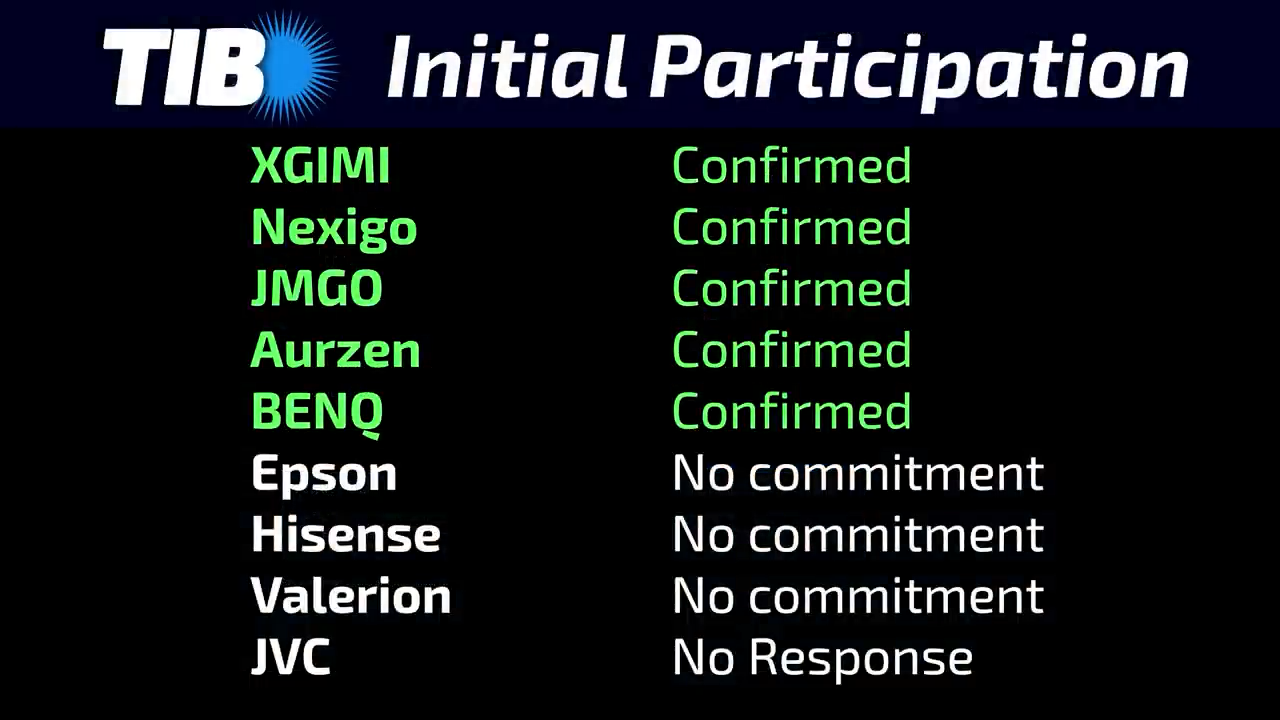
As for the rest, that’s where you come in. If there’s a projector you’re interested in that hasn’t been certified, let the manufacturer know you’d like to see independent testing from Truth In Brightness. Ultimately, my goal isn’t to catch manufacturers doing something wrong. It’s to give the manufacturers who are doing things the right a chance to prove it and to give consumers a set of numbers they can trust.
Hopefully, with enough support from both manufacturers and consumers, independent brightness certification can become the expectation rather than the exception. If you think this sounds like a good idea and refreshing change of pace, hit that thumbs up button and tell a friend or your favorite brand about it, and as always, thanks for watching The Hook Up.