Best Dashcams 2025 – The Clear Winner After Testing 13 Models
December 19, 2025Do you really need to buy a $600 dash cam, or can one that costs $40 get the job done? In this video I’ve got 13 new and popular dash cams ranging from $37 all the way to $579 and I’m going to test their image quality, parking modes, and other features to help you decide which dash cam is right for you. As always there are no sponsored reviews on this channel.
Starting with image quality, I’m going to put the dash cams head-to-head four at a time, going from the least expensive to the most and pick a winner based on their combined daytime and nighttime performance. Then the winner of each round will go on to face three new cameras in the next round.
Round 1: Galphi, Viofo, 70mai
In round 1, the least expensive camera in this video is the $37 Galphi 4K Dash Cam, which is a single channel dash cam with no screen that outputs a 4K video file, but almost certainly uses a lower resolution image sensor and then upscales the video into 4K. However, the form factor is sleek, and for $37, they also include a 64GB SD card in the box, which is amazingly cheap.

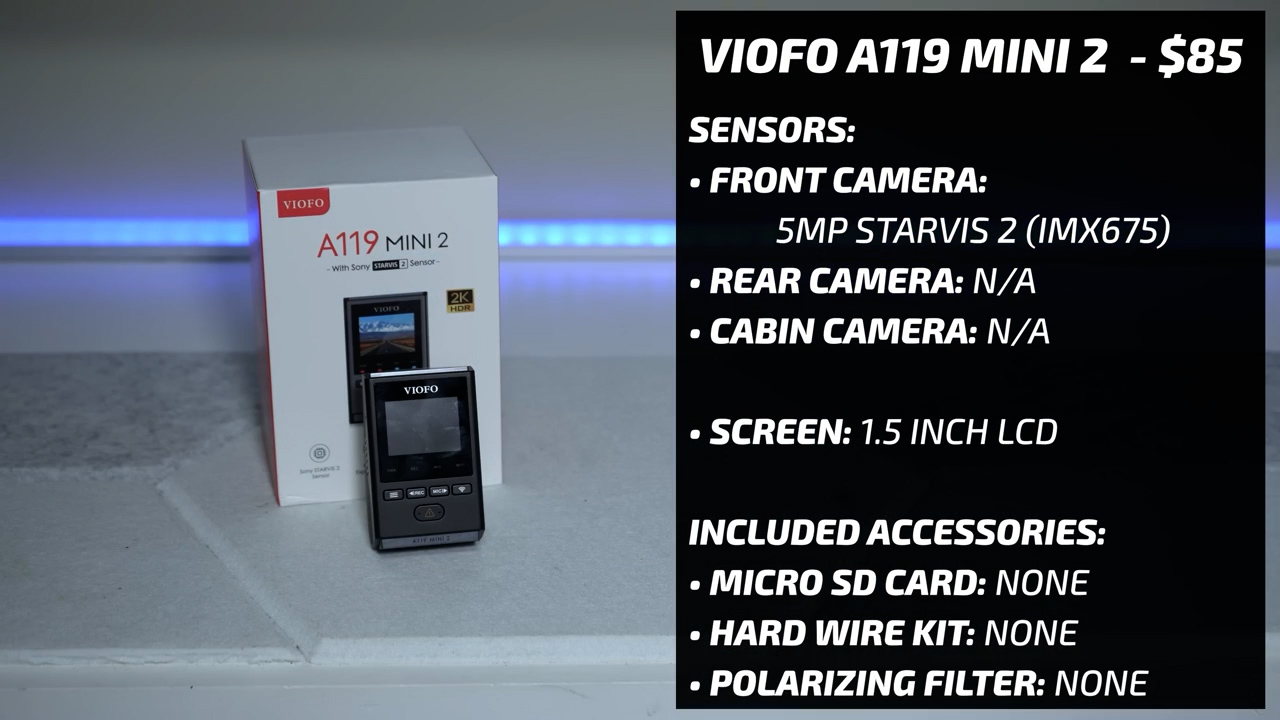
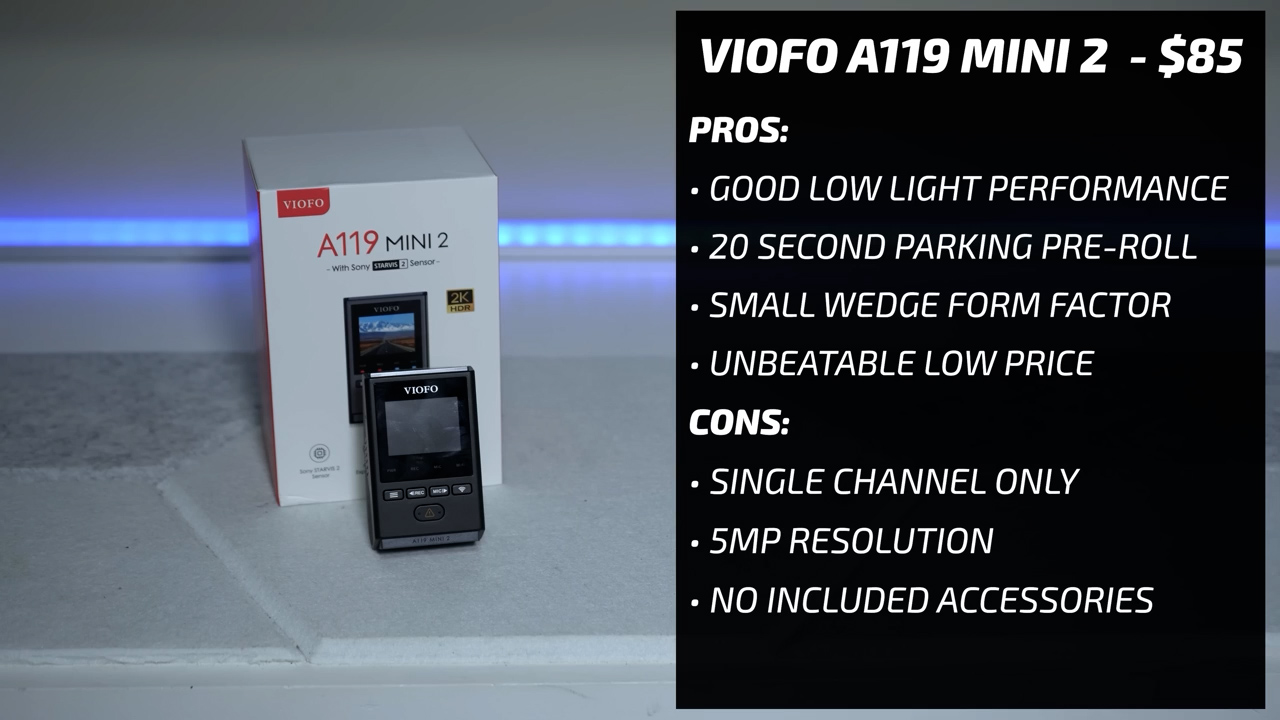
Next, more than doubling in price is my go-to recommendation for high quality budget dash cam, the $85 Viofo A119 Mini 2, which is single channel and uses the excellent 5-megapixel Sony STARVIS 2 IMX675 image sensor and has a 1.5” LCD screen, but doesn’t include an SD card.
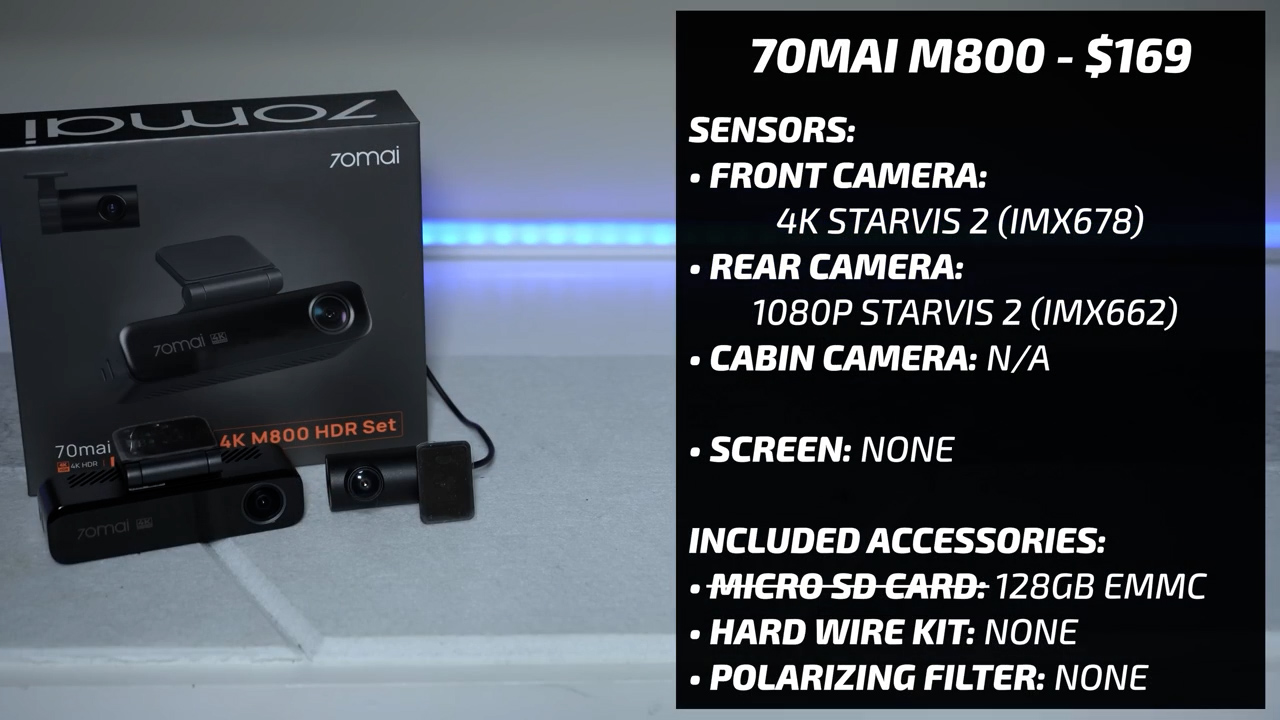
After that, doubling in price again up to $169 is the 70mai M800, a 2-channel front and rear dash cam with no screen that uses a true 4K Sony STARVIS 2 IMX678 image sensor in the front and a 1080 Sony STARVIS 2 IMX662 sensor in the back. The M800 doesn’t come with an SD card because it doesn’t use one, and instead it has 128GB of eMMC memory built in.
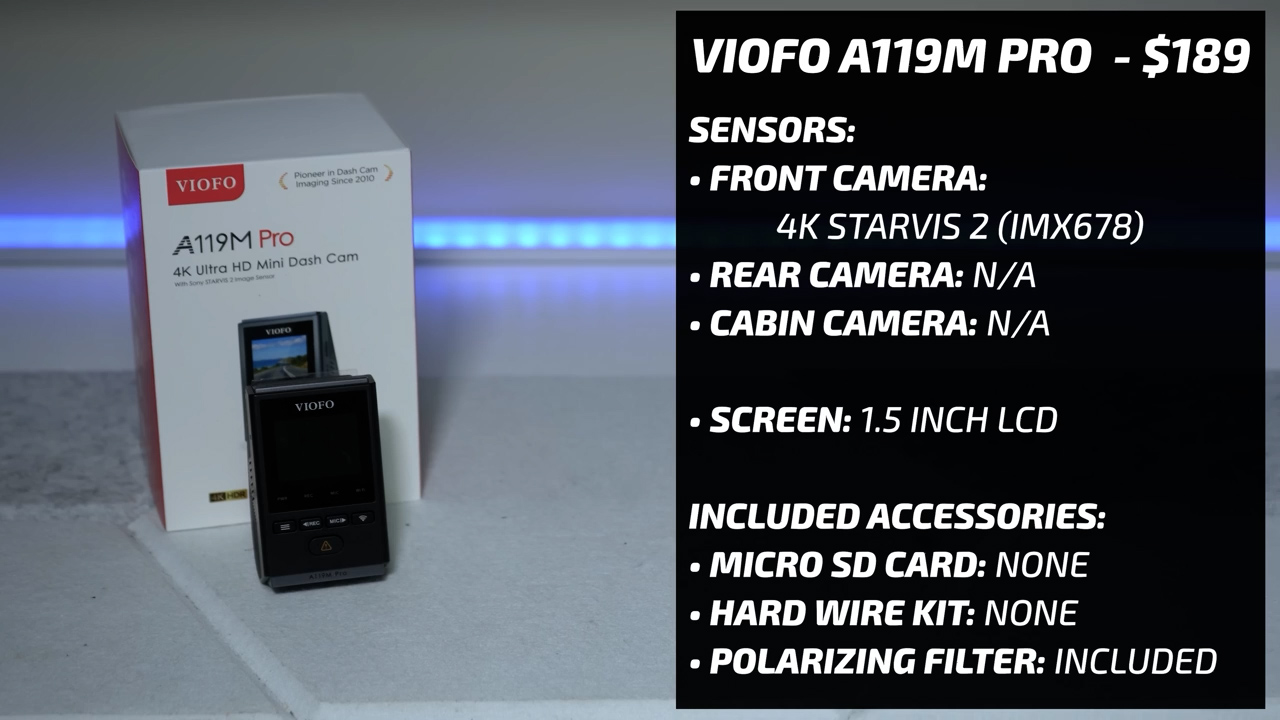
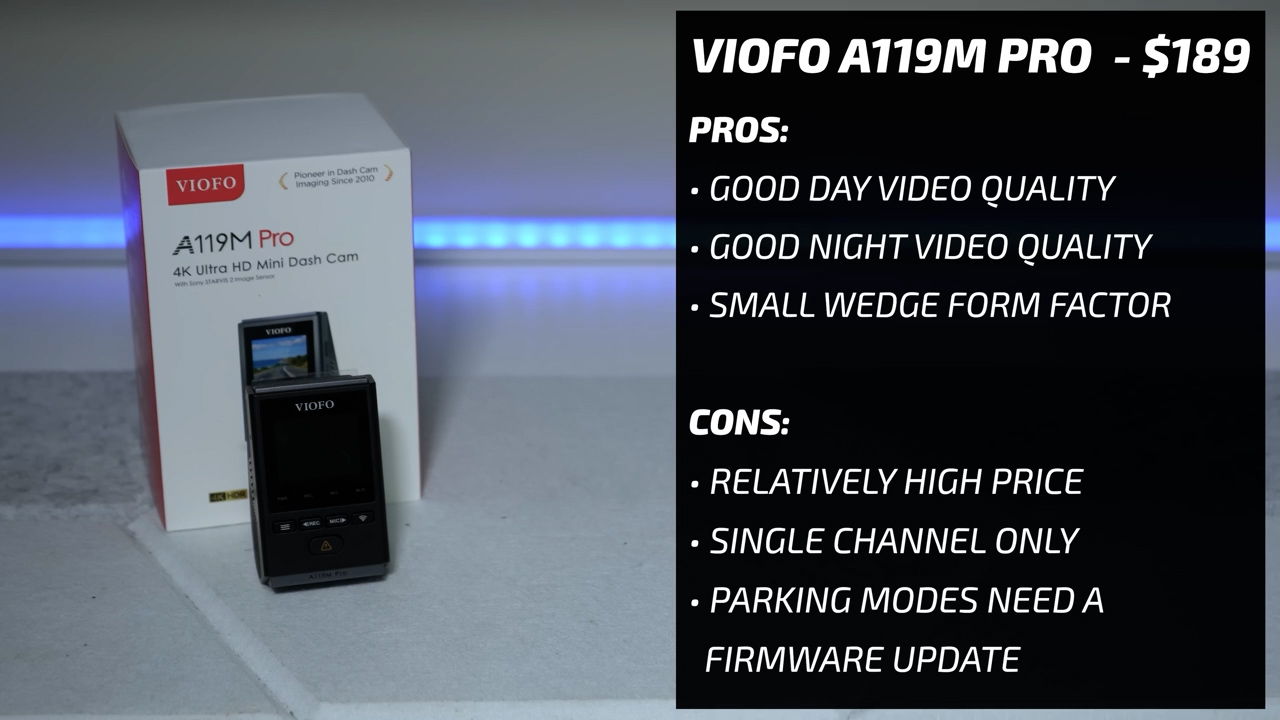
The last camera in round 1 is the single channel $189 Viofo A119M Pro that has almost the exact same form factor as the A119 Mini 2 with the 1.5” screen but uses a true 4K Sony STARVIS 2 IMX678 image sensor instead of the 5-megapixel sensor in the A119 Mini 2, and like the Mini 2, the A119M Pro also requires a separate micro SD card purchase.
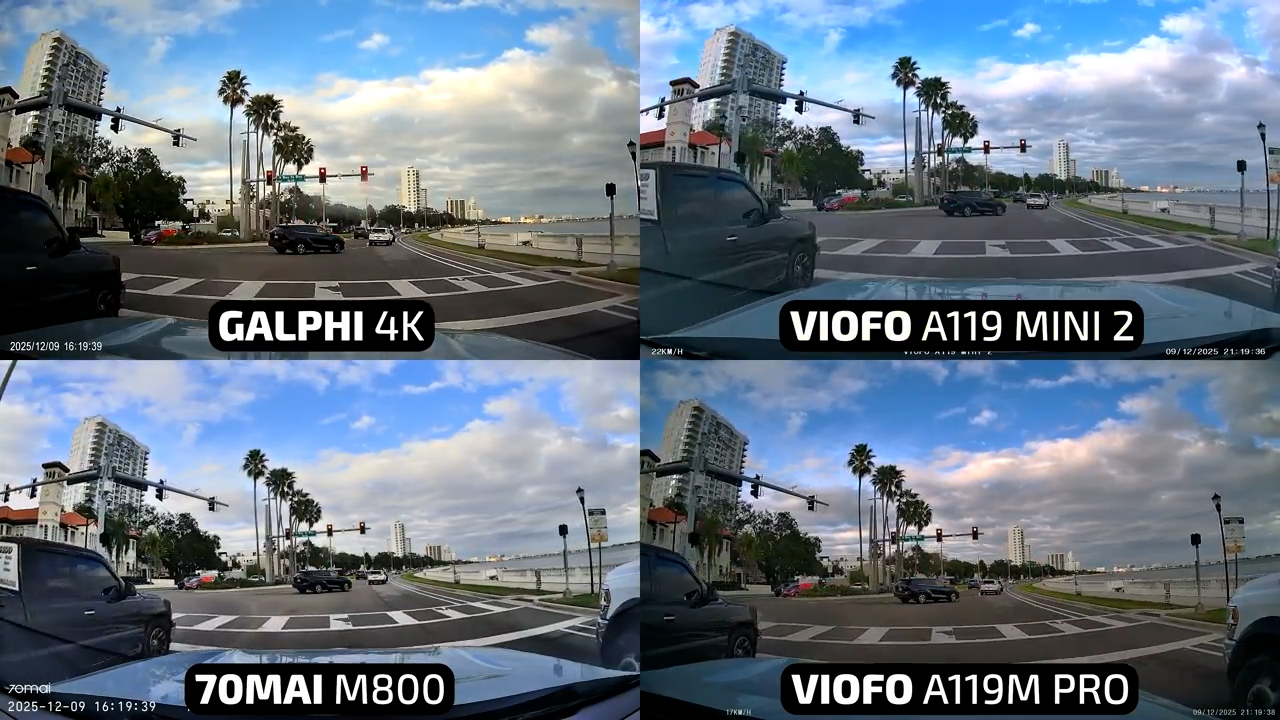
Starting with daytime footage, you can see that all the cameras do in fact record video, which is good, but it’s clear that the Galphi is not the same resolution as the rest of the cameras and looks blurry and over sharpened at the same time. The 70mai has a brighter, more colorful image, while the two Viofo cameras have a more HDR looking image. You can see that the Viofo A119M Pro is also very over sharpened, visible in artificial white lines surrounding the powerlines, and to me the Viofo A119 Mini 2 has the most natural image.

As far as field of view you can see that the 70mai M800 has by far the widest angle lens with both the corner where the crosswalk meets the Bayshore sidewalk visible on the left side, and the bell tower on the building on the left visible. Both Viofo cameras have similar field of view with the A119 Mini 2 aimed slightly further left showing the edge of the bell tower while the A119M Pro shows the intersection of the crosswalk and the Bayshore sidewalk, but the lower quality sensor on the budget Galphi can’t see the bell tower or intersection of the sidewalk.
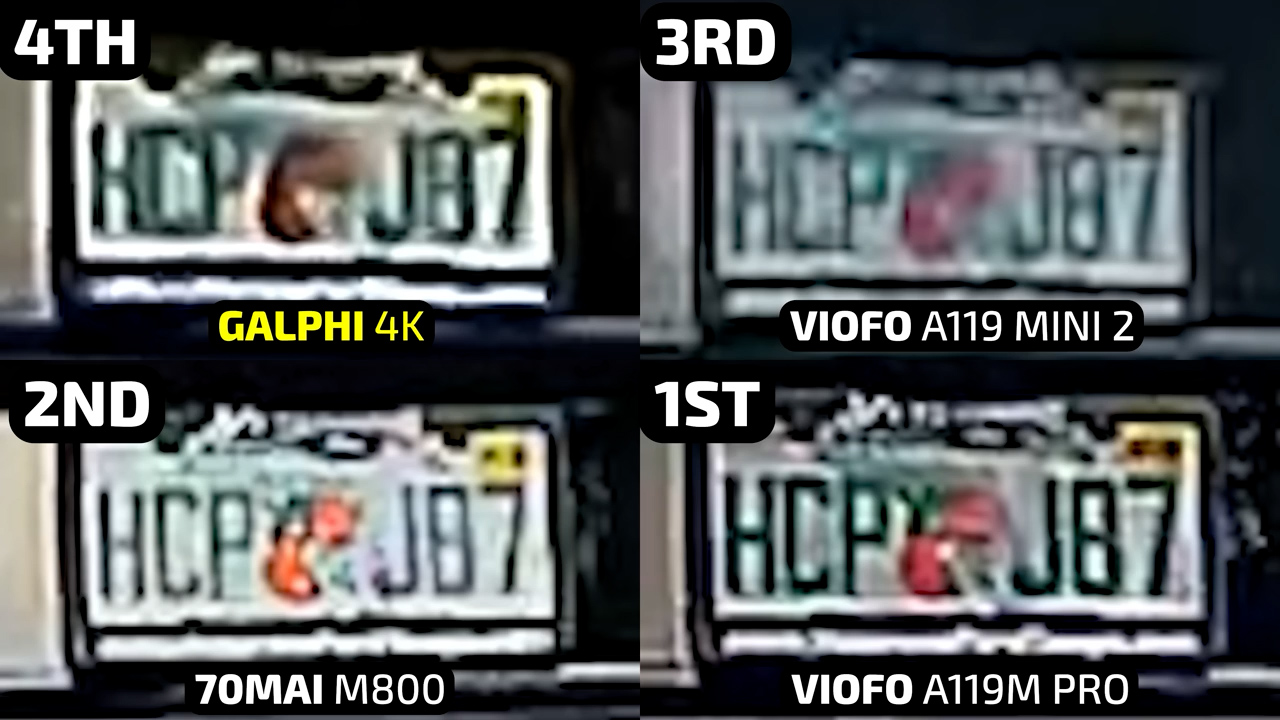
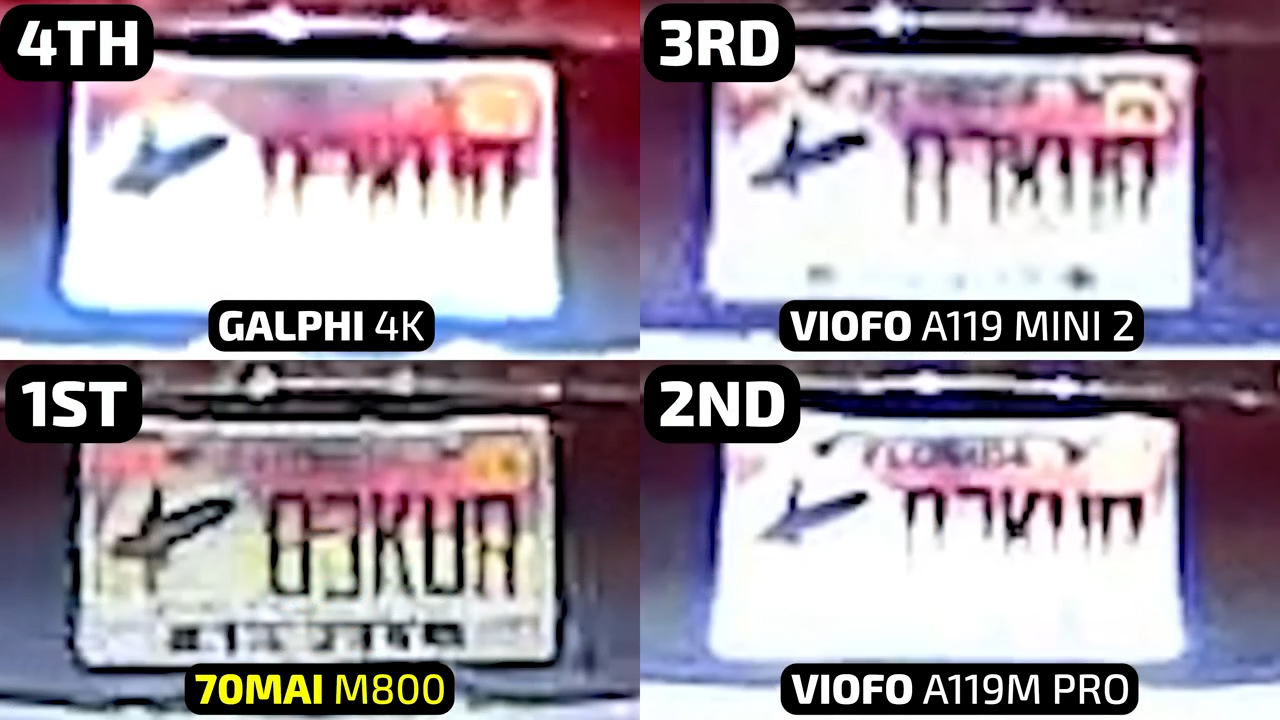
Usually, cameras with a smaller field of view will be better at picking up detail, so looking at license plate capture, the first set of plates are taken where neither car was moving, and all the cameras produced a legible image. But the Viofo A119M Pro was the clearest, the 70mai M800 was next, providing clear text but also some resolvable detail in the oranges in the center of the plate, the Viofo A119 Mini 2 was in third and the Galphi was in fourth due to the fact that it just looked overly processed.
The next set of plate captures is from when both cars were moving at similar speeds. In this one the 70mai took first place with a very legible image without too much processing, the Viofo A119M Pro was in second, and neither the Viofo A119 Mini 2 nor Galphi were able to produce a 100% legible plate number, but the Viofo was close, putting it in third place.

The last daytime capture was from a car passing me while I was stationary and in this one the Viofo A119M Pro was the clear winner, with the 70mai M800 in second, the Viofo A119 Mini 2 in third, and the Galphi in a pretty distant fourth.

At night, the 70mai did a great job of capturing detail in dark areas without overexposing highlights. Using those same three license plate capture criteria, the 70mai was the only camera that was able to avoid overexposing the license plate when both cars were stationary.
When both cars were moving the 70mai was the best of the four with the Viofo A119 Mini 2 in second place, but none of the cameras produced a legible plate.

When I was stationary and the other car was moving the 70mai M800 and Viofo A119 Mini 2 were the only cameras that captured anything that even looked like a license plate.
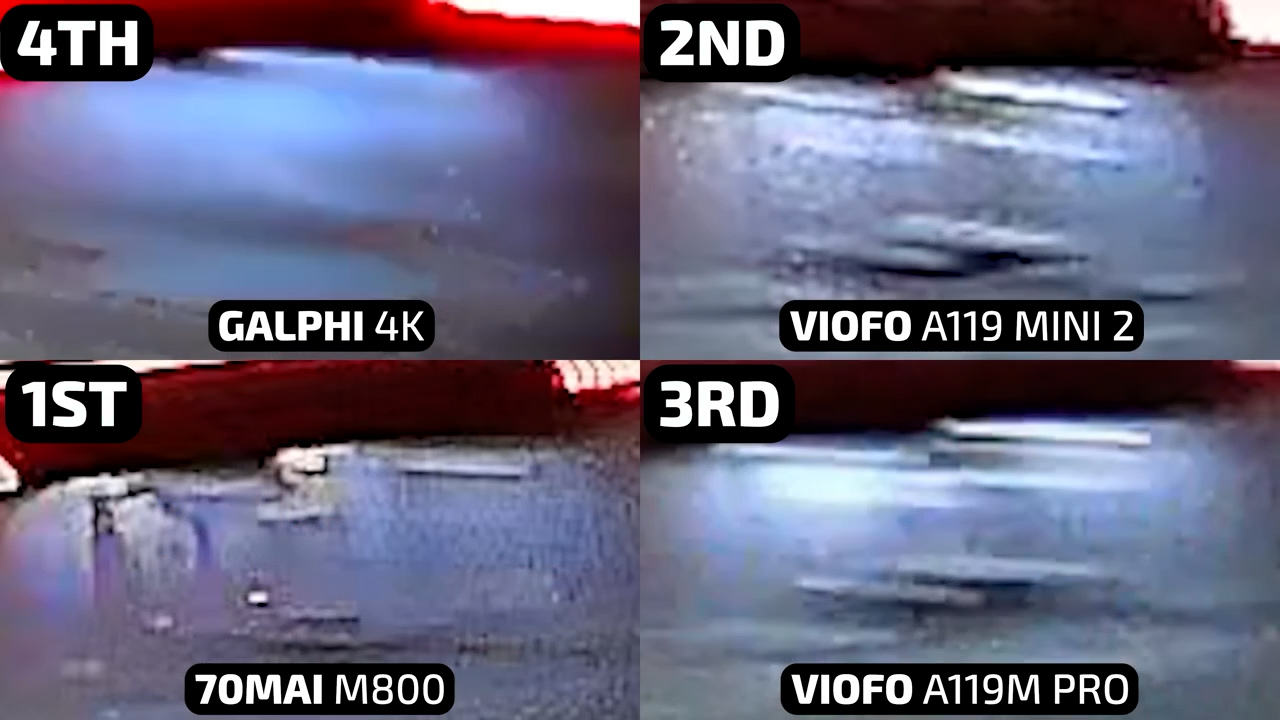
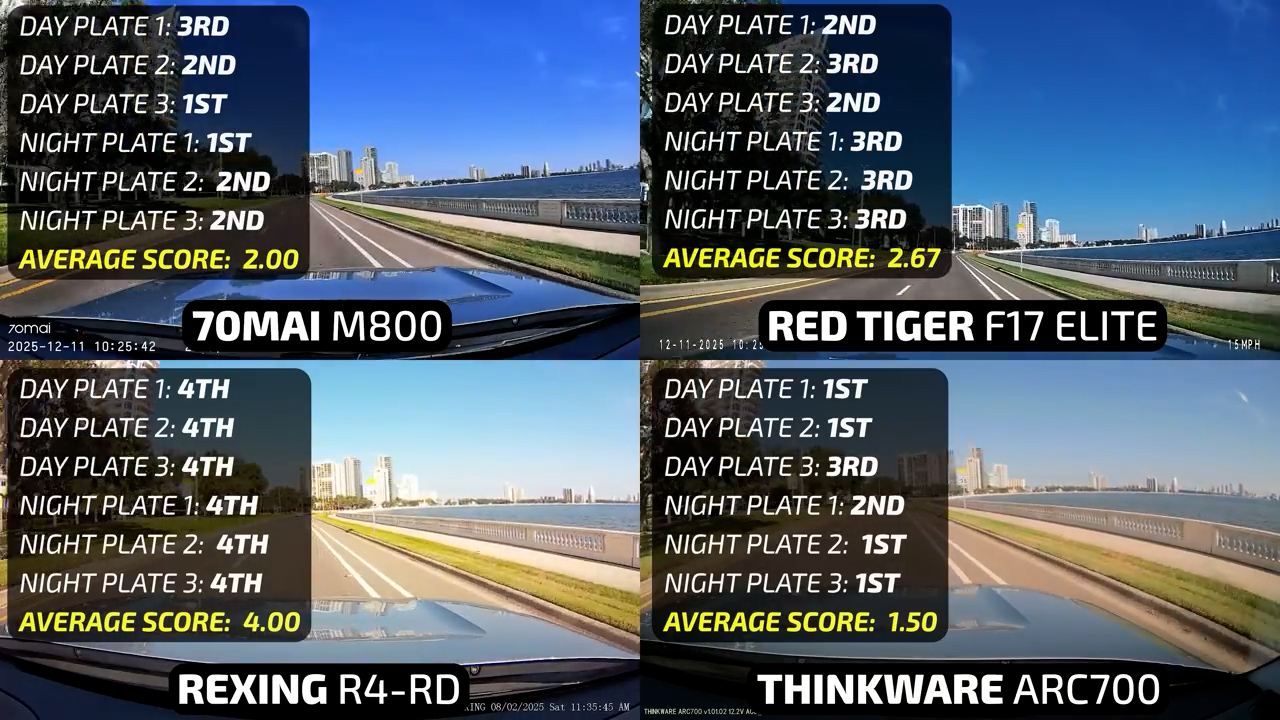
That means that overall, in round 1 the 70mai had an average rank of 1.33 and will move on to the next round.

Round 2: 70mai, Red Tiger, Rexing, Thinkware
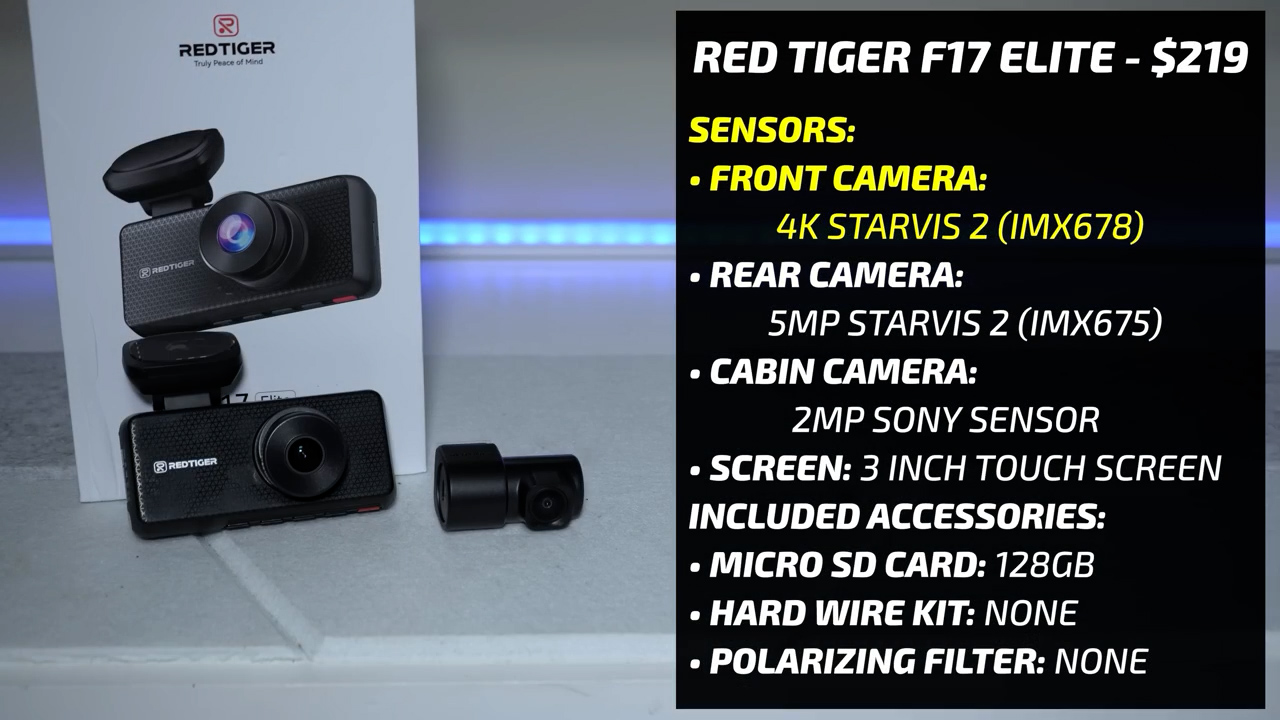
In round 2 it will face off against the $219 Redtiger F17 Elite, a 3-channel dash cam with a 4K Sony STARVIS 2 IMX678 image sensor in the front, a STARVIS 2 IMX675 for the rear, and a 1080p cabin camera and each lens can be independently positioned. The Redtiger F17 Elite also has a 3” touch screen and comes with a 128GB SD card in the box.
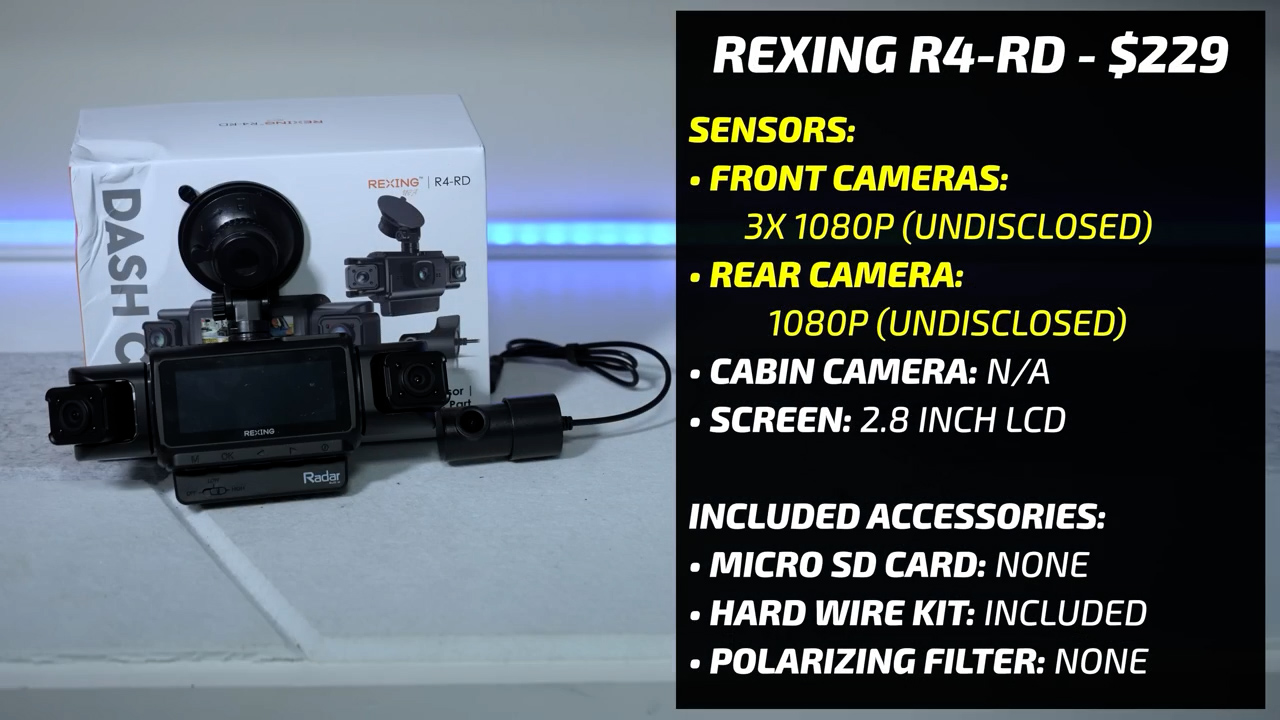
Then for $229 is the Rexing R4-RD, which is a unique 4-channel dash cam with a 2.8” screen that has not only a front facing road camera and rear camera, but also two aimable side mounted cameras to point where you choose. It also has a mmWave radar-based motion sensor. Rexing doesn’t advertise which sensors they use in the R4-RD, only that they are all 1080p, and the Rexing doesn’t come with an SD card, but it is the first camera so far to come with a hardwire kit to use with its radar-based parking modes.
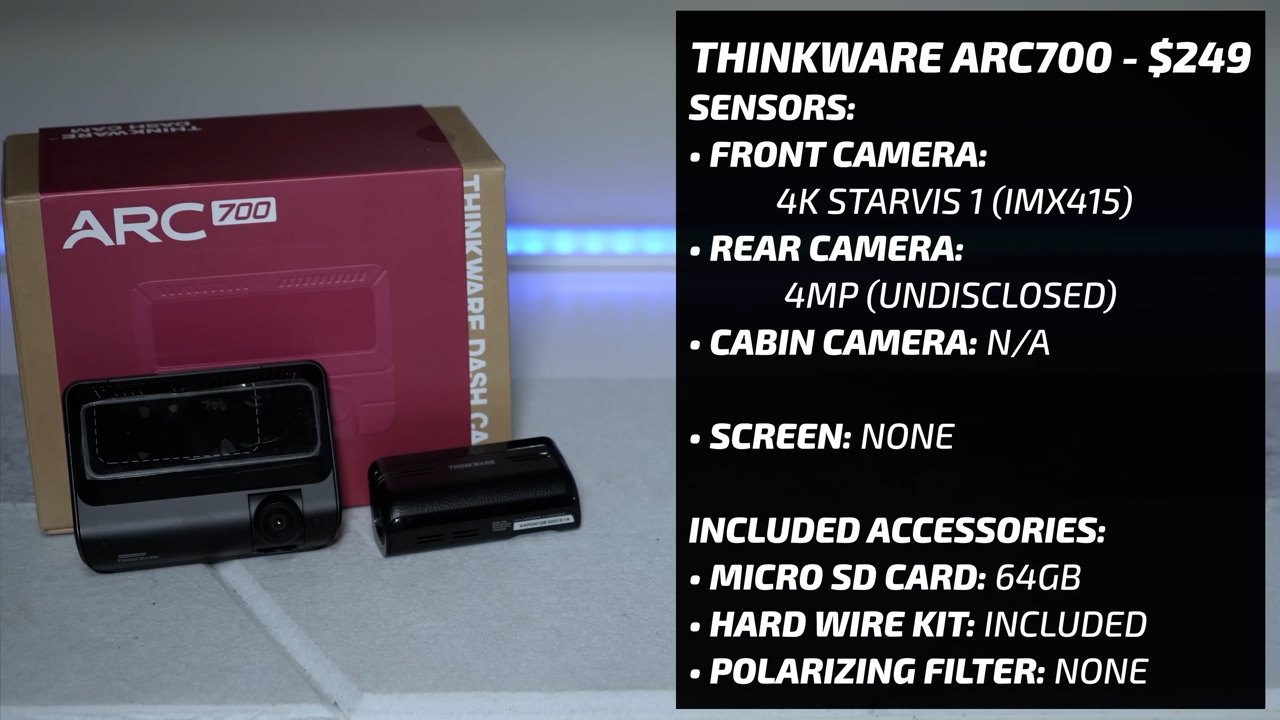
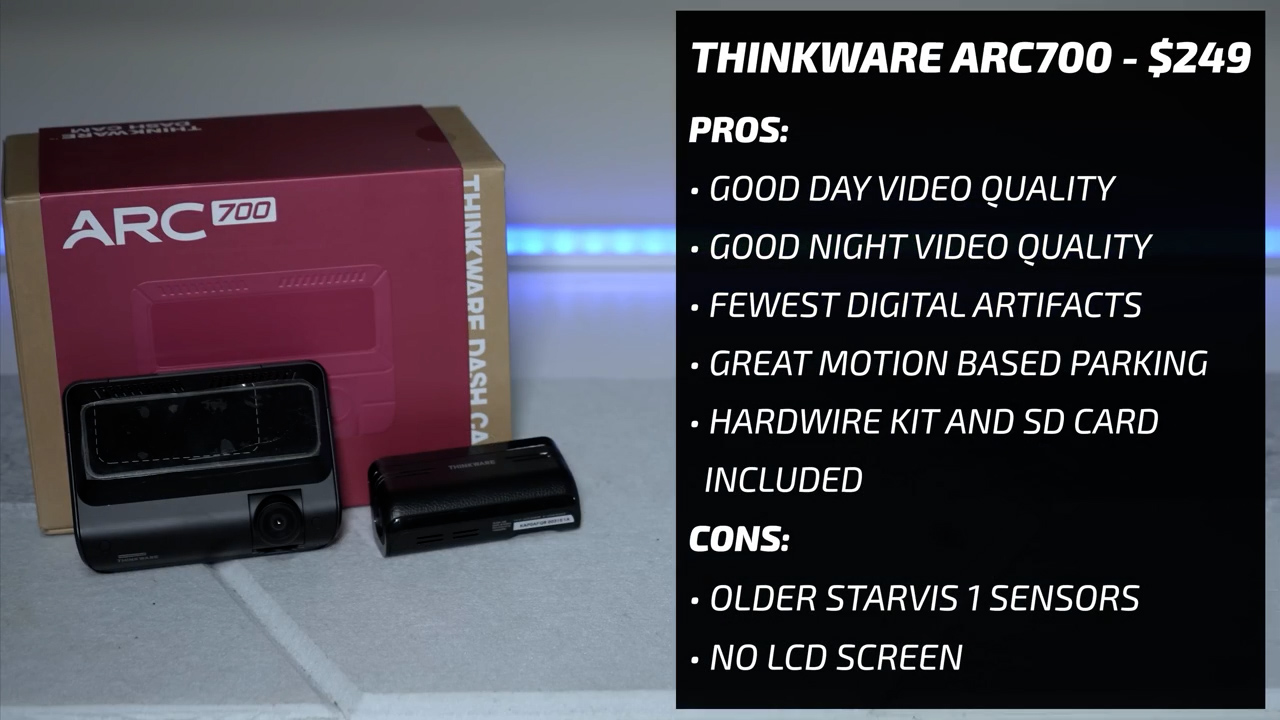
The last camera in round 2 is the $249 Thinkware ARC700, a 2-channel dash cam with no screen that uses a previous generation 4K Sony STARVIS 1 IMX415 image sensor for the front and a 4-megapixel sensor for the rear camera. The Thinkware comes with a 64GB microSD card in the box.
In this group the Redtiger’s image seems slightly sharper than the 70mai without being ridiculously over sharpened, but both are very vibrant and clear. The Thinkware Arc700 has an image that is more of what I would associate with a typical security camera, with a wider dynamic range which darkens highlights and brightens shadows to make the image more flat, which preserves detail. The Rexing was my least favorite image and was both oversaturated and overexposed.

Looking at their field of view the 70mai M800 and Redtiger F17 Elite have very similar field of views with the Redtiger being tilted slightly further up, showing more height, while the 70mai showed more of the hood and windshield, and the Rexing and Thinkware both had similar more narrow fields of view with the Rexing pointing further left and the Thinkware pointed further right, but don’t forget that the Rexing also has two side facing cameras, for a complete panoramic view.

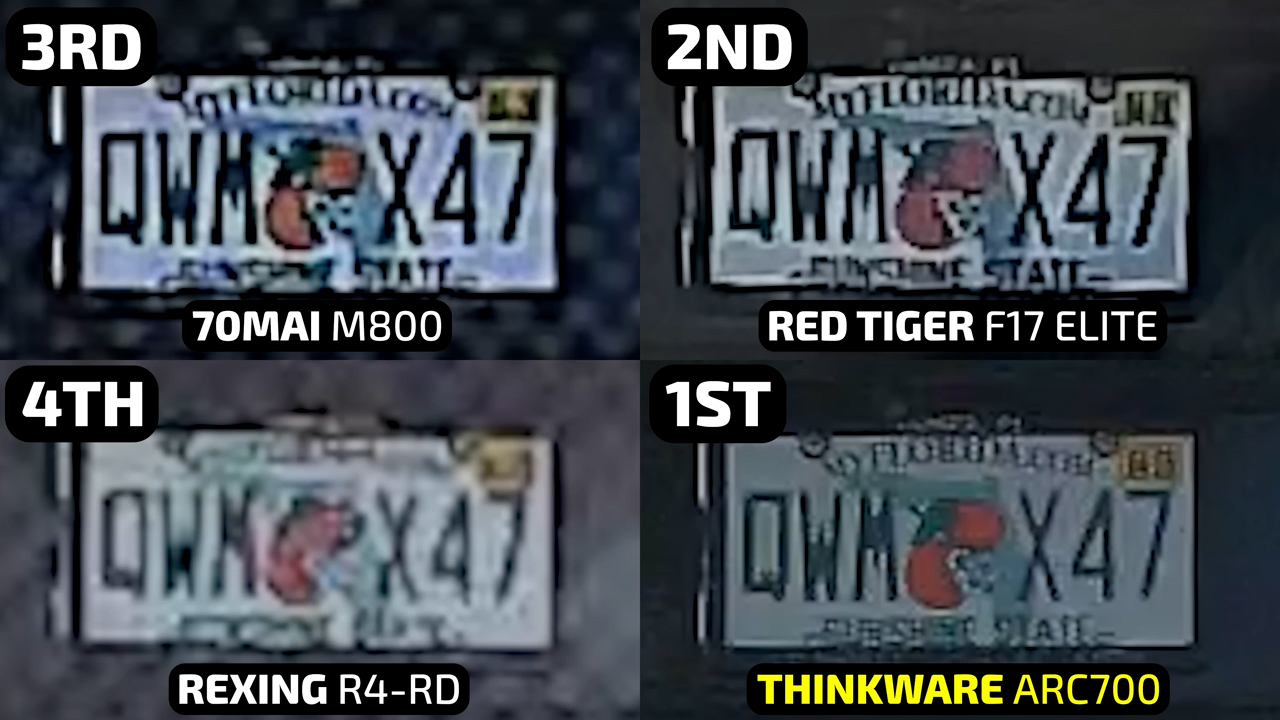
Looking at their plate capture abilities, when both cars were stationary all of the cameras produced legible plates during the day, but the Thinkware Arc700 was the least digitally manipulated. I could easily make out the Sunshine State text and see the oranges in the middle of the plate, and I thought the Redtiger was the next best.
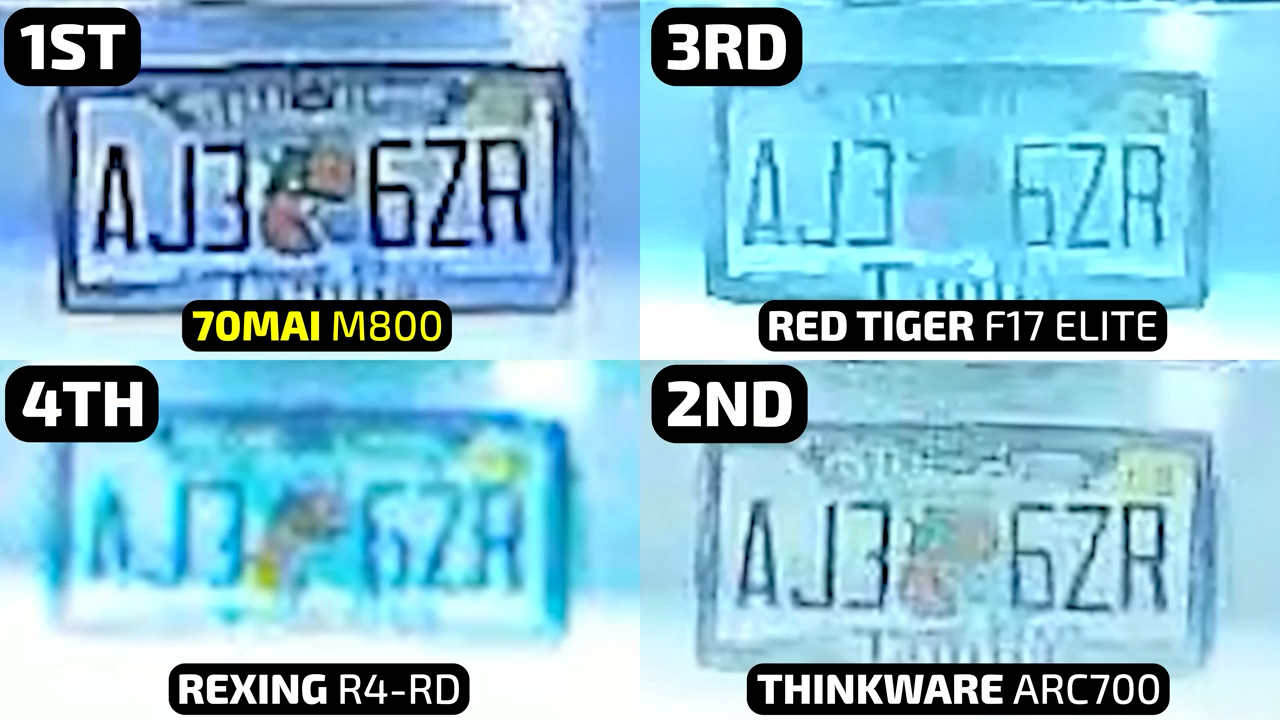
When both cars were moving the results were similar with the Thinkware producing an image with less digital artifacts, but in this one the 70mai took second place, and the Rexing failed to produce a legible image at all.

With a car speeding past me while I was stopped at a stop light, the 70mai took first place with the only fully legible plate and the Thinkware and Redtiger were very close, but the Rexing failed to capture any actual letters.

At night none of these cameras use circular polarizing lenses, so windshield glare was definitely an issue. But overall, the Redtiger was a little oversaturated and overexposed while both the Thinkware Arc 700 and 70mai M800 had that flatter more security camera like image that tends to preserve detail. Sure enough, when looking at plate capture, the wide dynamic range of the 70mai helped it produce an extremely clear image with the Thinkware in second and the Redtiger in third.
But when both cars were moving the Thinkware’s less digitally altered image was slightly clearer, taking first place over the 70mai, while the Redtiger fell significantly behind, and the Rexing was just a blurry mess.

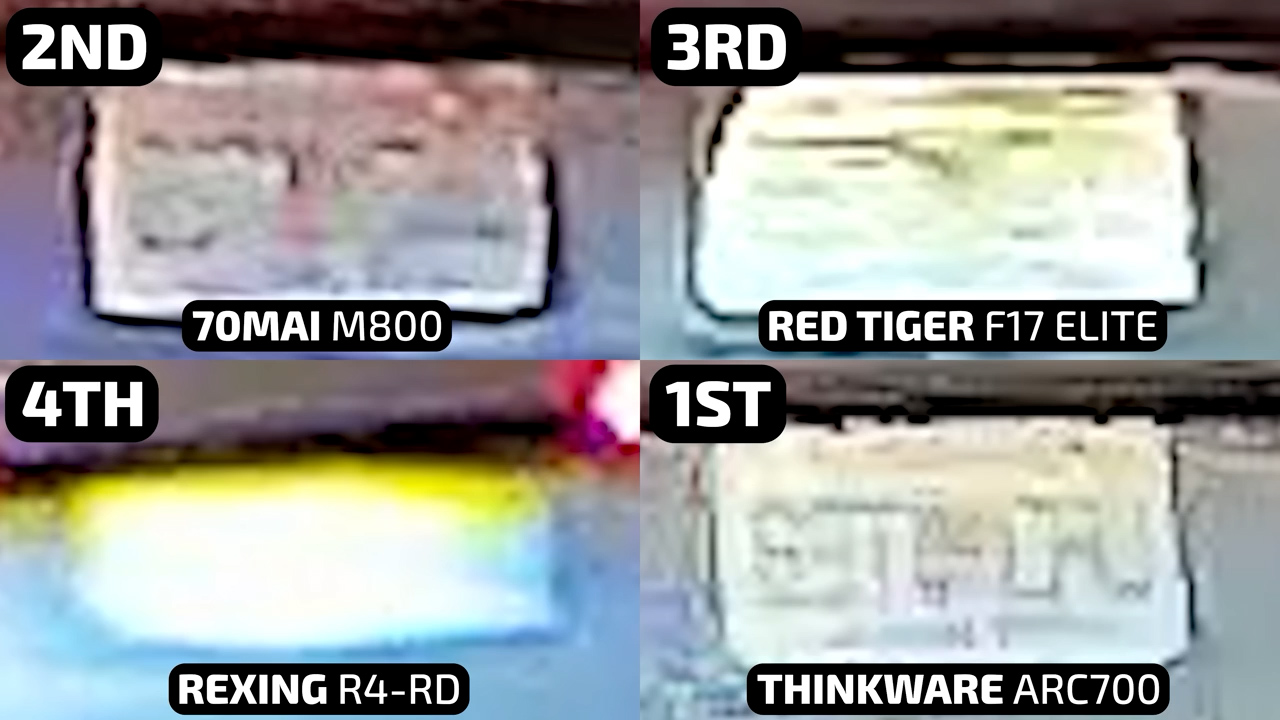
With a car passing at high speed none of the cameras were able to produce a legible image at night, but the Thinkware did the best capturing what looked like a few faint letters and numbers, the 70mai produced an image that at least looked like a license plate, and both the Redtiger and Rexing were just mildly rectangular shaped white objects.
So that means that the Thinkware Arc700 narrowly beat out the 70mai M800 with an average score of 1.5 and it will move on to round 3.
Round 3: Thinkware, Rove, Vantrue, 70mai
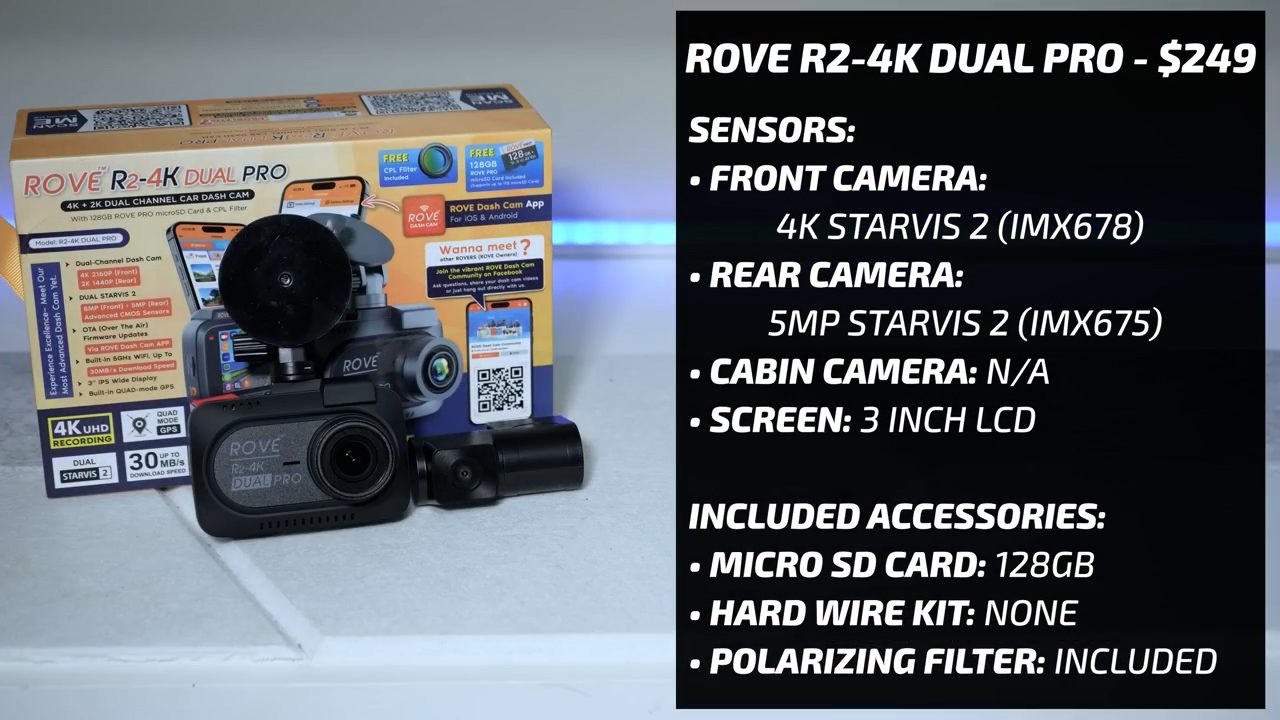
The least expensive camera in round 3 is the $249 Rove R2-4K Dual Pro, which as the name implies is a 2-channel camera. But unlike previous Rove models that upscaled lower resolutions sensors to 4K, this one has a Sony STARVIS 2 IMX678 true 4K sensor up front and a 5-megapixel STARVIS 2 for the rear camera. The Rove also has a 3” screen and comes with all kinds of accessories including a 128GB microSD card, a circular polarizing filter, and both suction cup and double-sided tape mounting options.
Then for $279 is the Vantrue N4 Pro S a 4K 3-channel dash cam with a 2.8” LCD screen. The N4 Pro S is the latest iteration of the N4 Pro and has some notable upgrades including Sony STARVIS 2 sensors for its cabin and rear cameras, a waterproof rear camera that can be mounted outside the car, and compatibility with Vantrue’s LTE module for remote cellular monitoring, and even though Vantrue sells hardwire kits, circular polarizing filters and SD cards, none of them are included with the N4 Pro S.

Last in round 3 is the $299 70mai T800, a 3-channel dash cam with a 3” LCD screen that has both front and rear Sony STARVIS 2 IMX678 4K image sensors and a 5-megapixel STARVIS 2 cabin camera. Similar to the N4 Pro S, the 70mai T800 can be LTE enabled by adding 70mai’s LTE addon kit. Also similar to the N4 Pro S, the T800 doesn’t come with an SD card, hardwire kit, or circular polarizing filter in the box, though they are all available for separate purchase.

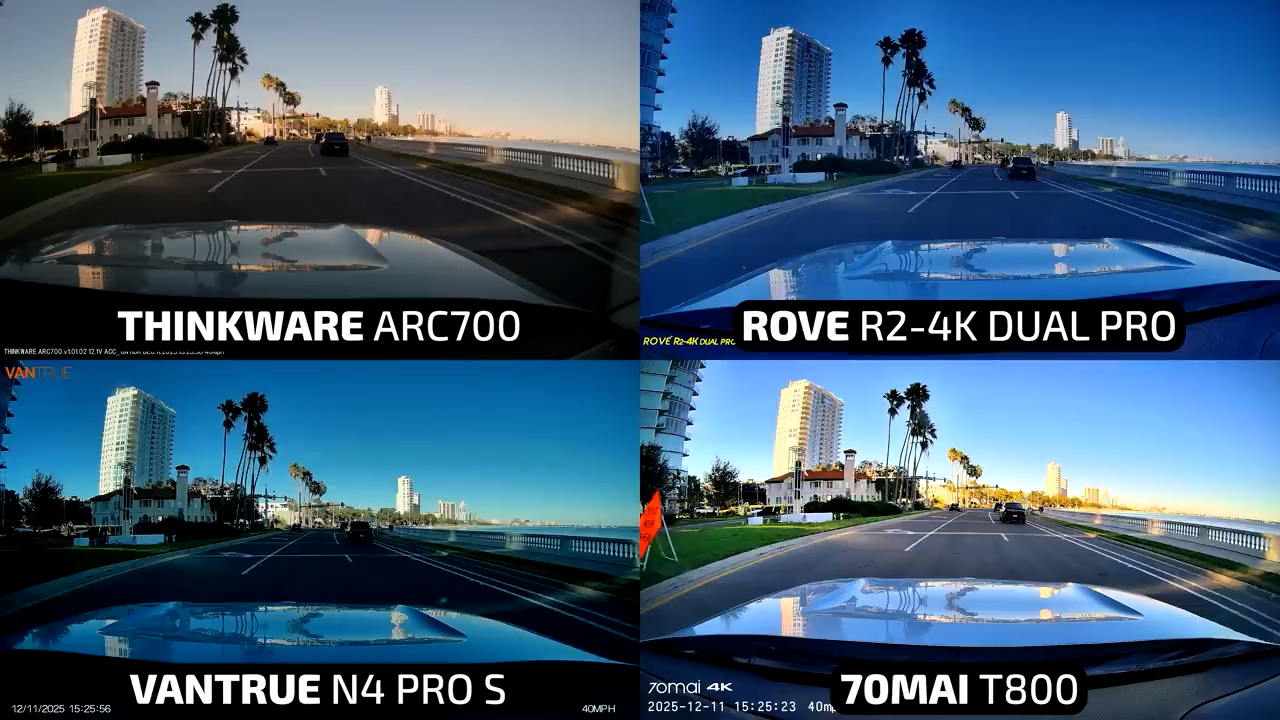
Looking at their daytime image characteristics, the 70mai again jumps out as having its characteristic bright and vibrant image while avoiding over exposure. The Rove and Vantrue have overall lower exposure and the Vantrue specifically has much darker shadows, though I didn’t see any lost shadow detail during the day.

Looking at field of view the 70mai is again much wider than the others, showing both the trail sign on the right and the bell tower on the left. The Rove and Vantrue have nearly identical field of view with the Rove aimed slightly further left and the Vantrue slightly further right, and the Thinkware Arc 700 has the lowest field of view.
Looking at their plate capture abilities, when both cars were stationary the Vantrue had the most resolvable detail, especially in the Florida text and oranges in the center. But I also liked the Thinkware which, as we saw last round, does a good job of preserving detail without adding digital artifacts. All four cameras produced a legible plate, but I thought the Rove was slightly better than the 70mai.

When both cars were moving all the cameras produced legible plates again, but the Thinkware captured the most detail and you can easily read the Buffalo Bills plate frame, while the Vantrue had the easiest to read plate numbers and resolved the oranges slightly better, but the Buffalo Bills lettering bled together, and again I thought the Rove was better than the 70mai.
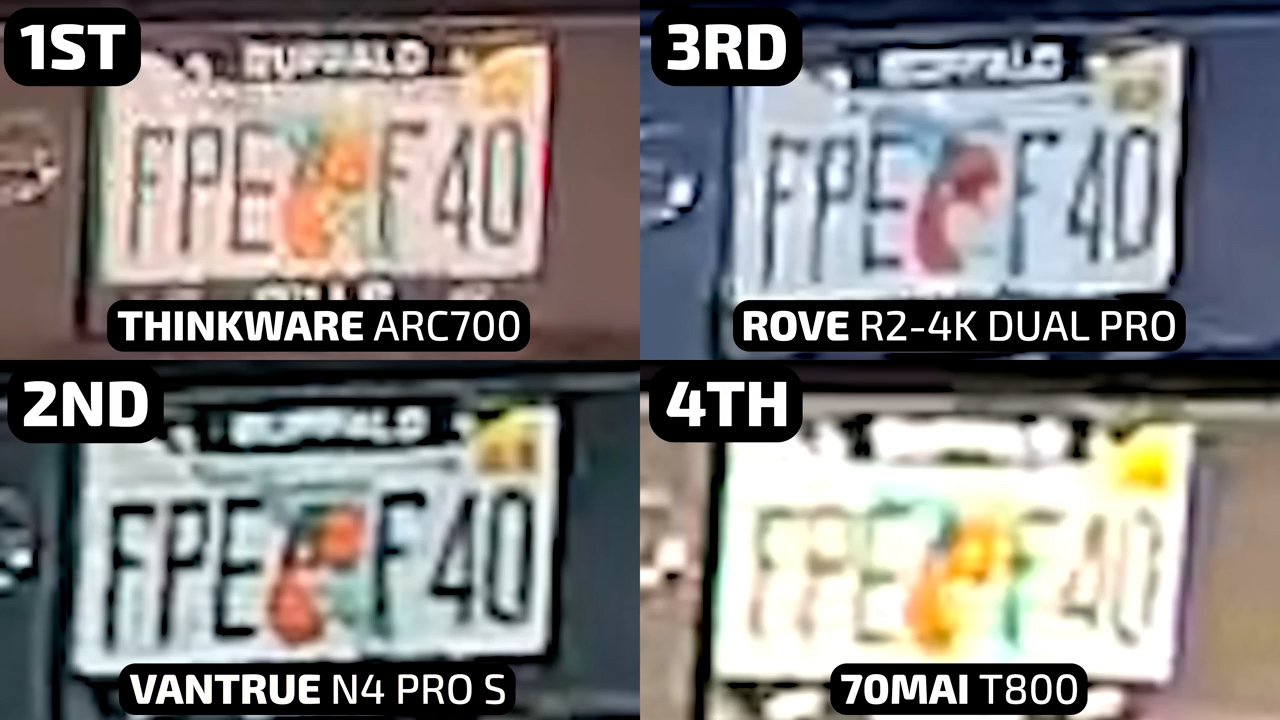
Last, with a car passing while I was stationary, the Vantrue dominated, but both the Thinkware and 70mai produced images that easily identified a plate number while the Rove struggled in this capture failing to produce a legible plate.

At night, the Thinkware was tuned more like a security camera and managed to preserve shadow detail in areas where the other cameras were just black. But that higher exposure and lack of a STARVIS 2 image sensor really hurt its ability to capture plates, and when both cars were stationary the Rove did the best job resisting over exposure, but the Vantrue was close behind in 2nd, while the 70mai captured an incomplete plate, and the Thinkware overexposed the entire image.

When both cars were moving the Vantrue was the clear winner, with the 70mai in 2nd, but all the plates came out readable.
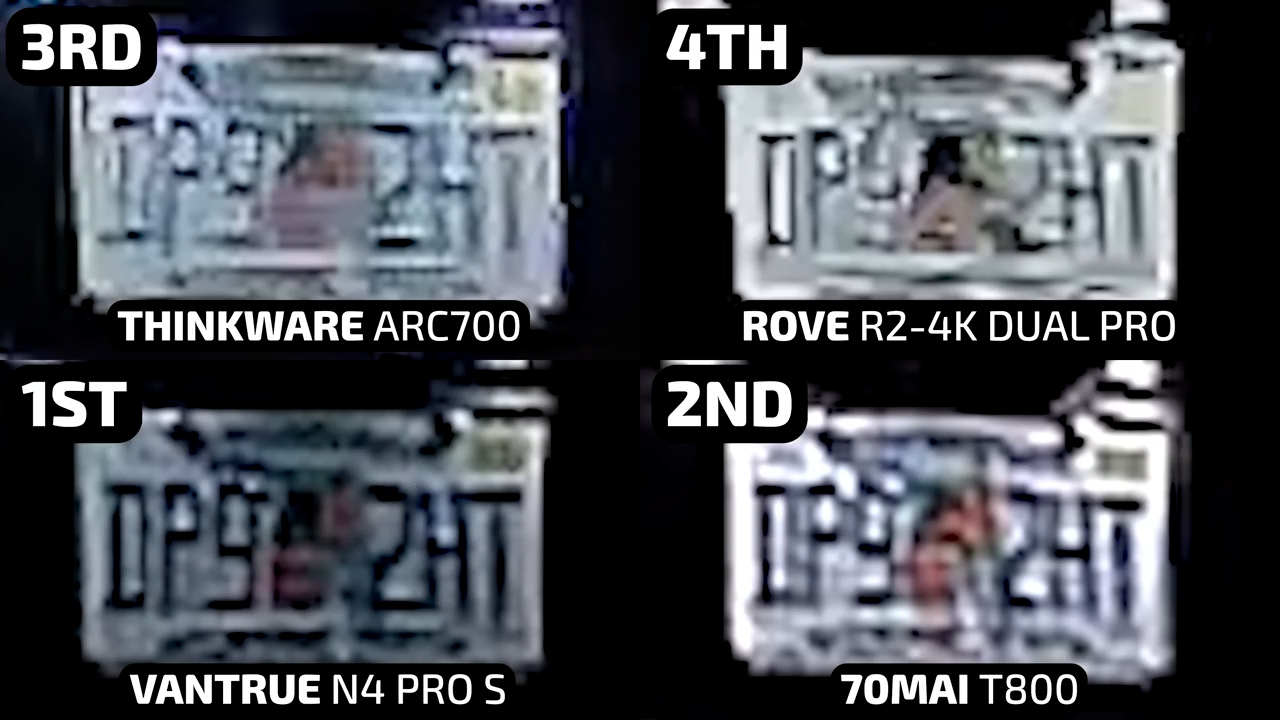
With a car passing at high speed at night, none of the cameras produced a perfect image of the plate, but the Vantrue captured the most information, followed by the Thinkware, then the 70mai, and the Rove had no usable information.

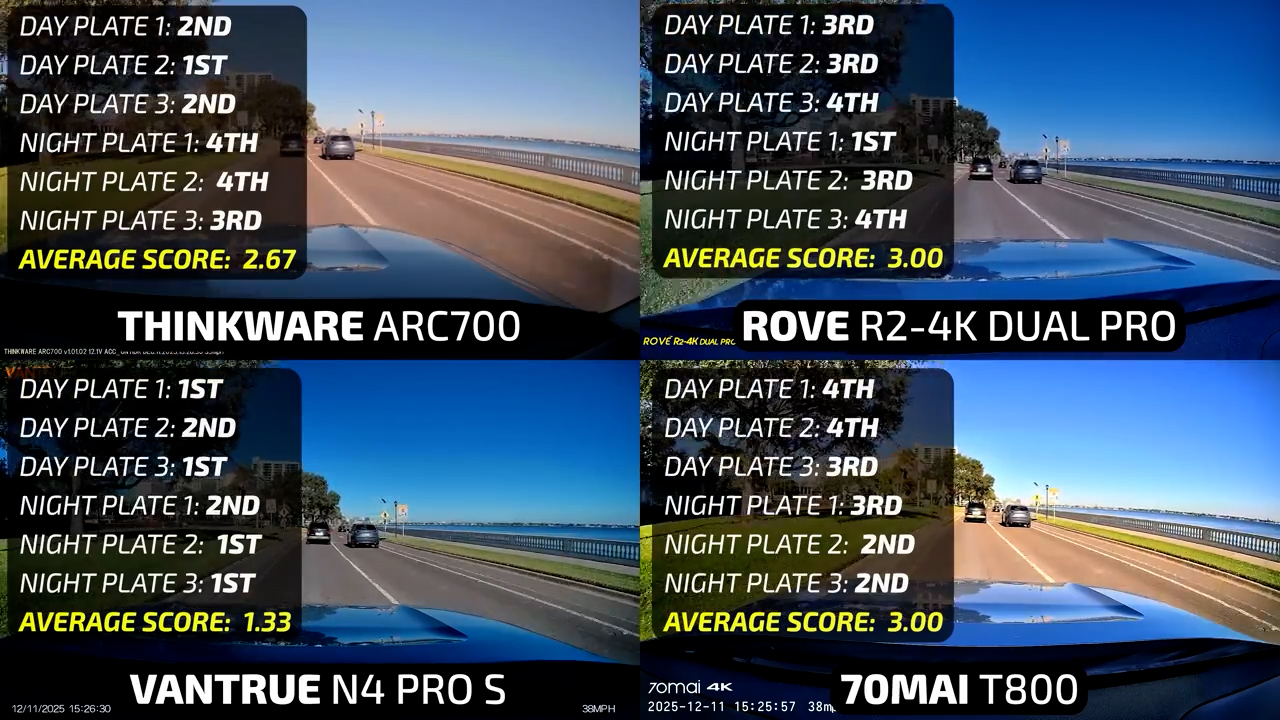
That means that for round 3 the Vantrue N4 Pro S had an average rank of 1.33, finishing first or second in every capture scenario, so it will move on to round 4.
Round 4: Vantrue, Viofo, Vueroid, Thinkware
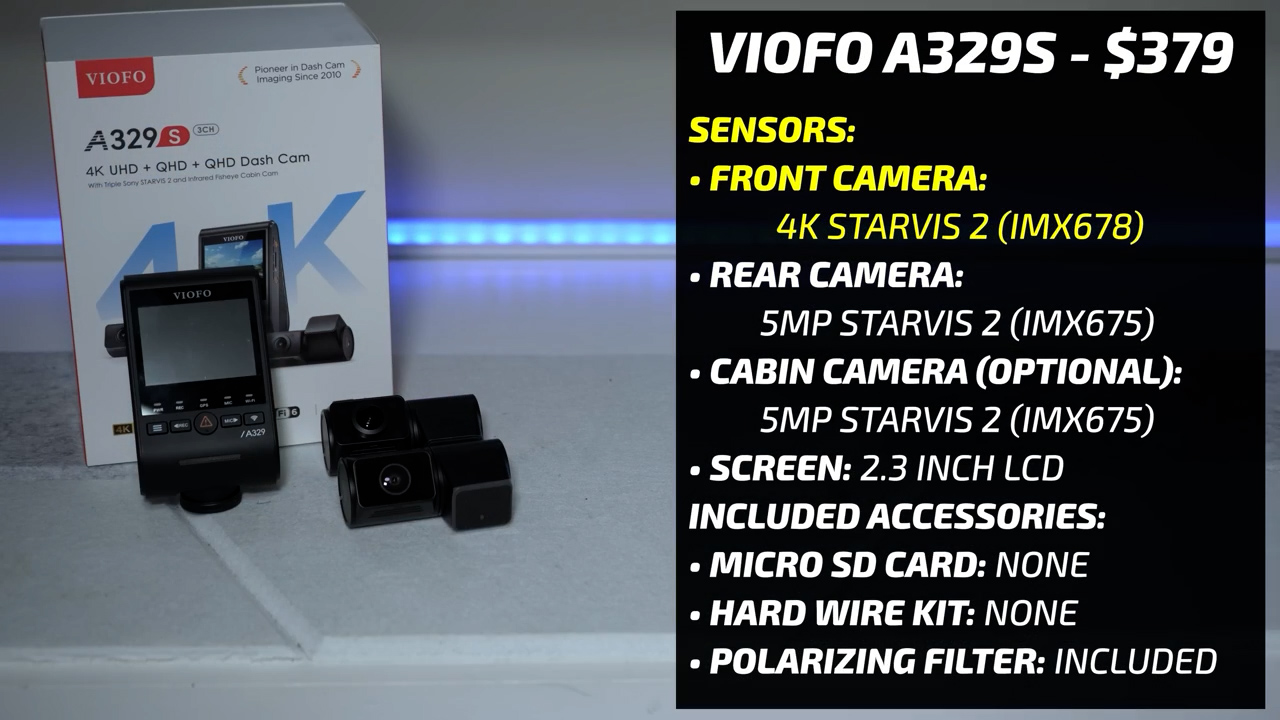
In this final round the first camera will be the $379 Viofo A329S, a 2-channel system with a 2.3” display and a 4K Sony STARVIS 2 IMX678 sensor in the front and a 5-megapixel IMX675 for the rear camera. Compared to last year’s A329, the A329S adds a few new parking modes and the ability to add an optional interior camera. The Viofo A329S does come with a circular polarizing filter in the box, but no SD card or hardwire kit.
Then for $399 I’ve got the Vueroid S1 4K Infinite, which is a 3-channel system with a 2.3” display, and uses the 4K Sony STARVIS 2 IMX678 sensor in the front and 5-megapixel IM675’s for the rear and cabin cameras. The Vueroid comes with a hardwire kit and circular polarizing filter in the box, but no SD card, though as I’m writing this there is an Amazon deal to get a 512GB SD card free with purchase.

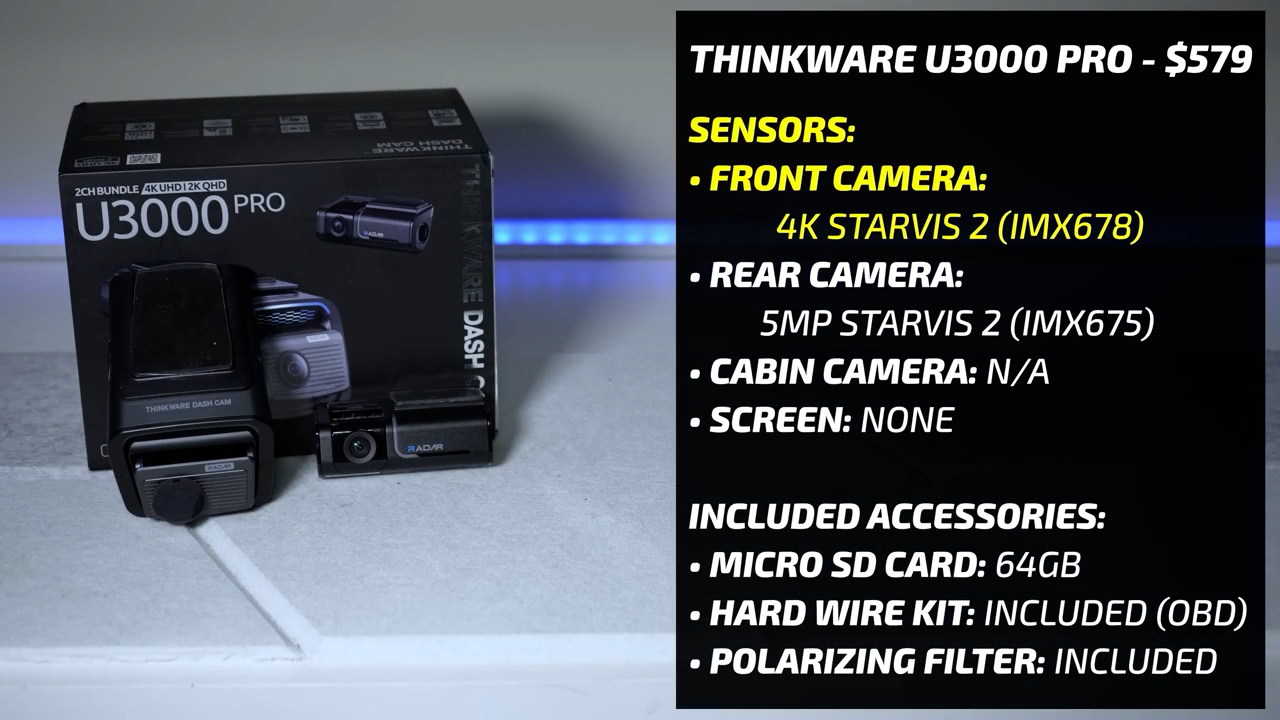
Last, the most expensive camera in this test is the $579 Thinkware U3000 Pro which is a 2-channel system with no screen, but it does have a 4K Sony STARVIS 2 IMX678 image sensor in the front and a 5-megapixel STARVIS 2 IMX675 in the back, and comes with a 64GB SD card, an OBD port hardwiring kit, and a circular polarizing lens in the box.
Looking at their daytime image quality, all four of these cameras are using the exact same image sensor, so the only differences come from their lenses and image processing. At first glance the Vantrue and Viofo appear to be significantly better at avoiding blown out highlights, but all four have similar sharpness and color.

All four cameras also have almost identical field of view, with the only difference being that the Vueroid is aimed a little further down, so the bell tower is visible in the more fisheye corner of the lens.

Looking at their plate capture ability when both cars were stationary, all four cameras captured crystal clear plate images, but looking at the BMWOFPOMPANO text and the orange in the middle of the plate the Viofo A329S was slightly better than the Vantrue N4 Pro S, with the Vueroid in 3rd and the Thinkware in 4th.
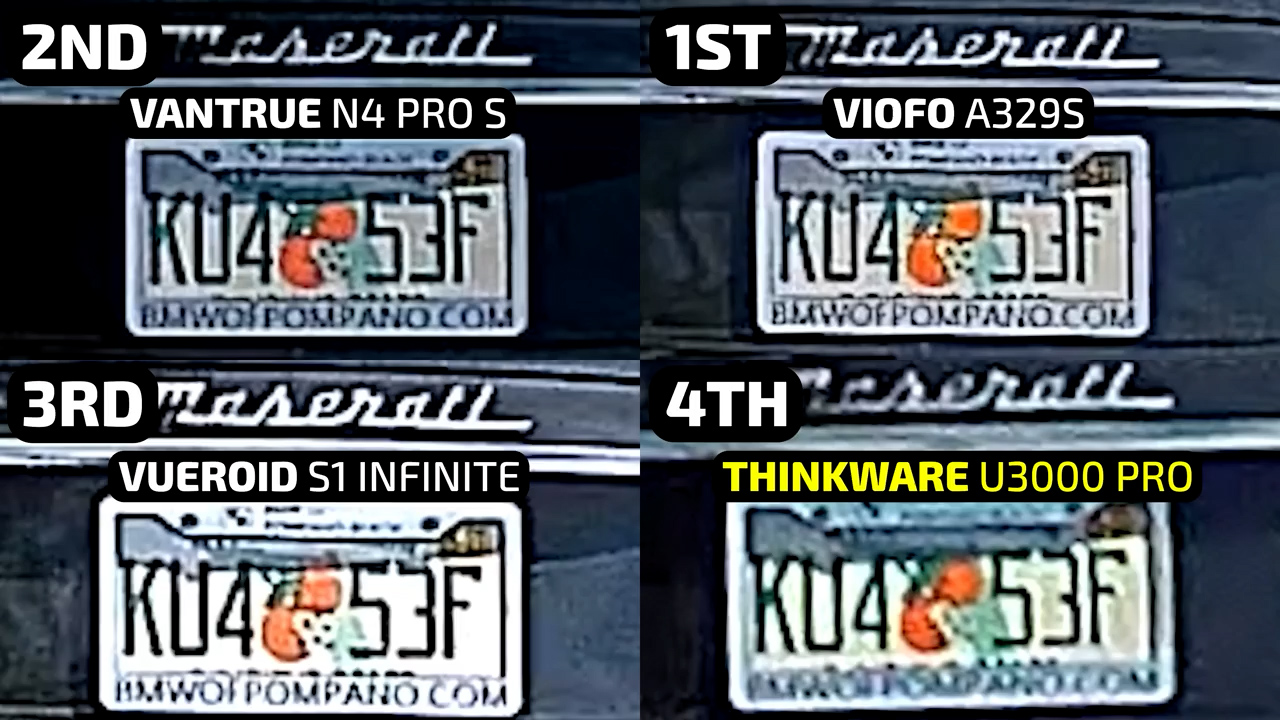
When both cars were moving the Viofo came out on top again, and despite the dark legible lettering on the Vantrue, I thought the R looked a little too much like an A, but the Thinkware still came in 3rd, and the Vueroid in 4th.
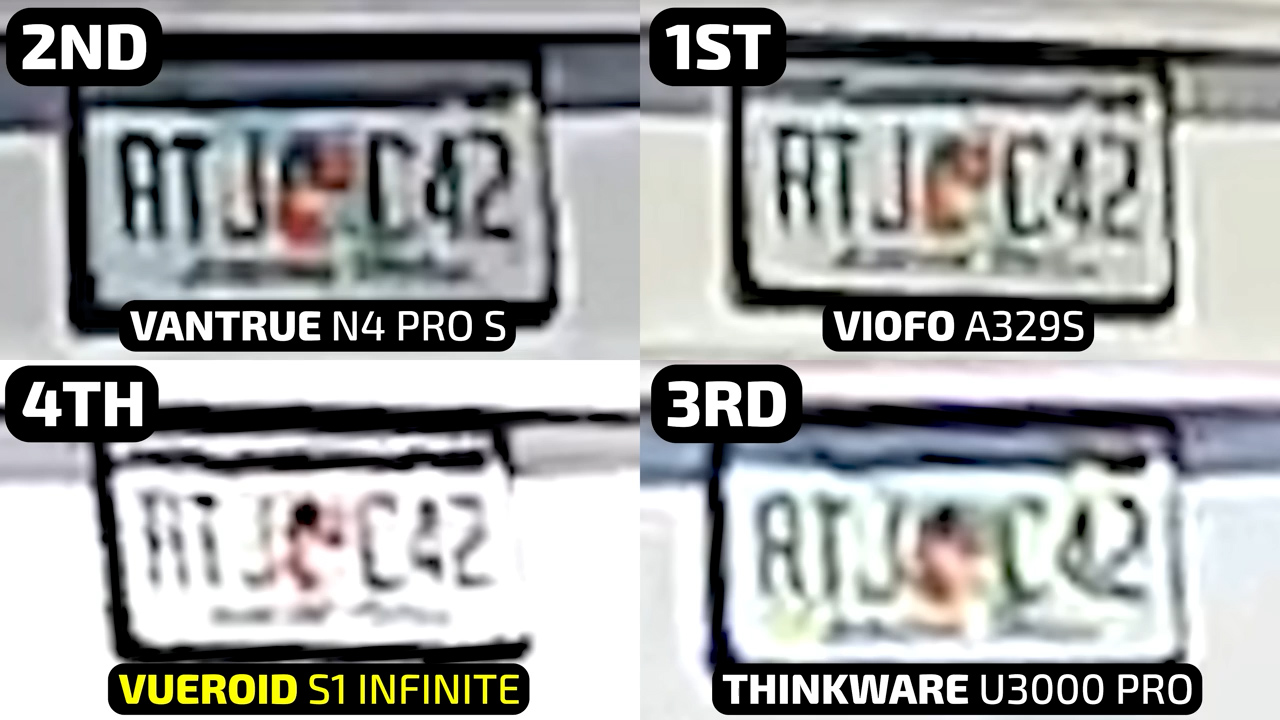
When I was stationary with a car passing at high speed the Vantrue was the only one to capture an accurate plate which was LVU T74, and the rest of the images had at least one distorted or illegible letter.

At night the Vueroid had the highest exposure, and the Vantrue was the darkest, but that allowed it to avoid overexposing license plates, and when both cars were stationary only the Vantrue and Viofo were able to control their exposure to capture the plate number, with the Vantrue’s image processing coming out on top, and the same was true when both cars were moving with both the Vantrue and Viofo successfully capturing the plate, but the Vantrue doing an overall better job.

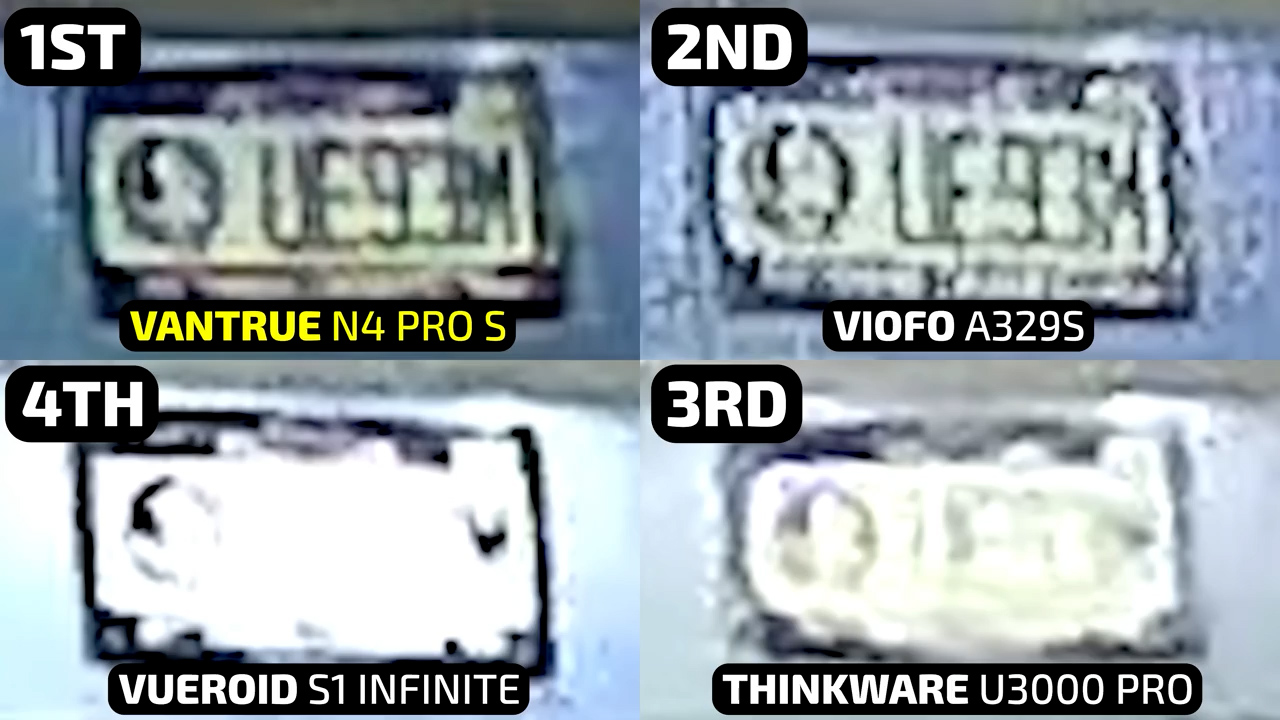
At night, when I was stationary and a car passed at high speed none of the cameras produced a legible plate, but the Vantrue did catch a partial and the Viofo had a little detail in the first two letters, but I’m not sure how useful they’d be without the Vantrue image to confirm what those letters were.

Image Quality Results
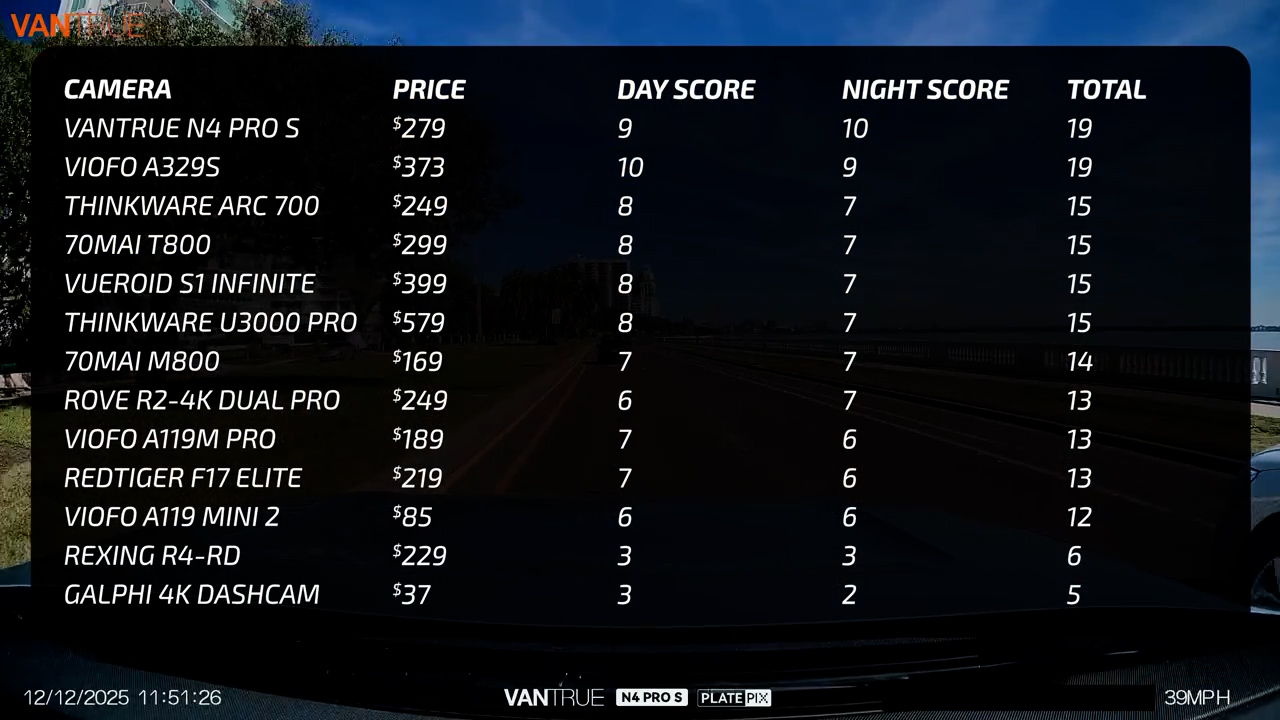
That means that just like last year’s models, the new Viofo A329S and Vantrue N4 Pro S were completely evenly matched in terms of image quality, each coming away with an average score of 1.5, with the Vantrue finishing first in each of the night captures, and the Viofo in first for each of the daytime captures.

But unlike last year’s video, there were also a lot fewer poorly performing cameras, and while the Viofo and Vantrue were clearly the best, the majority of the cameras had more than sufficient quality in most situations.
Parking Modes
Next, I spent a considerable amount of time testing the various parking modes on these cameras and in general there are five different possible modes.
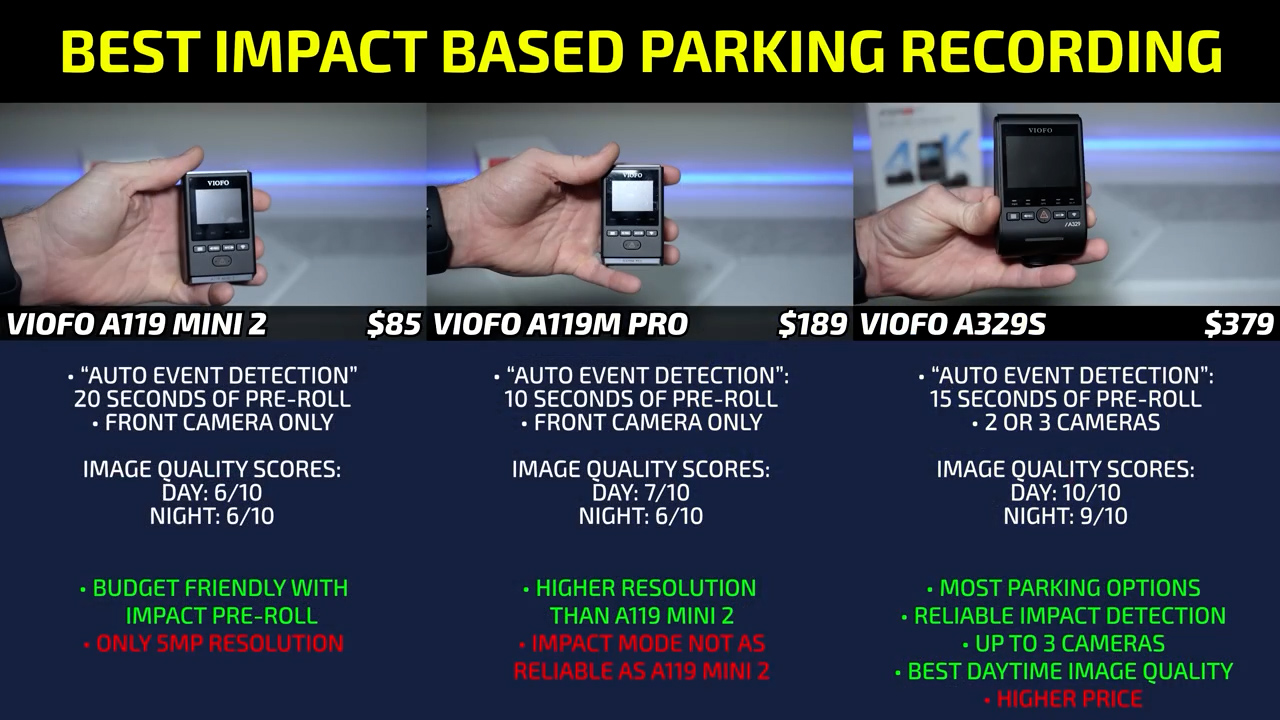
The first and most popular is G-Sensor or impact mode that uses a low power accelerometer to watch for impact events that trigger the camera to start recording, but not all G-Sensor modes are created equal. The Viofo cameras are in a league of their own and record 20 seconds of pre-roll before the impact so you have footage of the entire event, while in comparison the Vantrue N4 Pro S takes around 7 seconds to wake up after the impact, so you might never know what caused it.
Next are the two motion based parking modes and the most common version keeps the camera sensor in a lower power mode to watch for motion and then wakes up to record when motion is detected, but keeping the camera’s sensors on uses considerably more power than the accelerometer for G-Sensor mode, so camera based motion detection can be pretty rough on your car’s battery.
The solution to that is to use a separate lower power mmWave motion sensor to detect motion and only turn the cameras on after motion is detected, resulting in significantly lower power draw, with the Rexing R4-RD consuming 0.4 watt hours in my 30 minute test, and the Thinkware U3000 Pro consumed just 0.21 watt hours in that same time.
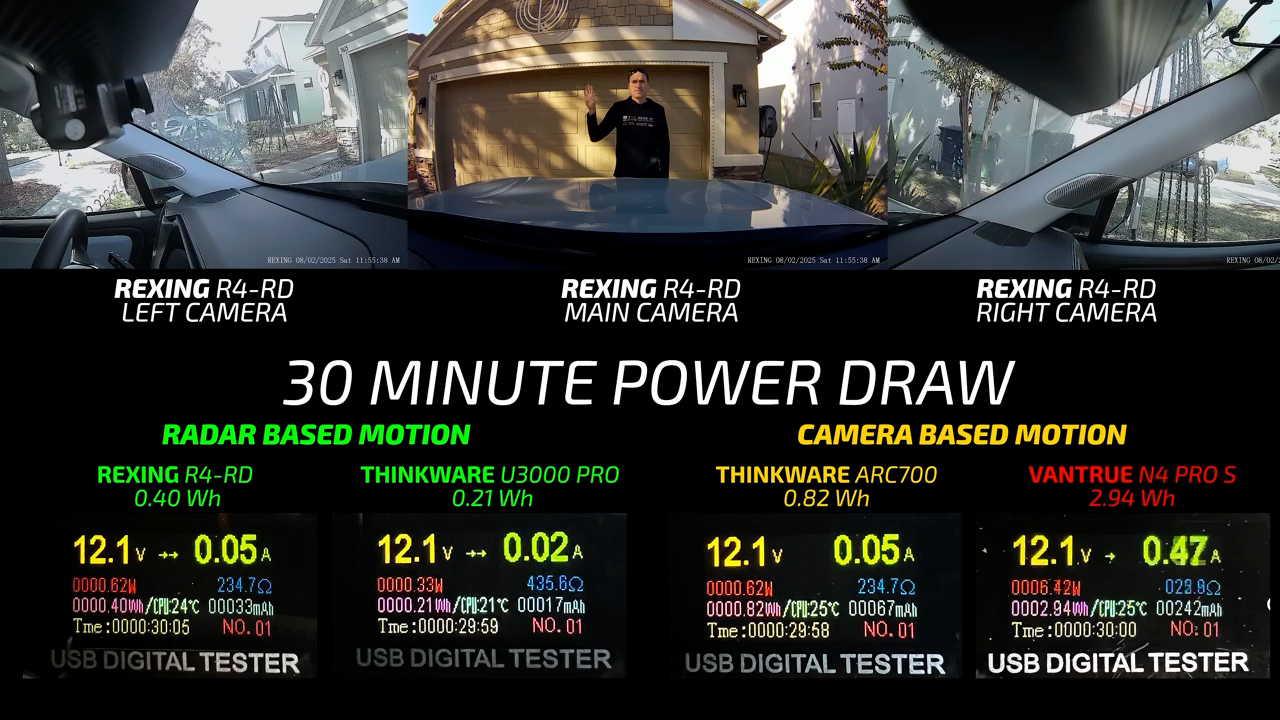
Even though the Rexing R4-RD and Thinkware U3000 Pro are the only cameras that have Radar included, the Thinkware ARC700 had notably low power draw for its motion detection mode and I measured just 0.82 watt hours in 30 minutes for its camera based motion detection, which worked very well and captured much more information about parking events than impact based systems without pre-recording.
The last two parking detection types are continuous recording modes that use either low bitrate or low framerate to save on storage space, but like motion-based detection, these modes consume considerably more power. The Viofo A119 Mini 2 for instance uses around 0.35 watt hours per 30 minutes of impact-based parking recording, but 1.15 watt hours per 30 minutes when set to low bitrate recording.
Parking Recommendations
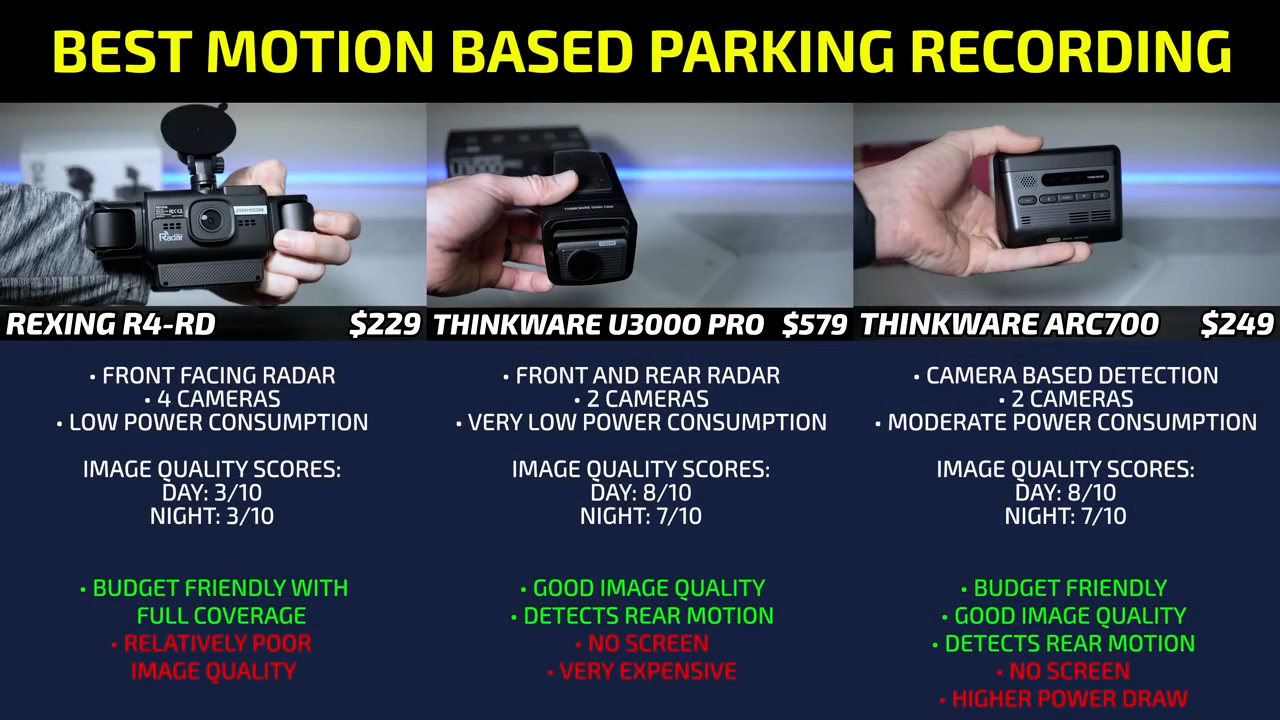
So if parking modes are your main reason for wanting a dash cam you’ll first need to choose between motion based detection or impact based, and for motion based the best options are the Rexing R4-RD that not only has low power radar based motion detection, but also four independent camera lenses that give complete coverage of your car, the Thinkware U3000 Pro that also has front and rear radar-based motion detection with incredibly low power draw, and the Thinkware ARC700 that has effective camera based motion detection that uses considerably less power than other models.
But if you want impact detection instead the three Viofo models with their 20 seconds of pre-roll recording are in a league of their own with low power consumption and reliable impact detections that consistently capture the entire event.
Form Factor
The last consideration that’s important for me at least is camera form factor. I personally prefer a camera that can tuck up and out of the way, has a screen for selecting menu options, and a status light to show that it’s recording. With those considerations in mind, I gravitate more towards the wedge shaped Viofo and Vueroid cameras, but I also enjoyed the flexibility of the Redtiger F17’s aimable lenses.
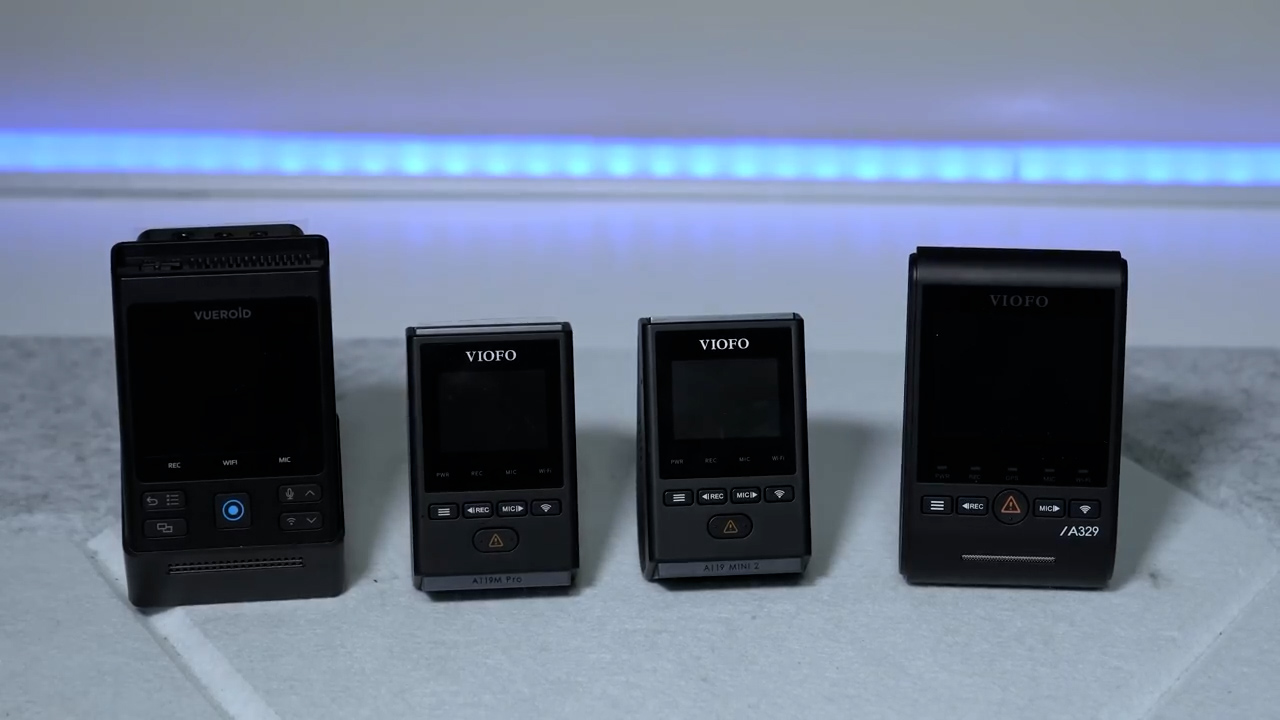
The Vantrue N4 Pro S, Rove R2-4K Dual Pro, and Rexing R4-RD are bigger and more in your face when driving, and the 70mai T800 is somewhere in between the wedge shape of the Viofos and the barrel shape of the Vantrue.
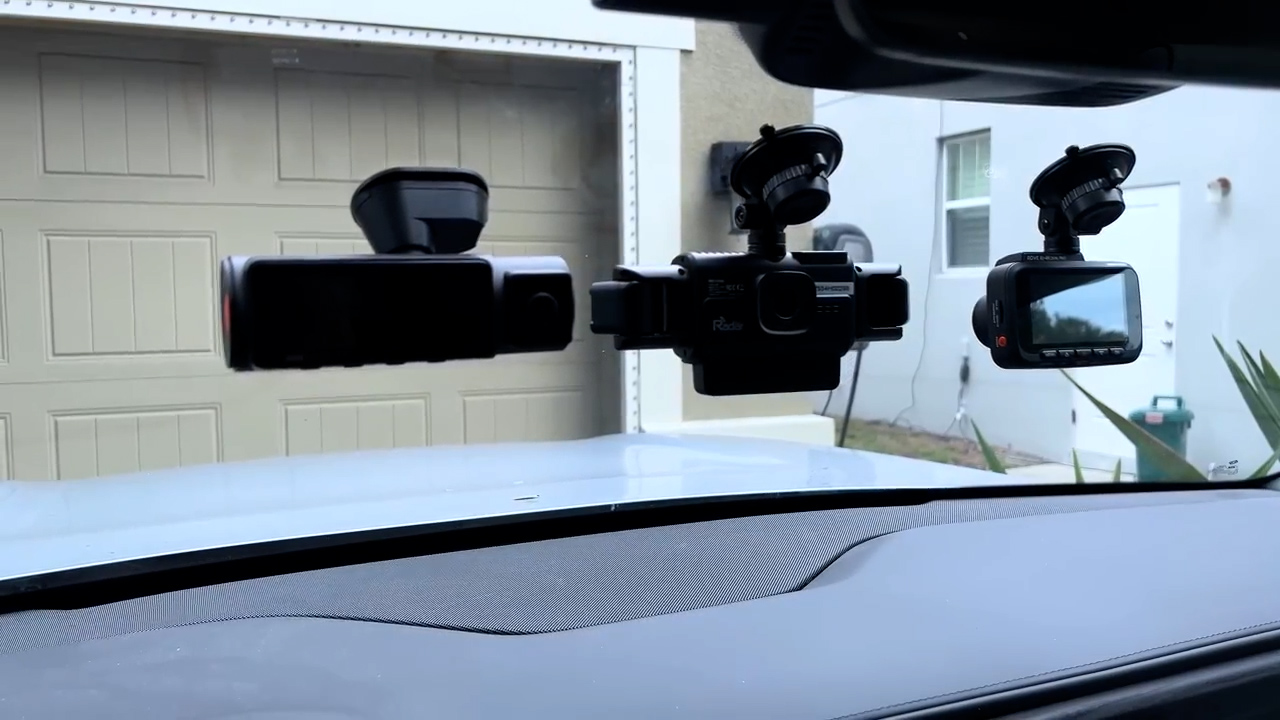
Some people might prefer it, but I personally don’t like the lack of a screen on the Thinkware U3000 Pro, 70mai M800, and Galphi 4K, and I find connecting via a phone app to be both clunky and time consuming.
Conclusions

So, adding up all of the sub scores for daytime image quality, nighttime image quality, parking modes, form factor, and price vs performance, the results are pretty conclusive with the Viofo A329S in first place, with its only downside being its $373 price tag.
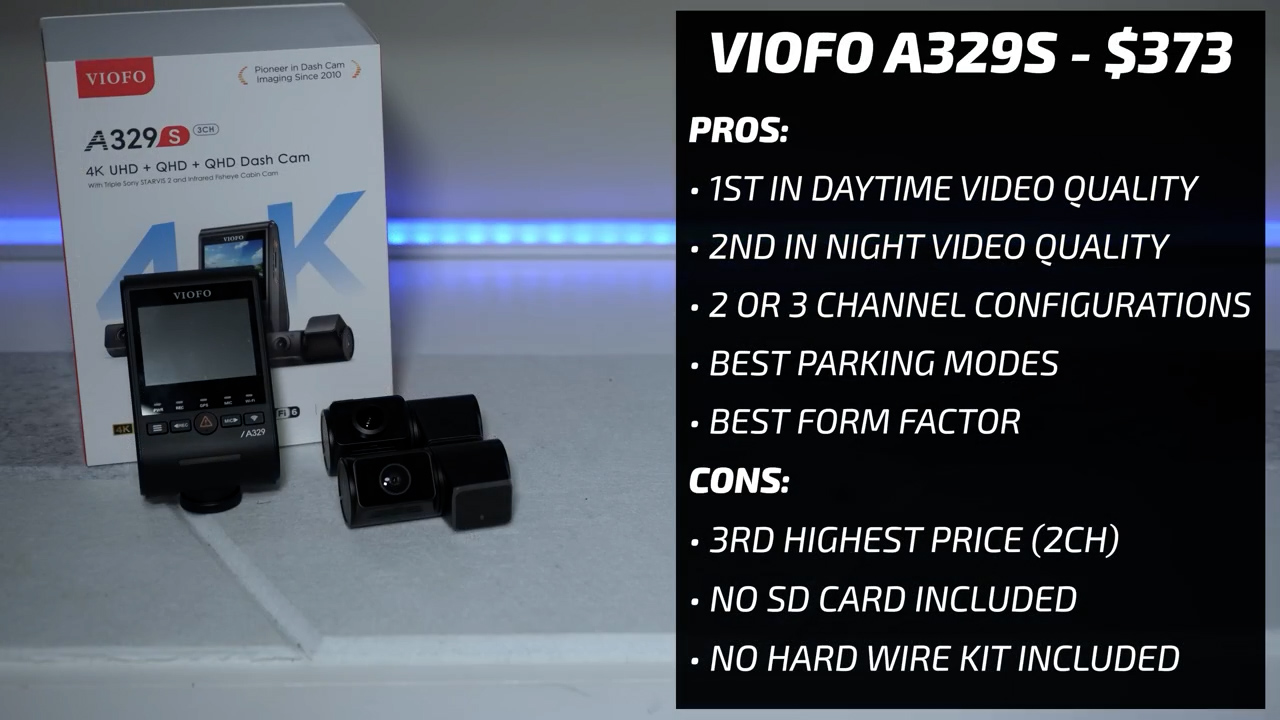
The Viofo A119 Mini 2 came in second overall with good single channel image quality, great parking performance, great form factor, and a low price.
The Thinkware ARC700 came in 3rd place with surprisingly good image quality given its older STARVIS 1 image sensor and surprisingly efficient motion-based parking performance given its lack of a separate mmWave motion sensor, so hats off to the Thinkware engineers for squeezing every last drop of performance out of the ARC700’s hardware.
The Viofo A119M Pro also had a relatively high score but given its price difference compared to the A119 Mini 2 I wouldn’t recommend it, and the switch to the IMX678 image sensor doesn’t justify doubling the price compared to the A119 Mini 2.
Last, the Vantrue N4 Pro S remains the king of nighttime video quality but even though it’s impact based parking mode has been slightly improved compared to the previous N4 Pro, it still takes a considerable amount of time after an event to start recording. So, if parking modes aren’t that important to you and the new and unique features like the waterproof rear camera and optional LTE module would be useful for your setup then the Vantrue is definitely still worth considering.

As always there are no sponsored reviews on this channel, but I do have links below for all the dash cams in this video and as always, I appreciate when you use those links since as an Amazon affiliate I do earn a small commission on the sale.
I’d also like to thank all of my awesome patrons over at Patreon for their continued support of my channel, and if you’re interested in supporting my channel please check out the links below. If you enjoyed this video, please consider subscribing to my YouTube channel and as always, thanks for watching The Hook Up.
UPDATE
Thanks to some comments I was made aware of a firmware update for the Vueroid S1 Infinite. In order to give it a fair shake I decided to update and retest against the Vantrue N4 Pro S (which had the top night time score) and the Viofo A329S (which had the best day time score). That video is here: https://www.youtube.com/watch?v=BT3oTrVcIkE
While the Vueroid S1’s firmware does increase its video quality, especially at night, it still doesn’t quite beat the Viofo or Vantrue.